

Local Chimney Inspection in Jacksonville
Your chimney and fireplace checked top to bottom, every finding explained. Local and family owned, and the inspection is free.
- Family owned and operated
- Free inspection and estimate
- Same-day service available
- Upfront pricing, no hidden fees
Get Your Free Inspection
Get a quote for chimney and fireplace repair and installation in Jacksonville.
Request received
Thank you. We will call you shortly to set a time.
or call (904) 920-5495
Why Choose Us
Why homeowners trust our inspection specialists
- Locally owned in Jacksonville
- Family owned and operated
- 100% satisfaction guaranteed
- Free inspection and estimate
- Same-day service available
- 10% off when you book today
A chimney inspection service is only worth booking if the person doing it tells you the truth. Ours comes from a family business with no reason to invent work, so you see what we see and hear it in plain words. Any repair gets its own written price, the inspection itself costs you nothing, and no price grows once we arrive. Call (904) 920-5495 to book it.
- Free inspection and estimateThe inspection costs nothing, and a clean result is a normal result.
- Locally owned and operatedA local family business with no reason to invent work, so you see what we see.
- No hidden feesAny repair gets its own written price, and nothing grows once we arrive.
What's Included
What our chimney inspection checks
A chimney inspection checks the flue, the firebox, the smoke chamber, the clearances and the top of the stack as one system, the way NFPA 211 lays it out. It costs nothing, and it comes from a local family business whose inspection pros explain each finding where you can see it, with any repair priced separately.
- Flue walls checked end to end for cracks and gaps
- Damper, smoke chamber and firebox looked at up close
- Roof-level look at crown, cap and flashing when safe
- Clearances to framing measured wherever we can reach them
- Gas and stove vents checked as part of the system
- Repairs ranked by urgency, each with its fix
How It Works
How a chimney inspection runs
-
Firebox, damper and throat first
We start where the fire sits, checking the firebrick, the hearth, the damper and the chamber above it.
-
Flue checked end to end
A strong light and a mirror from below, and a look from the top where footing is safe, show the full run of tile.
-
Clearances, attic and roof
Gaps to framing are measured where we can reach them, then the crown, cap, flashing and height are checked up top.
-
Findings shown, repairs ranked
You see each finding on site, and any repair goes on a written estimate ranked by how soon it matters.
10% off your first service when you book today
No charge for the inspection, and 10% comes off any repair you book today as a new customer.
Your Options
Yearly check or a deeper inspection?
Most homes need the yearly check. NFPA 211 names a few moments that call for a deeper look.
Local Conditions
Inspections after hurricane season storms
NFPA 211 names a storm or another event likely to have damaged the chimney as a reason for a more thorough inspection. Across Duval, Clay, Nassau and north St. Johns, the hurricane season NOAA dates from June 1 to November 30 is when caps, chase covers and crowns face wind and driven rain.
A look after a big storm and before the next fire catches a loose cap or a cracked crown while it is still a small repair. In the beach towns, from Fernandina Beach to Ponte Vedra Beach, the metal parts also get a close check for rust from salt air.
Free Inspection
Every item on the inspection list
- Flue interior checked end to end for cracks, gaps, deposits and blockage
- Smoke chamber, smoke shelf and damper condition noted
- Firebox walls, hearth and hearth extension looked at and measured
- Clearances to framing checked wherever they can be reached
- Crown, cap, flashing and masonry above the roof examined
- Flue size and lining compared with the appliance it serves
- Each defect written up with its repair and how soon it matters
Estimate Factors
What shapes an inspection visit
Why you booked it
A yearly check covers what existing openings show. A sale or a new appliance calls for a deeper evaluation.
Access
An attic hatch, a safe roof and a removable insert let us see more of the system.
Number of flues
Every flue in the stack is checked, whether or not it is in use.
A dirty flue
Heavy deposit hides cracks, so a sweep may have to come first.
Factory-built units
Labels, listed parts and the maker's instructions are compared on site.
FAQ
Chimney inspection questions
How far ahead should I book an inspection?
A few days is usually plenty, and same-day visits happen when there is an open slot. Tell us about any deadline when you call (904) 920-5495 and we will work to it.
Riverside house. Do you inspect chimneys there?
Yes, Riverside and every other part of Jacksonville. Call (904) 920-5495 and mention anything you have noticed, so we look at it first.
What does the fireplace inspection cover?
The flue, damper, smoke chamber, firebox and hearth, plus the crown, cap and flashing on the roof when it is safe to walk. Anything vented into the chimney is part of the check too.
Will you push repairs I do not need?
No. Our chimney inspection service gives you the findings in plain words, ranked by what matters for safe use, and any repair goes on a free written estimate that is yours to accept or decline.
Should I stay home while you work?
Someone needs to let us in and be there at the end, when we walk you through what we found. You do not need to stand by in between.
Common Problems
Reasons homeowners book an inspection
Buying or selling a house
Nobody at the closing table knows the chimney's history. A sale is one of the times NFPA 211 calls for a more thorough look.
First fire of the season coming up
The yearly check looks at soundness, deposits and clearances before the fireplace goes back into use.
New stove, insert or gas appliance
A different appliance changes what the flue has to handle, so the flue is measured against the new unit.
Draft trouble at the fireplace
Flue size, chimney height and a clogged screen are measured and written down before anyone blames the chimney.
A storm or a suspected chimney fire
Puffed creosote, cracked tiles or a warped cap can follow. No fire goes in until the whole flue has been examined.
Rust on the damper or a damp ceiling
Something is letting water in. Each clue is traced to a likely entry point and written down.
Our Services
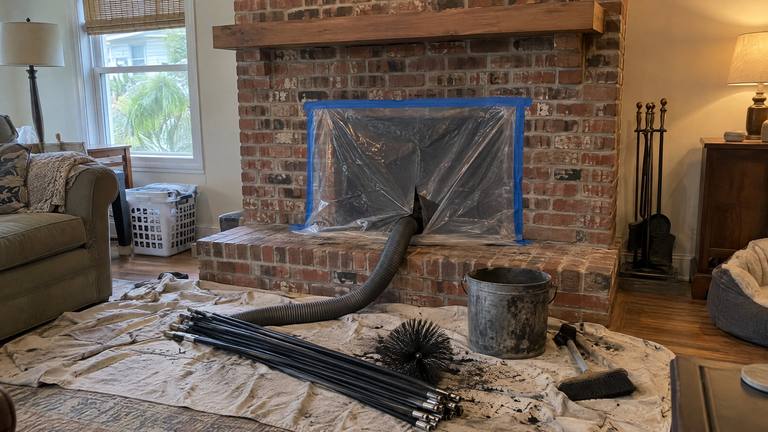
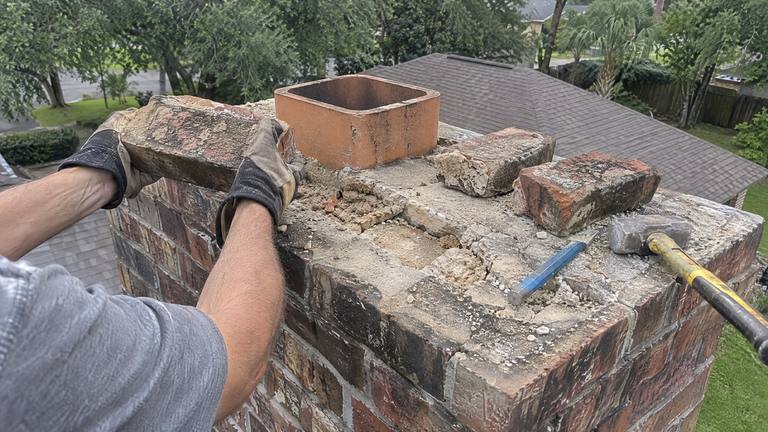
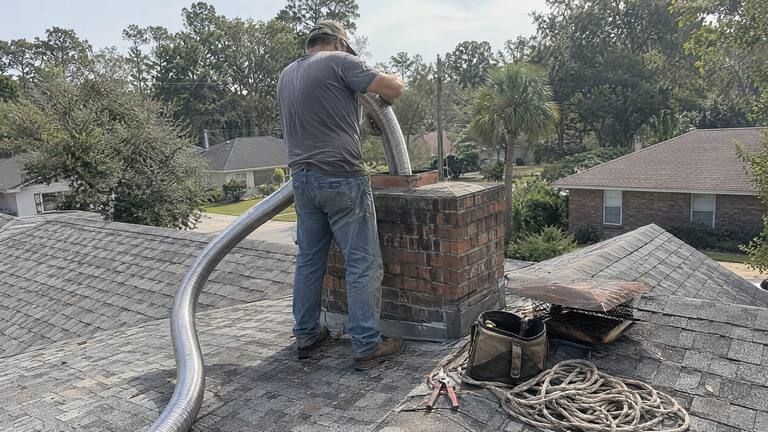
Sweep, repair and liner work
-
-
-


Book a free chimney inspection
A local expert goes over every finding with you, and repairs come with their own prices.
Free InspectionFull service details
What NFPA 211 asks an inspection to cover
NFPA 211 calls for chimneys, fireplaces and vents to be inspected at least once a year for soundness, freedom from deposits and correct clearances. Soundness asks whether the structure and flue will hold heat and smoke. Deposits asks whether anything inside can burn or block the flue. Clearances asks whether heat can reach wood it should not. Booked as the yearly check or as a chimney safety inspection, it treats the fireplace, the chimney and whatever vents into it as one system.
Firebox, flue and connector
The check starts where the fire sits: firebrick joints and cracks, the hearth, a damper that opens fully and closes flat, and smoke chamber walls with no gaps between the stepped courses. NFPA 211 lists the inside surfaces of fireplaces and smoke chambers among the things examined, and an insert comes out when the flue connection cannot be seen any other way.
The flue is checked end to end for cracked or shifted tiles, missing mortar, deposits and blockage, and measured against what it serves. FBC Residential sets a masonry fireplace flue at one-twelfth of the opening for a round flue and one-tenth for a square one (R1003.15.1), and no appliance flue smaller than its connector (R1003.14). Where a stove vents through a wall, the connector's support, fastening and pitch and the thimble around it are part of the check.
Clearances and the roof
The code keeps framing at least 2 inches from a chimney inside the house or within an exterior wall and 1 inch from one entirely outside (FBC R1003.18), with fireblocking at floors and ceilings (R1003.19). The hearth extension reaches 16 inches out and 8 past each side for an opening under 6 square feet, and 20 and 12 for a larger one (R1001.10). We say plainly which clearances could not be reached.
On the roof, the chimney should stand 3 feet above its roof penetration and 2 feet above anything within 10 feet (R1003.9), with a sloped crown, a drip edge and a sealed break at the flue tile (R1003.9.1). Inside, rust on the damper, white deposits and a damp patch beside the chimney are each traced to a likely entry point.
Home sales, new appliances and fire damage
NFPA 211 names moments that call for a more thorough evaluation, reaching into attics, crawl spaces and every foot of flue: an appliance added, removed or swapped, a flue about to be relined, a property changing hands, and a storm, chimney fire or other event likely to have caused damage. A real estate chimney inspection belongs in that group, since a chimney inspection for a home sale has to cover a history nobody at the closing table knows.
After a chimney fire, creosote looks puffed and honeycombed, tiles show fresh cracks and a damper or cap may be warped. No fire goes in until the flue has been examined, and the estimate separates fire damage from old wear.
Factory-built fireplaces and gas vents
A factory-built fireplace is tested to UL 127 and its metal chimney to UL 103, and the code says it is installed to its listing (FBC R1004.1), so we read the label and compare parts with the maker's instructions. Gas appliances make no creosote, but their vents still have to be clear and sized to NFPA 54. A gas smell is a call to the gas utility or 911 from outside the house first.
What you get from the inspection
Findings are explained on site, where you can see them, and anything that needs work goes on a written estimate, one line per defect, marked urgent, due soon or able to wait. If nothing needs work, that is what we tell you. When the flue is too dirty to see the tile, we suggest a chimney sweep first, since deposits hide cracks.
Buying a house, starting the season, or unsure what is up there? Call (904) 920-5495 and book a chimney check.
Guides
Chimney and fireplace guides
- How a fireplace can put carbon monoxide in the houseCarbon monoxide has no smell and no color, so an alarm notices it before you do. How a fireplace makes it, how it gets into the room, and where Florida law puts the alarms.
- What to do during and after a chimney fireGet out and call 911 first. Everything else here, from the roar of a fire in progress to the flakes one leaves behind, comes after that.
- How tall a chimney must be: the 3-2-10 rule explainedTwo measurements decide whether a masonry chimney is tall enough: how each is taken, and why a shortfall shows up at the firebox.
- Checking the chimney before you close on a houseA general home inspection stops where the flue disappears from view. Getting the rest of the chimney checked, in writing, before the inspection period runs out.
- What you are paying for in a chimney inspectionAn inspection is time spent on the whole system, plus findings you can act on. Flues, appliances, access and deadlines stretch or shorten that time.
- A yearly checklist for your chimney and fireplaceFour moments in the year carry this checklist. Much of it is looking, and a few items belong to a crew.
- Sweep or inspection: what each one does, and which to book firstOne job removes deposits, the other judges the whole system, and the signs in your fireplace say which to book first.
- Using a fireplace safely at homeThe habits that keep a fire where it belongs, from the 3-foot zone to the ash can, and what changes with gas glass and small children.
- Why smoke spills out of the fireplaceSmoke in the room is a draft problem. The causes run from a half-open damper to a house that pulls air down the flue, and two of them you can test yourself.
- After the home inspector flags the chimneyA flag in the report names a symptom, not a cause. Reading its wording, and turning it into a scoped written estimate before the inspection period ends.
- How often a chimney needs sweeping, and why the inspection sets the paceThe standard puts the inspection on the calendar. Your wood, your fires and your flue decide the cleaning.
- Chimney anatomy: what each part does and how it failsA chimney is a set of parts with separate jobs. Knowing their names makes any estimate easier to read and to question.
- Factory-built or masonry: reading your fireplace from the firebox upFive places to look, and why the answer changes every repair.
- Getting a fireplace and chimney ready for a saleA buyer's inspector will see the cap, the crown and the damper. Fix water and safety items first, and put the rest in writing.