

Local Chimney Sweep in Jacksonville
Soot and creosote brushed out of your flue while the room stays clean. Local, family run, and a free inspection whenever you want one.
- Family owned and operated
- Free inspection and estimate
- Same-day service available
- Upfront pricing, no hidden fees
Get Your Free Inspection
Get a quote for chimney and fireplace repair and installation in Jacksonville.
Request received
Thank you. We will call you shortly to set a time.
or call (904) 920-5495
Why Choose Us
Why homeowners book our chimney sweep specialists
- Locally owned in Jacksonville
- Family owned and operated
- 100% satisfaction guaranteed
- Free inspection and estimate
- Same-day service available
- 10% off when you book today
Sweeping is simple work that is easy to do badly. Our sweep pros come from a local family business. They brush every surface the smoke touches, keep the soot inside the firebox with a sealed opening and a filtered vacuum, and tell you plainly if the brushes turn up something worth fixing. You hear the price before we start, with no upsell and nothing added at the end, and a first sweep with us is 10% off. Call (904) 920-5495 to book your sweep.
- No hidden feesYou hear the sweep price before we start, with nothing added at the end.
- Same-day service availableA same-day sweep is possible when the calendar has room.
- 100% satisfaction guaranteedIf the room is not as clean as we found it, we come back and make it right.
What's Included
Our chimney sweep service includes
A chimney sweep clears the soot and creosote that smoke leaves in the flue, the smoke chamber and on the damper. Our sweep pros are part of a local, family-run business, and they brush every surface the smoke touches while a filtered vacuum keeps the dust in the firebox. Want the whole system looked at too? Ask for a free inspection.
- Flue brushed end to end, head sized to the liner
- Smoke shelf and smoke chamber scraped clear of loose deposit
- Damper cleaned until the plate opens and shuts flat
- Drop cloths down and a filtered vacuum running at the opening
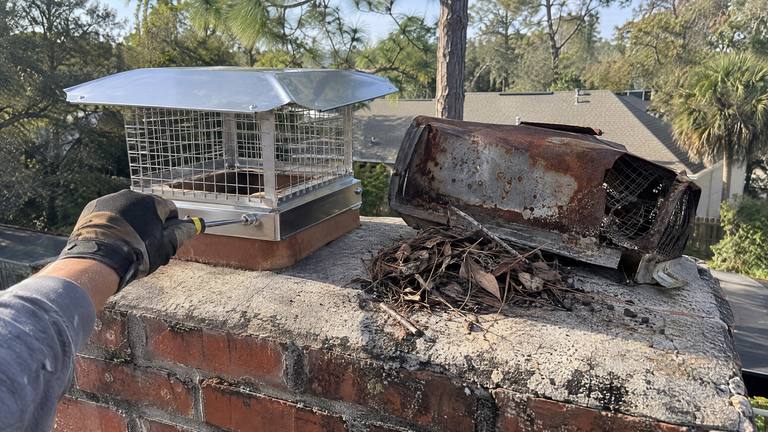
- Leaves and nest debris pulled from the cap screen
- A written note of anything the brushes uncovered
How It Works
How our chimney sweep works
-
Room covered, opening sealed
Drop cloths go down, the fireplace opening is closed off and a filtered vacuum runs at it.
-
Flue brushed with a matched head
Rods carry a brush shaped and sized to your tile or liner up the full height, around any offset.
-
Damper and chamber walls scraped
The sloped walls, the smoke shelf and the damper plate are cleared by hand, with the shelf last.
-
Clean-up and a written note
Debris is bagged and carried out, and you get a note on the deposit and anything the brushes uncovered.
10% off your first service when you book today
Booking your first chimney sweep with us? Book today and it is 10% off.
Your Options
Sweep, deep clean or full inspection?
Most chimneys need a plain sweep. The brushes tell us when it has to be more than that.
Materials
The brushes and tools we sweep with
- Tile-shaped wire brush heads
- Square, rectangular or round, sized so the bristles bear on every wall of a clay flue.
- Plastic bristle brush for stainless liners
- Liner makers call for it so steel bristles do not scratch the alloy.
- Flexible rods
- Carry the brush around offsets, and a sharp offset is brushed from both ends.
- Sealed, filtered vacuum
- Runs at the opening the whole time, so air moves into the firebox and the dust stays put.
- Hand scrapers
- For the smoke chamber steps and the smoke shelf, where a flue brush cannot reach.
Local Conditions
Sweeping around nesting season and storms
Chimney swifts arrive in March or April and leave in August or September, and federal law protects them, their eggs and their nests while they are here. Florida also bars bat exclusion devices from April 16 through August 14. A flue with an active nest waits, so we ask about noises in the chimney when you book.
Storms bring the other load, since leaves and small limbs can end up in an uncapped flue, and a sweep clears them before the next fire.
Free Inspection
Every surface on the sweep checklist
- Flue brushed end to end with rods and a head matched to the tile or liner
- Smoke chamber walls and smoke shelf cleared of loose deposit
- Damper plate, frame and throat cleaned until the plate shuts flat
- Firebox and grate area emptied, with the debris bagged and carried out
- Drop cloths down and a sealed, filtered vacuum running at the opening
- Cap screen cleared, and the cap lifted and reset if it blocks the brush
- Any glaze found named, with its separate removal scope
- A written note of each defect the cleaning exposed
Estimate Factors
Sweep pricing, and what changes it
How heavy the deposit is
Light soot brushes out quickly. Thick, crunchy deposit takes more passes and more scraping.
Number of flues
Each flue in the stack gets its own brush run.
Stove or insert
A connector pipe to take down, or an insert to pull, adds time.
Offsets and access
A flue with bends, or a tall stack on a steep roof, takes longer to brush from both ends.
Nests and debris
Packed debris has to come out before the brush can pass.
FAQ
Chimney sweep questions
Could I book chimney sweep service this week?
Call (904) 920-5495 and we will offer the earliest open slot, and a same-day visit is possible when the calendar has room. Tell us when the fireplace was last used so we plan enough time.
Will a chimney cleaning service leave soot in my house?
Not ours. The opening is closed off, a filtered vacuum pulls air into the firebox the whole time, and the hearth and floor are covered and wiped before we go.
Can I get a chimney sweep and inspection in one visit?
Yes. We sweep first so the flue walls are bare, then check the whole system while the drop cloths are still down, and both go on one written price. Ask for both when you call (904) 920-5495.
Fleming Island or Orange Park, do you sweep there?
Yes, both. You get the same careful sweep and a price up front, wherever in Clay County you live.
What should I do before the sweep shows up?
Let the last fire burn out at least a day ahead so the ash is cold, and clear a path to the fireplace. We bring the brushes, the cloths and the vacuum.
Common Problems
When a chimney is due for sweeping
Old smoke smell drifting into the room
Deposit in the flue plus a house pulling air down the chimney. The sweep clears the deposit, and we point out the draft.
Fire hard to start or smoky
A clogged cap screen or heavy deposit can choke the draft. We clear both and check that the damper opens fully.
Black flakes falling into the firebox
Creosote has turned crunchy and is letting go. Firm brushing removes it before it builds further.
A damper that will not close flat
Deposit on the plate and frame. It is scraped off until the plate shuts flat again.
Leaves or nest bits in the firebox
The flue is collecting debris or animals. We make sure it is clear end to end, and nesting birds are left until they go.
Shiny, tar-like coating in the flue
That is glaze, and a brush skates over it. It needs creosote removal, written up as its own job.
Specialized Services
Heavy creosote and glaze removal
Our Services
Inspection, liner and cap work
-
-
-


Book your chimney sweep
Call and a local pro gives you the earliest open slot, with the price before we start.
Free InspectionFull service details
Where smoke leaves its deposit
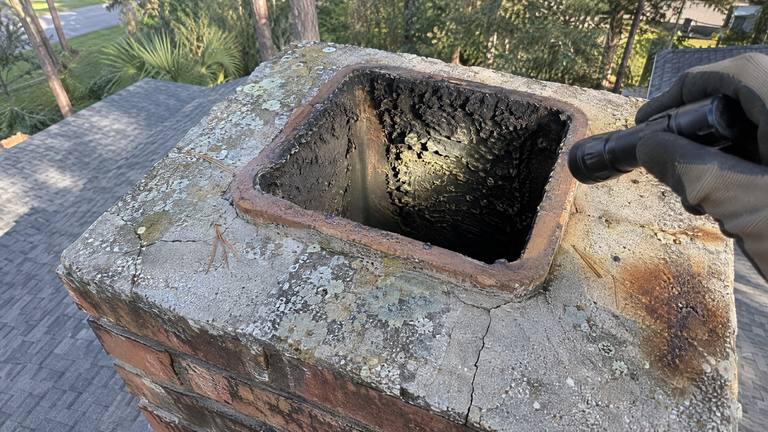
Smoke from a wood fire rises out of the firebox, through the throat and the damper, over the smoke shelf and up the smoke chamber into the flue, cooling the whole way. When it cools enough, tar vapor and moisture condense on the walls, and that film is creosote. It builds heaviest where the gases slow down or lose heat: on the sloped walls of the smoke chamber, in the first few feet of flue above them, and near the top of a chimney on an outside wall.
Stepped smoke chamber walls are scraped by hand, and rough or open joints there are noted, since smoke chamber repair is a separate job.
Chimney soot removal, surface by surface
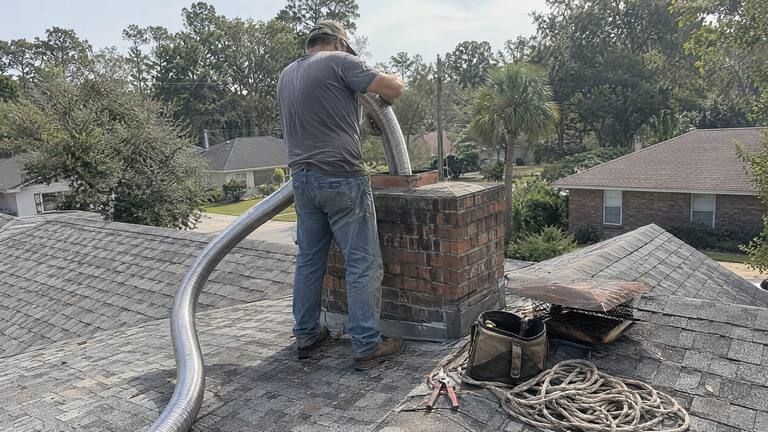
Clay flue tile is square, rectangular or round, and a round brush in a square tile leaves the corners untouched, so the head is shaped and sized to the tile. Liner makers call for a plastic bristle brush on stainless liners, since steel bristles can scratch the alloy, and factory-built fireplaces are swept to the cleaning instructions in their manual.
Chimney soot removal runs in order: the flue brushed its full height, the smoke chamber scraped, the damper plate and frame cleaned, the firebox emptied, the cap screen cleared, and the smoke shelf last, because everything knocked loose above lands there.
Keeping the soot out of the room
Let the last fire burn out a day ahead so the ash is cold, and clear a path to the fireplace. The hearth and floor are covered, the opening is closed off, and a sealed, filtered vacuum pulls air into the firebox during the work.
Kitchen and bath fans and a running dryer pull air down the chimney, so we ask for them off while we sweep. The same pull explains a fireplace that smells of old smoke on days it is not used, and chimney odor removal deals with both the deposit and the draft that carries the smell in.
Soot, flaky creosote and glaze
The first deposit is soot, a fine powder that brushes away. With more cool, smoky fires it turns crunchy and flaky, which firm brushing still removes. Past that it can harden into a shiny glaze fused to the flue wall, and a brush skates over it. Glaze takes rotary tools or a chemical treatment, sometimes over more than one visit, which is creosote removal.
The look we take with the flue open
NFPA 211 sets a yearly inspection of the structure, the deposits and the clearances, and calls for cleaning when that check shows a need. Its inspection chapter treats a routine cleaning as a moment to examine the flue, and it expects defects seen during the work to be reported to the owner. So the tile joints, the damper frame, the firebrick and the top of the chimney get looked over and written down. A full chimney inspection goes further, into clearances to framing and the attic side of the stack.
Stoves, inserts and blocked flues
In wood stove chimney cleaning, the connector pipe comes down to be brushed and refitted with its joints fastened and its pitch restored. NFPA 211 lets an insert stay in place when the venting can be cleaned thoroughly without pulling it. A fireplace that burns gas has no creosote to brush, and servicing it is gas fireplace repair.
An uncapped flue collects leaves, twigs and nests, and a blocked chimney can push smoke and carbon monoxide into the house with the first fire, so we confirm the flue is clear end to end. Some birds and bats are protected while nesting, and a stack with more than one flue gets a brush run in each.
After the sweep
You get a short written note: what was cleaned, how heavy the deposit was and anything that needs work, each repair listed separately. Regular chimney maintenance is mostly this cycle: a yearly look, a sweep when the deposit calls for it, and repairs made while they are small.
Ready to book? Call (904) 920-5495, or send the form and we will call you back.
Guides
Chimney and fireplace guides
- Choosing firewood that burns clean and dryA dry split of an ordinary tree outburns a wet one of a prized hardwood. Checking, storing and buying wood with that in mind.
- What to do during and after a chimney fireGet out and call 911 first. Everything else here, from the roar of a fire in progress to the flakes one leaves behind, comes after that.
- A yearly checklist for your chimney and fireplaceFour moments in the year carry this checklist. Much of it is looking, and a few items belong to a crew.
- What changes the price of a chimney sweepA sweep is priced by what has built up inside the flue and the work it takes to get at it. The questions below size it before the visit.
- Sweep or inspection: what each one does, and which to book firstOne job removes deposits, the other judges the whole system, and the signs in your fireplace say which to book first.
- Where chimney and fireplace odors come fromThe smell is air from the chimney arriving in the room. Find what that air passed over, and you have the fix.
- How often a chimney needs sweeping, and why the inspection sets the paceThe standard puts the inspection on the calendar. Your wood, your fires and your flue decide the cleaning.
- Choosing who works on your chimney: the questions that matterA good chimney contractor can show you what they found and explain why the fix fits. These questions bring that out.
- How to tell a chimney is due for sweeping, from the firebox upThe flue shows its buildup in a few places you can check yourself, with the fire out and the ash cold.
- Creosote, from soft soot to hard glazeWood smoke leaves a coating in the flue that thickens from soot to glaze, and all of it burns.