

Local Chimney Chase Cover in Jacksonville
Rusted, leaking chase covers replaced with a made-to-measure top that drains. Locally owned, family run, free inspection.
- Family owned and operated
- Free inspection and estimate
- Same-day service available
- Upfront pricing, no hidden fees
Get Your Free Inspection
Get a quote for chimney and fireplace repair and installation in Jacksonville.
Request received
Thank you. We will call you shortly to set a time.
or call (904) 920-5495
Why Choose Us
Chase cover specialists who measure before ordering
- Locally owned in Jacksonville
- Family owned and operated
- 100% satisfaction guaranteed
- Free inspection and estimate
- Same-day service available
- 10% off when you book today
Flat chase tops tend to hold water and rust through, and a stained ceiling is often how homeowners find out. Our chase cover pros, from a local family business, measure your chase and order a top made to fit it, with slope built in and a new storm collar at the pipe. You see the price in black and white before we order, and a 10% discount applies to your first service. Call (904) 920-5495 to book the free measuring visit.
- Locally owned and operatedWe measure your chase on the roof ourselves and order the top from those numbers.
- Free written estimatesMetal, gauge, finish and price go on the written estimate, and you approve it before the order goes in.
- Workmanship warrantyIf the new top, its collar or the storm collar gives trouble, our workmanship warranty covers it.
What's Included
What's included with a new chase cover
A chimney chase cover is the metal roof over the framed box that hides a factory-built chimney pipe. When it rusts or ponds, rain runs down the pipe and into the house. A local, family-owned crew of chase cover pros measures the chase for free and orders a top made to fit it, sloped so water runs off. The inspection costs you nothing.
- Rusted or ponding chase tops replaced with a custom-sized cover
- Cross-breaks and slope so rain runs off the edges
- Fresh storm collar sealed at every chimney pipe
- Galvanized, stainless or copper, with painted finishes available
- Soft wood under the old top found and flagged
How It Works
A new chase cover, from tape measure to hose test
-
Chase and pipe measured
On the free visit we measure the outside of the chase over the siding and read the fireplace model from its plate or manual.
-
A top made to your chase
The cover is formed with cross-breaks or a pitch, a skirt with a drip edge and a raised collar sized to your pipe.
-
Old top off, new top fastened
We pull the old cover and check the framing, then fasten the new top through its skirt and clamp a sealed storm collar at the pipe.
-
Hose test before we leave
Water run over the new top has to leave from every edge. If it puddles anywhere, we reshape it before the job is done.
10% off your first service when you book today
First time booking with us? Book your chase cover today and 10% comes off the job.
Your Options
Patch the chase top or replace it?
A chase top with one pinhole can sometimes be patched. Once rust goes through the sheet, a new top is the repair that lasts.
Materials
Galvanized, stainless or copper chase tops
- Galvanized steel
- One maker's drawing lists 26-gauge galvanized as the minimum. It forms easily, but a flat galvanized top that holds water spends its zinc fast.
- Stainless steel
- A stainless steel chase cover in a heavier gauge keeps its shape and resists pitting. It is our usual proposal.
- A higher stainless grade for salt air
- Flat surfaces and closeness to salt water both raise the corrosion risk, so the grade is picked for your exposure and named in writing.
- Copper
- Chosen for looks on some houses, and fastened with copper or stainless screws so it does not attack nearby steel.
- Storm collar
- Clamped around the pipe above the collar and sealed where the fireplace maker says to seal it.
Local Conditions
Chase covers near the ocean and inland
A chase top is a flat metal surface, and the International Molybdenum Association's guide to exterior stainless steel counts flat, sheltered surfaces and nearness to salt water as separate corrosion risks. For chases in Jacksonville Beach, Sawgrass and Neptune Beach, that points to stainless in a grade chosen for salt air.
Inland, in Orange Park, Middleburg or Callahan, galvanized holds up better, but a top that ponds still rusts at the puddle. Storms add wind, so every skirt is fastened through its sides and every storm collar clamped tight before each hurricane season.
Free Inspection
What we measure on a free chase visit
- Outside dimensions of the chase, measured over the siding or stucco
- Metal, gauge and finish of the new chase top
- Skirt depth, drip edge, and slope or cross-breaks to shed water
- Collar height and hole size for each listed chimney pipe
- New storm collar at each pipe, sealed where the chimney maker specifies
- The fireplace maker and model, and the listed termination cap it takes
- Condition of the framing and sheathing at the top of the chase
- Removal and disposal of the old cover
Estimate Factors
What moves the price of a chase cover
Size of the chase
A bigger top takes more metal and a deeper skirt to lap over the siding.
Metal and gauge
Galvanized, stainless and copper are priced differently, and a heavier gauge costs more than a light one.
Number of pipes
Each pipe through the chase needs its own collar and storm collar.
Framing under the old top
Rotted plates or sheathing are chase repair, written on their own line.
The termination cap
A sound cap goes back on. A damaged one is replaced with the maker's listed part.
FAQ
Chase cover questions
Is chase cover repair possible instead of a full replacement?
Sometimes, when the metal is sound apart from a pinhole or a lifted seam. Rust through the sheet means a new top, and you hear which case you have before paying for anything.
How long from measuring to the new cover going on?
The cover is made to your chase, so there is a short wait between the measuring visit and the install. You get the date when you approve the written price.
Is Oakleaf Plantation inside your service area?
Yes, Oakleaf Plantation and Middleburg are both in our Clay County territory. Call (904) 920-5495 and the measuring visit is free.
Could the stain on my ceiling be coming from the chase top?
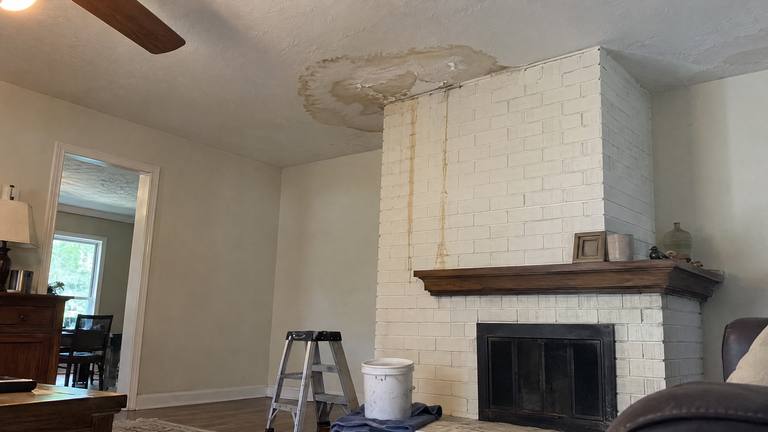
It can. A flat or rusted top holds water that runs down the pipe into the house, so we check the top, the collar and the siding joints and tell you which one is leaking. If the stain keeps growing, call (904) 920-5495 for the earliest open visit.
Can the new cover match my trim color?
Yes, several metals come painted or powder-coated. We choose the metal for durability first, then match the color you want.
Common Problems
When a chase top starts to fail
Rust streaks running down the siding
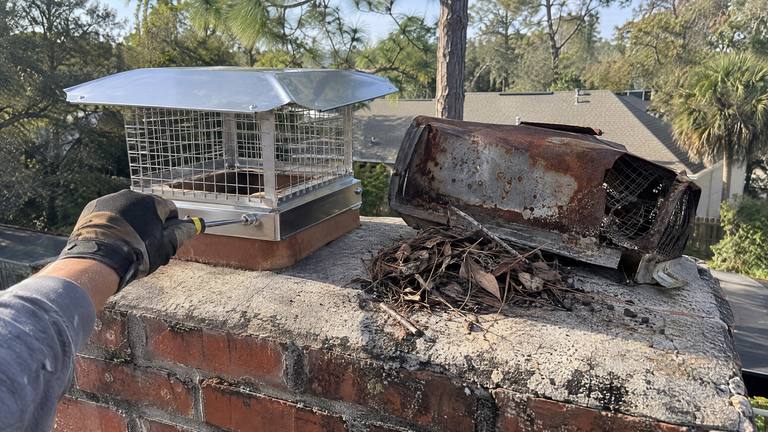
The chase top has lost its coating and is rusting through. A new top in heavier metal, sloped to drain, stops it.
Rain standing on the chase top
A flat, thin sheet sags and holds water. The new cover gets cross-breaks or a pitch so rain runs to the edges.
Ceiling stain near the fireplace
Water getting past the top can follow the pipe down. We check the cover, the collar and the siding joints and show you which one leaks.
Rust flakes inside a metal firebox
Water is dripping down the chimney pipe. The collar and storm collar are rebuilt along with the new top.
Soft wood under the old cover
The leak has reached the framing. It goes on the estimate as chase repair, priced apart from the cover.
Specialized Services
Chase framing and siding repair
Our Services
Other help for the top of the chimney
-
-
-


Get a free chase cover check
We send a local pro to measure the chase and check the wood under the old top, with the price written before ordering.
Free InspectionFull service details
Which chimneys have a chase cover
A factory-built fireplace vents through a metal chimney pipe listed for use with it, usually from the same maker. UL 127 is the standard those fireplaces are tested to, and UL 103 covers factory-built chimneys. Where the pipe runs up the outside of the house or above the roof, it is boxed in by a framed chase finished to match the walls, and the chase cover is the metal roof over that box, with a raised collar where the pipe passes through.
Chase top, chase cap and chimney chase cap are other names for it, so a call about chase cap replacement is this same job. Brick and block chimneys have a crown and a flue cap instead, and our guide on chase cover vs chimney cap shows how to tell them apart from the yard.
The fireplace manual sets the chase top
One major maker's manual says a chase installation must use a chase top, that it may be field constructed, and that it needs a turndown with a drip edge so water cannot seep into the chase. The same page calls for a 2-inch soldered, welded or spun collar around the pipe opening, a 1/8-inch gap around the pipe, a slope away from the opening of at least 1/4 inch per foot, and caulk on every seam.
The details change from model to model, so we ask for the model plate or manual before measuring, and each custom chase cover we make follows the instructions for your fireplace.
Why flat chase tops rust through
A top cut flat from light galvanized sheet sags between its edges, and the low spot holds water after rain. The zinc under that puddle is used up long before the rest of the top. Pinholes and open rust follow, and the water that gets through lands on the framing, the chimney pipe and the top of the fireplace. Rust streaks on the siding, a ceiling stain near the fireplace or a musty smell after rain is usually the first sign.
Collar, storm collar and the gap left open
Each pipe gets a raised collar so water on the top has to climb before it reaches the opening, and a storm collar clamps around the pipe above it, sealed where the maker says to seal it. The same manual warns in capital letters against caulking the pipe to the chase top collar, because the pipe has to keep its air space and move with heat, and some terminations have air openings marked do not seal.
The listed termination cap goes back on over the new top, or is replaced with the maker's part for that model. Its height stays as the manuals set it, at least 3 feet above the roof and 2 feet above any roof within 10 feet.
Choosing the metal for a chase top
A stainless steel chase cover in a heavier gauge holds its shape and resists pitting. The International Molybdenum Association's guide to exterior stainless steel scores horizontal surfaces and sheltered crevices as higher risk than surfaces rain washes clean, with distance from salt water as a separate factor, so the grade is chosen for the house and named in writing. Copper needs copper or stainless fasteners so it does not attack the steel it touches. A painted or powder-coated color is a finish, and the metal under it sets the lifespan.
Two pipes, wet framing and the estimate
When a chase carries a second pipe, each one gets its own collar and storm collar, laid out from the measured center of each pipe. One maker suggests at least 24 inches between terminations and an 18-inch difference in height, and we point it out if an existing pair sits closer.
Soft top plates, swollen trim or wet sheathing under the old cover are chimney chase repair, priced apart from the cover. Inside the chase, the air space the manual requires around the pipe stays clear; one manual calls for 2 inches to insulation and other combustibles.
Call (904) 920-5495 or book a free inspection of your chase top online.
Guides
Chimney and fireplace guides
- Why chase covers are priced to measureA chase cover is bent to the box it sits on and fitted to the pipe that passes through it, so every measurement shows up in the price.
- Chase cover vs chimney cap: which one your roof hasOne closes the framed box around a metal chimney; the other covers a flue opening.
- Getting a chimney ready before hurricane seasonWind and driven rain go after loose parts at the top, cracks, and the joint with the roof. The spring checks, and what to do once a storm is forecast.
- Where a rust streak on a chimney startsA rust streak starts just under a part that is corroding. Tracing it up, and choosing a replacement metal that suits the exposure.
- How salt air corrodes chimney metal and masonryChlorides from sea spray use up zinc, pit stainless and crystallize in brick. Which metals hold up near the water, and a routine that catches corrosion early.