
Local Chimney Repair Company Serving Jacksonville
Leaks, cracked crowns, loose brick and rusted caps, fixed by one local family-owned crew. Start with a free inspection.
- Fully licensed and insured
- Locally owned
- Family owned and operated
- Same-day service
Get Your Free Inspection
Get a quote for chimney and fireplace repair and installation in Jacksonville.
Request received
Thank you. We will call you shortly to set a time.
Quicker by phone? Call (904) 920-5495
Why choose us
Family owned and locally owned, we send one crew for the crown, flashing, brick, cap and liner, so a single estimate covers the whole chimney instead of three trades. The price is on paper before we start, a repair you approve in the three days after the inspection is 10% off, and every repair carries our workmanship warranty and a 100% satisfaction guarantee. Call (904) 920-5495 to book the free inspection.
Why homeowners call the local chimney and fireplace pros for repairs
- Locally owned in Jacksonville
- Family owned and operated
- 100% satisfaction guaranteed
- Free inspection and estimate
- Same-day service available
- 10% off any service
- Family owned and operatedThe family-owned crew that inspects your chimney is the one that comes back to repair it.
- Upfront pricing, no hidden feesEvery repair line has its price in writing before we start, listed in the order it matters.
- 100% satisfaction guaranteedIf a finished repair is not right, tell us and we come back to fix it.
What's included with chimney repair
Chimney repair covers every part of a chimney, from the crown and cap on top to the flashing, brick and flue liner. We are a local, family-owned company, and our chimney pros find the part that actually failed during a free inspection, then fix that first, so you pay for the repair your chimney needs and nothing else.
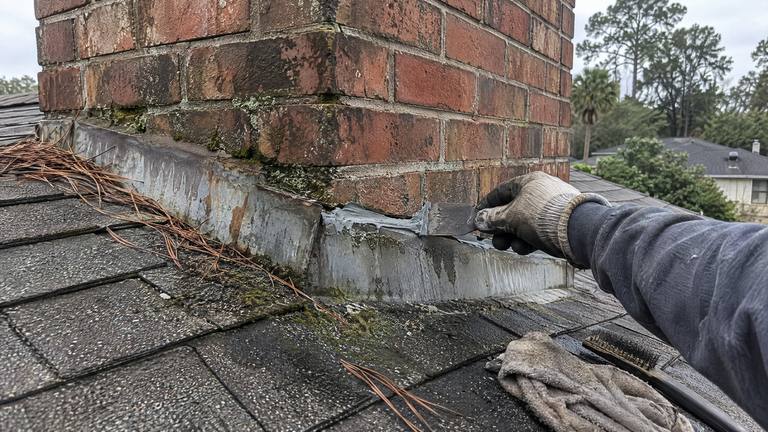
- Leaks stopped at the crown, flashing or brick where they start
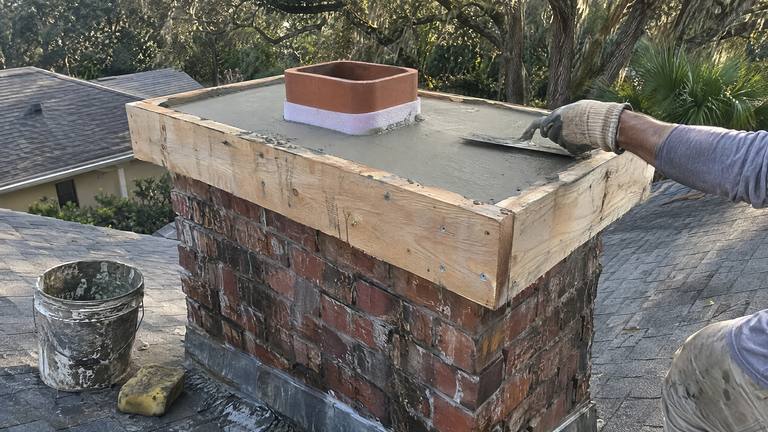
- Cracked crowns sealed or cast new so rain runs off
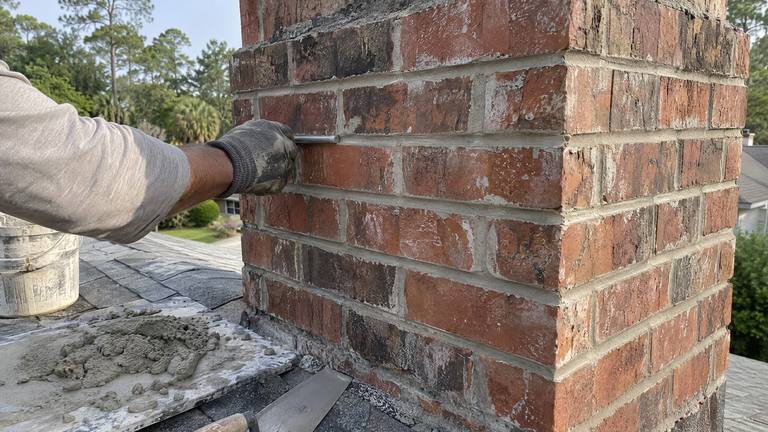
- Open mortar joints repointed and broken brick swapped out
- Rusted or missing caps and chase covers replaced
- Cracked flue tiles and smoke chamber gaps repaired
- Nests pulled out and the chimney top closed off
Chimney repairs up close

Chimney repair, from the first check to cleanup
-
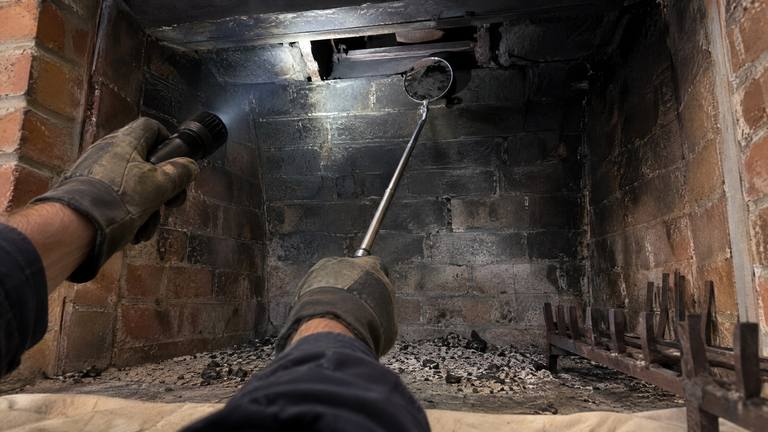
Whole chimney checked, firebox to cap
Every part of the chimney is checked on a free visit, and each defect is named by the job it breaks.
-
Repairs ranked by urgency
Heat and smoke faults come first, then water, then movement, then wear, each with its own price.
-
Failed part fixed with named materials
We bring the mortar, concrete and metal listed on your estimate, so what goes on the chimney is what you approved.
-
Work shown, site cleaned
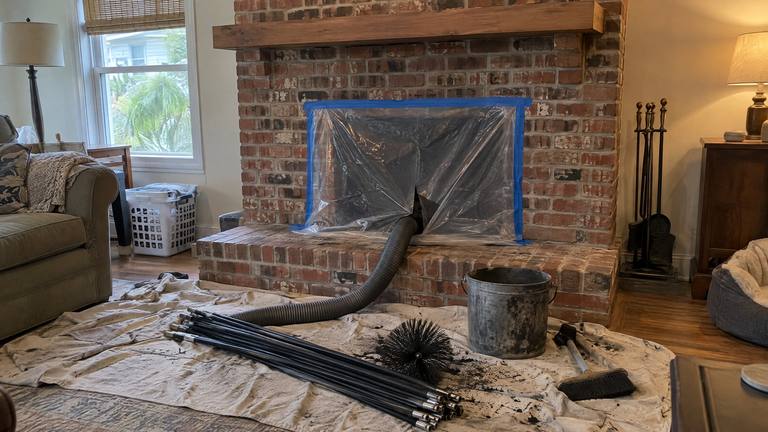
We clean up, show you each repair and note anything worth watching at the yearly check.
10% off any service booked within 72 hours of inspection
Whatever the repair turns out to be, from one open joint to a new crown, the discount applies.
Repair it now, later or rebuild?
Not every defect needs fixing the same week. The estimate sorts them so you can see what is urgent and what can wait.


Materials behind a lasting chimney repair
- Mortar matched to the job
- The mortar type is named on the estimate for every joint we repoint or brick we relay.
- Cast or precast crown
- Pitched to shed water, with a drip edge and a sealed joint at each flue, as FBC R1003.9.1 asks.
- Stainless or copper flashing
- Set with counter flashing into the brick, in a metal that suits the roof.
- Stainless steel cap and screen
- Measured to the flue tile, with a screen whose free area meets FBC R1003.9.2.
- Parging for the smoke chamber
- Troweled over the stepped brick above the damper so gases move straight up.
What decides the price of a chimney repair
How many parts failed
One crown coating is a small job. A crown, flashing and repointing together add up.
Where on the stack
Work at the top of a tall chimney on a steep roof takes staging and more time.
Coat, patch or replace
A crown that takes a coating or flashing that takes a reseal costs less than a new pour or new metal.
Permits
Where the building department needs a permit for a line, it is noted beside that line.
What sits under the old work
Loose brick under a crown or rotted wood under flashing can show once the old part comes off, and it is priced before we go on.
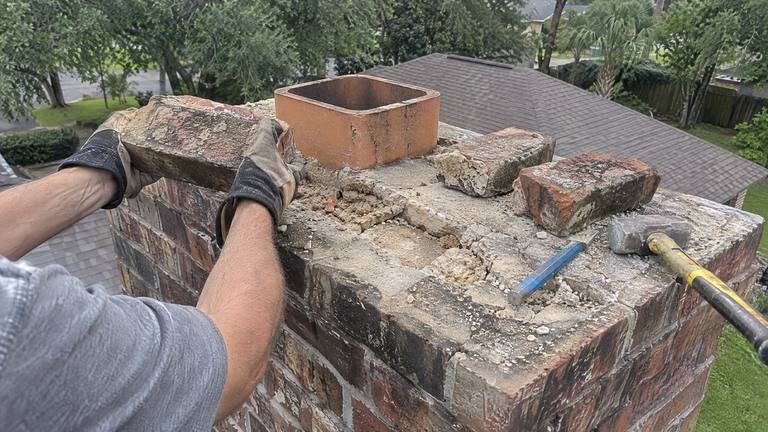
Crown, masonry, leak and rebuild work
-
-
-
-


How weather affects the repair plan
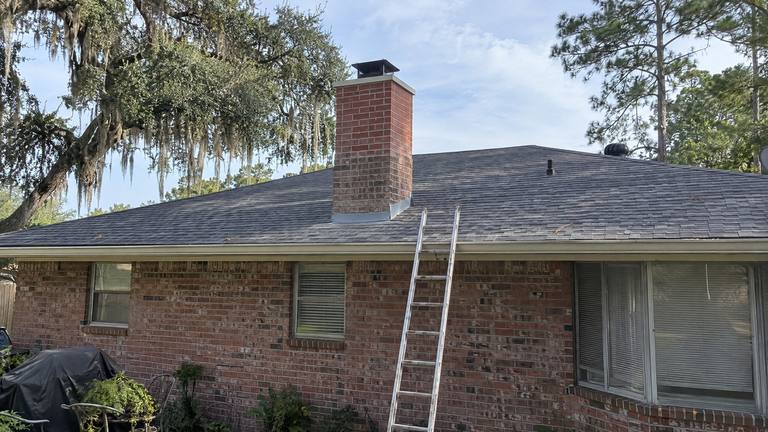
The chimney's exposure helps explain which parts wear first. We check the crown and flashing for water entry and the exposed metal for corrosion, then relate those findings to the problem you have noticed.
Salt exposure can affect caps, chase covers and flashing metal. Wind-driven rain can reveal openings at the crown and roof joint, while a displaced cap or loosened upper brickwork calls for storm damage chimney repair. The proposed work follows the damage found at your home.
What we check on a free repair visit
- Each defect named, with where it sits on the stack and why it failed
- The water path behind any leak, from where it gets in to where it shows
- Materials by name: mortar type, crown build, flashing metal, cap metal
- Which items keep the fireplace out of service until they are fixed
- Work outside our scope, such as roof covering or gas supply, and who does it
- Access needs: roof pitch, ladders or staging, and how the room is protected
- Whether the building department needs a permit for any line
- Our workmanship warranty terms, written against each repair line
Chimney repair questions
Can someone look at my chimney today?
Same-day service is available when the schedule and the weather allow, and you get a real arrival window when you call (904) 920-5495. If water is coming in right now, use the 24/7 emergency line.
Is your estimate really free?
Yes. We look at the chimney, show you what failed and hand you a written price, and neither the inspection nor the estimate costs anything. That price holds for the work on it, with no hidden fees.
What information helps you plan my repair visit?
Give us your Jacksonville property address and explain what changed: a leak, loose masonry, a damaged cap or another concern. We will confirm availability and arrange the inspection around the problem you have described.
What happens once you are on the roof?
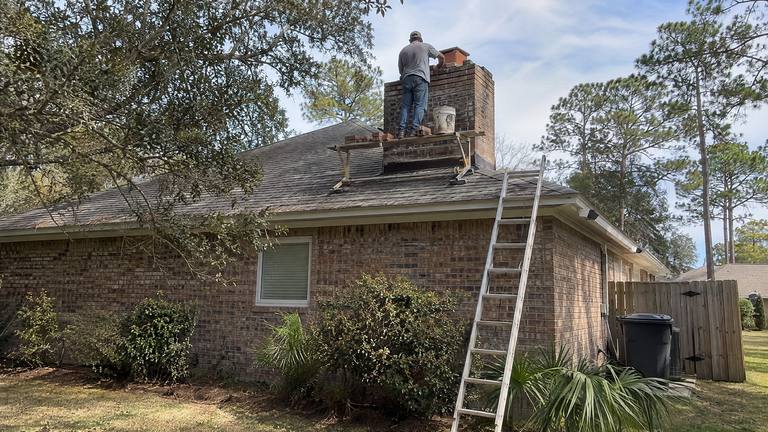
We check the chimney from the firebox to the top of the flue, tell you what failed and why, and write the fixes in the order they matter. Nothing starts until you approve the price.
One company for the whole chimney, or several trades?
One. We are the chimney repair contractor for the crown, flashing, brick, cap, liner and smoke chamber alike, so a single family crew runs the job start to finish. Roofing beyond the flashing goes to a roofer we name in writing.
Does the 10% off cover a repair?
Yes. Any service you book in the 72 hours after your free inspection is 10% off, repairs included. Every repair also carries our workmanship warranty and a 100% satisfaction guarantee.
Chimney damage homeowners spot first
Stain on the ceiling after rain
Water is getting in at the crown, flashing, brick or cap. We trace it to the part that failed before pricing anything.
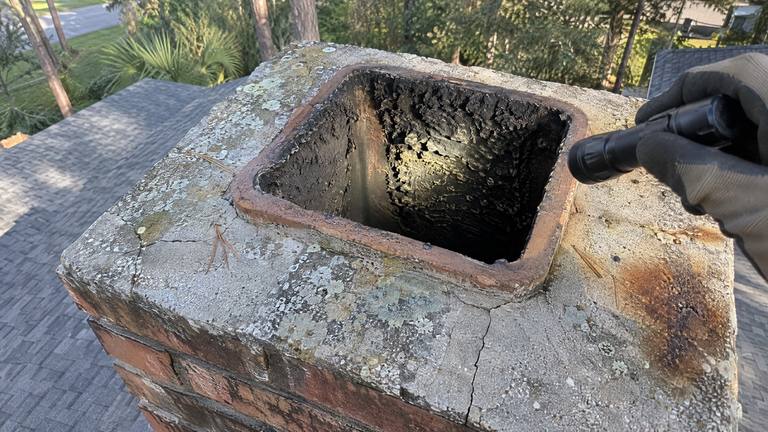
Cracked or crumbling crown on top
The slab that sheds rain has failed. A sound crown gets a coating, and a broken one gets a new pour.
Open mortar joints or flaking brick
Water is working into the faces of the chimney. Joints are repointed and broken brick is swapped for sound units.
Rusted, bent or missing cap
Rain and animals can get into the flue. A new cap is measured to the tile and fastened for wind.
Smoke rolling out of the fireplace opening
Chimney height, flue size, a clogged screen or a rough smoke chamber can each cause it. We measure and write down which one.
A leaning top or stair-step cracks
The chimney may be moving on its footing. We tell you if it is a repair or a rebuild, and why.
Your free chimney repair inspection starts here
Our family-owned chimney experts find what failed, write it down in order and price each fix before starting.
Free InspectionFull service details
What a chimney has to do
A chimney does five separate jobs. It sheds rain, holds the heat of a fire away from the framing, carries smoke out with enough draft, moves on its own footing without tearing the roof, and keeps animals and debris out of the flue. The crown, cap, flashing and brick faces shed water. The flue liner, the smoke chamber and the air space around the masonry handle heat. Flue size and height set the draft, and the footing and the gap at the roof deck let the chimney move.
Good chimney damage repair starts by naming which of those jobs broke, and it is a fair question to put to anyone you are comparing: which job failed, and how do you know?
Water, heat and draft
The residential code (FBC R1003.9.1) wants a masonry chimney topped with concrete, metal or stone, pitched to shed rain, with a drip edge and a sealed flexible joint at each flue liner. A thin mortar wash cracks and moves the damage into the brick below, which is chimney crown repair. Flashing seals the roof line, and a stain inside is where chimney leak repair and its water testing start.
R1003.11 says masonry chimneys shall be lined to suit the appliance, and R1003.18 calls for a 2-inch airspace between the interior of a masonry chimney and combustible material, which we check from the attic. Below the liner, smoke chamber repair parges the stepped brick smooth so gases move straight up, and a fireplace and chimney repair visit covers the parts you reach from the room as well as what shows above the roof.
Under R1003.9, a chimney has to stand 3 feet above its roof penetration and 2 feet above anything within 10 feet. An addition or a steeper new roof can leave an older chimney short, and a flue sized wrong for the fire drafts poorly, so we write down the flue size, the opening and the heights.
Movement, animals and storm damage
A masonry chimney sits on its own footing under FBC Residential R1001.2, while the wood-framed house around it shrinks and settles. Cracks that follow the mortar and hold their width can be old movement that has stopped. Cracks through the brick, cracks that grow or a lean point to the footing or the ties, and may belong under chimney rebuild.
A screened cap keeps birds, animals and debris out, and where the screen is a spark arrestor, R1003.9.2 sets its net free area at no less than four times that of the flue outlet. Some birds that nest in chimneys are protected by federal law while eggs or young are present. A cap thrown off or brick knocked loose in a storm is storm damage chimney repair.
Which repair comes first, and other trades
With more than one problem, heat and smoke faults come first because they can put fire or carbon monoxide where they do not belong, and the fireplace stays out of service until they are fixed. Water entry comes second, movement third unless it is active, and worn parts last. The aim is to fix a chimney once, with the smallest repair that holds on each line.
Chimney and roof repair meet at the flashing. A roofer handles roof covering beyond the flashing detail, a gas contractor handles gas supply and an electrician handles wiring, and our chimney repair services stop where those trades begin. When a chimney needs several of these fixes, carried out in order, the job becomes a chimney restoration, priced line by line. A repaired chimney still gets its yearly NFPA 211 check, and water pouring in after hours goes to the emergency chimney repair line.
Whatever you are seeing on your chimney, call (904) 920-5495 or book a free inspection online.
Chimney and fireplace guides
-
-
-
-
-
-


Chimney Repair by Town
- American Beach
- Arlington
- Atlantic Beach
- Avondale
- Baldwin
- Bayard
- Bellair-Meadowbrook Terrace
- Brentwood
- Brooklyn
- Bryceville
- Callahan
- Clay Hill
- Crawford
- Doctors Inlet
- Fernandina Beach
- Fleming Island
- Fruit Cove
- Garden City
- Green Cove Springs
- Hilliard
- Jacksonville Beach
- Julington Creek Plantation
- Keystone Heights
- Kings Ferry
- Lake Asbury
- Lake Geneva
- Lake Shore
- Lakeside
- Mandarin
- Mayport
- Middleburg
- Murray Hill
- Nassau Village-Ratliff
- Nassauville
- Neptune Beach
- Nocatee
- Northside
- O'Neil
- Oakleaf Plantation
- Oceanway
- Orange Park
- Ortega
- Palm Valley
- Panama Park
- Penney Farms
- Ponte Vedra Beach
- Riverside
- San Jose
- San Marco
- Sandalwood
- Sawgrass
- Springfield
- St. Nicholas
- Sunbeam
- Switzerland
- Tallulah-North Shore
- Yulee