Chimney warning signs you can check from the yard, the attic and the hearth
Start in the yard, finish at the hearth. Each sign points to a part, and a few of them take the fireplace out of use.
- Family owned and operated
- Free inspection and estimate
- Same-day service available
- Upfront pricing, no hidden fees
Get Your Free Inspection
Get a quote for chimney and fireplace repair and installation in Jacksonville.
Request received
Thank you. We will call you shortly to set a time.
or call (904) 920-5495
In short
The signs your chimney needs repair are stains on walls or ceilings near the stack, cracked or crumbling crown concrete, open or sandy mortar joints, flaking brick faces, lifted or tar-covered flashing, and rust on the damper or chase. Smoke entering the room, chips of flue tile in the firebox, gaps in the firebox mortar or a leaning stack mean stop using the fireplace until it is checked.
Looking without climbing
Knowing how to tell if your chimney needs repair starts with what you can see without setting foot on the roof. A pair of binoculars, a flashlight and a walk around the house, the attic and the fireplace cover most of what a homeowner can see. Leave the roof itself to someone equipped for it: roof edges, wet shingle and loose tile are where falls happen.
What you see is only part of the picture. The national chimney standard, NFPA 211, sets a yearly inspection of the whole system for that reason: parts that fail can sit inside the flue and the smoke chamber, out of sight. The signs below tell you when to call before that yearly check comes around.
From the yard: the outside of the stack
Stand back far enough to see the whole chimney, then walk around it. Look at each face, the top, and the place where it meets the roof and the wall of the house.
- A lean, or daylight showing where the chimney meets the house wall
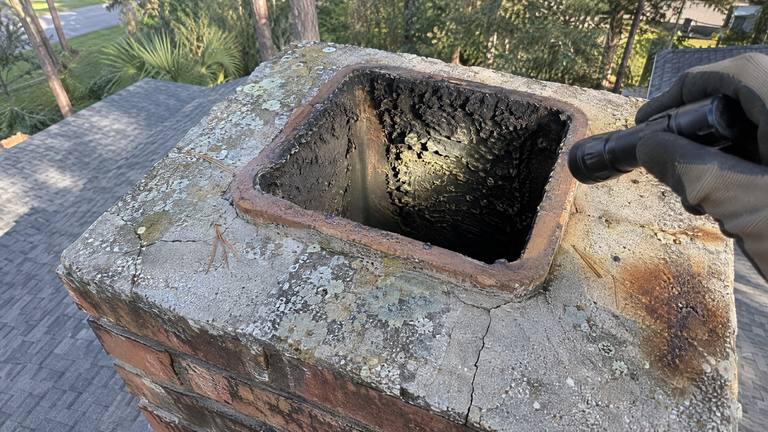
- Cracks that step up through the mortar joints, or cracks running through the brick itself
- Brick faces flaking, popping off or crumbling, especially in the top few courses
- A crown with dark crack lines, missing corners or no overhang past the brick
- A cap that is missing, tilted or rusted through
- White crusty deposits on the brick, or dark patches that stay damp after rain
- Rust streaks running down the siding of a framed chase
- Plants or moss growing from the joints or the top of the chimney
What the outside signs point to
Several of these chimney damage signs are water signs. Flaking faces, white deposits, damp patches and rust streaks all mean water is getting into the masonry or through a metal part. The crown and the flashing are the first places to suspect, and the longer water keeps getting in, the more brick and mortar it takes with it.
Cracks and leans are different. A stair-step crack that stays the same width over months can be old settlement. A crack that widens, runs through the bricks rather than around them, or comes with a gap at the house wall suggests the chimney is moving on its footing or pulling away from its ties. That is structural, and it deserves a look soon, before a storm tests it.
At the roof edge and in the attic
From the ground, the flashing at the roof line should look like neat metal lying flat against the brick and the roofing. Thick beads of caulk, smears of black roof cement, lifted edges and rusty metal all mean the joint has failed or been patched.
The attic can tell you more than the yard. With a flashlight, look at the rafters and roof decking around the chimney for dark streaks or soft wood, at the chimney brick for damp rings or white crust, and at the insulation around it for wet or matted patches. Also look at the gap between the chimney and the framing: inside the house, the code (R1003.18) keeps wood and other combustibles 2 inches off the brick, so framing or insulation packed tight against it is worth pointing out.
In the room and the firebox
Inside the house, look at the chimney breast and the ceiling around it for stains, bubbling paint or a damp smell that comes and goes with the rain. Then open the damper and check the throat and the firebox with a light.
- Rust on the damper plate or frame, or a damper that sticks
- Gaps where mortar has fallen out between the firebricks, or cracked firebrick
- Chips of clay tile, mortar or brick lying on the hearth or the smoke shelf
- Water on the firebox floor after rain
- Smoke that drifts into the room during a fire instead of rising
- A strong smoke smell in the room when the fireplace has not been used
Signs that mean the fireplace stays cold
Some signs point to a chimney that may no longer keep heat and smoke where they belong, and those end fires in that fireplace until the chimney has had a professional look. Chips of clay flue tile in the firebox suggest a cracked liner. Gaps in the firebox mortar let heat into the masonry behind it.
Smoke spilling into the room means the flue is not carrying gases out as it should. A carbon monoxide alarm that sounds is a different matter: get everyone outside and call 911 before anything else. A leaning stack or a chimney pulling away from the house is structural.
A chimney fire belongs on this list too, even one that burned out by itself. The chimney standard treats a fire in the flue as an event that calls for a closer look before the next use, because it can crack tiles and open joints that cannot be seen from the room.
Signs that mean fix soon, not tonight
Water signs are worth acting on within weeks, not months, because water keeps working inside masonry after the stain dries. A cracked crown, failed flashing, white deposits, rust streaks, flaking faces and a stain that appears with rain all belong here. None of them alone makes the fireplace unsafe to use, but each one grows.
The exception is water that is coming in fast or pooling near electrical fixtures. Keep people clear of the wet fixture, and if there are sparks or a burning smell, leave the house and call 911. Otherwise it is a call to make the same day, which is what an emergency line is for.
A few things look alarming without being repair signs by themselves: a dark soot line around the top of the flue, a patch of mortar in a different color where an earlier repair was done, or brick that is simply dirty. Note them anyway. Whoever checks the chimney can tell you quickly whether they matter, and a sign that proves harmless still helps build the picture.
What to note before you call
A good description saves time on the visit. Write down which signs you saw and where, whether they appear only after rain and from which direction, whether the fireplace burns wood or gas, and when the chimney was last checked or repaired. If you have the paperwork from a home inspection, keep it handy.
The person who comes out should explain what each sign means on your chimney and write down the cause and the fix, not just the symptom. A sign is where the diagnosis starts; the repair belongs to the part that failed.
FAQ
Frequently asked questions
Can a chimney look fine from outside and still need repair?
Yes. The liner, the smoke chamber and the clearances around the chimney sit out of sight from the yard and the room. Those hidden parts are why NFPA 211 schedules an inspection every year, even on a chimney with no visible signs.
Is white residue on the brick a problem?
White residue is salt left behind by water moving through the masonry. The residue itself does little harm, but it tells you water is getting in and drying out through the brick, and that water is worth tracing to its source.
Is a hairline crack in the crown urgent?
Not as an emergency, but it is worth dealing with before it widens. Water that gets through a crown crack runs down inside the chimney, and a crown with fine cracks can be sealed instead of replaced if it is caught early.
Do these signs matter on a chimney that vents a gas fireplace?
Yes. The crown, the brick and the flashing take the same weather regardless of what burns below. A gas appliance also needs a sound, correctly sized flue, so fumes in the room mean shutting it off and having the flue checked. A sounding CO alarm or a gas smell means everyone goes outside first, then someone calls 911 or the gas utility.
Should I seal small cracks myself?
Caulk or roof cement over a crack can hide it without fixing the cause, and it makes the next diagnosis harder. It is better to note the crack, watch whether it grows, and get a professional diagnosis so the repair fits what actually failed.

Proudly American
A family business that answers its own phone.
Our Services
Related services

Guides
Chimney and fireplace guides
-
-
-


Call your local chimney team
One call gets you a time slot and a free inspection. No pressure to decide on the day.
Free Inspection