Where chimney and fireplace odors come from
The smell is air from the chimney arriving in the room. Find what that air passed over, and you have the fix.
- Family owned and operated
- Free inspection and estimate
- Same-day service available
- Upfront pricing, no hidden fees
Get Your Free Inspection
Get a quote for chimney and fireplace repair and installation in Jacksonville.
Request received
Thank you. We will call you shortly to set a time.
or call (904) 920-5495
In short
Odors from a fireplace come from air moving down the flue and carrying the smell of what is inside the chimney into the room. The sources are creosote and soot, which smell stronger in damp weather, wet masonry and rotting debris, and nesting material or animals. The fix matches the source, from a sweep to a cap, a top-sealing damper or a leak repair.
First, rule out the smells that are emergencies
A few odors near a fireplace are not about the chimney's condition at all. At a rotten-egg smell near a gas unit, get out without touching switches and call the gas company, or 911, from outside. A smoke smell coming from a wall, a ceiling or a room above the fireplace, rather than from the opening itself, can mean a hidden fire or a cracked flue, and it calls for getting out and calling 911. A hot electrical or burning-plastic smell from an electric fireplace means switch it off at the wall and leave it off.
A sounding carbon monoxide alarm, at any point, means getting everyone outside to fresh air and calling 911 before anything else. Everything below is about the everyday odors that are unpleasant but not dangerous, and that point to something in the chimney that can be fixed.
Why the smell comes into the room at all
A chimney with no fire in it is an open pipe between the room and the outside. Air moves through it whichever way the pressure pushes, and when the house is under slight negative pressure, air sinks through the flue into the room, bringing the smell of the flue with it. Exhaust fans, a kitchen hood, a clothes dryer and leaky return ductwork on an air conditioning system can all pull a house negative. So can wind blowing across the chimney top.
So a fireplace can smell worst when nobody has used it for weeks, and the smell can come and go with the fans and the weather. A quick test is to close the damper and see whether the smell fades over a day, then run the kitchen hood and see whether it returns. If the damper makes a difference, air movement is part of the story, whatever the source proves to be.
Creosote and soot: the sharp, smoky smell
Creosote is what wood smoke deposits on the inside of the flue, and it has a strong, tarry, smoky smell like an old campfire. The deposit takes on moisture from damp air, and the odor gets noticeably stronger in warm, damp weather even when the fireplace has not been used for months. Soot on the smoke shelf and the damper adds to it.
A sweep removes soot and the lighter forms of creosote from the flue, the smoke chamber, the smoke shelf and the damper, and when deposits are the source, that can take the smell down to almost nothing. Hard, glazed creosote does not brush off and holds odor, so it needs a separate removal process. Ash left in the firebox also smells, so shovel cold ashes into a covered metal can and take it outside.
Damp masonry and debris: the musty fireplace smell
A musty, damp-closet smell points to water. Rain that gets past a missing or damaged cap, a cracked crown, failed flashing or porous brick soaks the masonry and the smoke chamber. Leaves and twigs that fall down an uncapped flue collect on the smoke shelf and rot there. A damper that has rusted adds a metallic note to the smell.
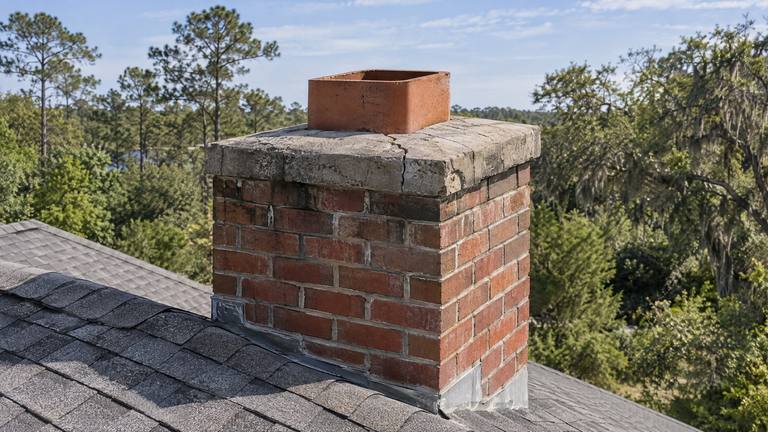
Stopping the water is the repair; covering the smell is not. A cap keeps rain and debris out of the flue. A cracked crown is sealed or recast, and flashing is reset or replaced. Once the leaks are closed, a vapor-permeable water repellent on the brick can cut down how much water the face absorbs. If you suspect mold in the house itself, that is a separate trade, and we stay with the water path that feeds it.
Animals and nests
Nesting material, droppings and feathers have a smell of their own, and an animal that has died in the flue or on the smoke shelf produces an odor that is hard to mistake and lingers until the remains are taken out. Scratching, chirping or fluttering sounds before the smell started are a strong clue.
Clearing the flue of the animal, the nest and the debris comes first, along with cleaning the smoke shelf. Some animals are protected by law. Chimney swifts are a protected migratory bird, so an active nest stays until the young have left, and Florida's wildlife rules bar excluding bats during their maternity season, so the timing of removal depends on what is in the flue. The lasting fix is a cap with a screen that keeps animals from getting back in.
Air down the flue: closing the path
When the source is mild but the air movement is strong, closing the flue is the most direct fix. A throat damper is a metal plate on a metal seat, and even a good one lets some air past. A top sealing damper shuts the flue at its upper end against a gasket, which stops far more of the air movement and keeps rain out of the flue as well.
If the house runs strongly negative, the real answer may be in the heating and cooling system, such as sealing leaky return ducts or adding makeup air for a large kitchen hood. That work belongs to a heating and cooling contractor, and we will say so when the tests point there. A vented gas log set in the fireplace changes the options, since its instructions require the damper to be held open.
Smells from a gas fireplace
Gas units bring a different set of odors. A new unit smells of curing paint for its first hours of use, and a unit that has sat idle smells of burning dust for its first minutes. A sooty or exhaust-like smell during a burn points to logs out of position, a dirty burner or a venting problem, and it needs service. Any rotten-egg smell is a possible leak, and our guide to a gas fireplace smells like gas explains the safety steps and how a leak differs from a new-unit smell.
What the odor visit covers
An odor call starts with questions about when the smell appears, what it smells like, and whether fans or the weather change it. On the visit, we examine the flue and the smoke shelf for deposits, debris and signs of animals, check the damper's seal, and trace the water path through the cap, crown and flashing. On a gas unit, we check the burner, the logs and the vent.
The written estimate names the source we found and the fix for it, whether that is a sweep, a cap, a damper, a crown or flashing repair, or a note that the answer lies with the house's air handling. We do not sell deodorizing treatments as a substitute for removing the source.
FAQ
Frequently asked questions
Why does the fireplace smell worse in summer, when it is warm and damp outside?
Creosote and soot deposits take on moisture from damp air, and their odor gets stronger when they do. Warm-weather use of air conditioning and exhaust fans can also draw air through the flue into the house. A sweep removes the deposits, and a well-sealed damper cuts the airflow.
Will a chimney sweep get rid of the smell?
If the smell comes from soot and creosote, a sweep takes the bulk of it away. If it comes from water, animals or glazed creosote, the sweep is only part of the fix, and the note from the visit says which source we found and what else it needs.
Can I spray air freshener into the fireplace?
It masks the smell for a while and leaves the source in place. Keep aerosol sprays away from any fireplace or gas unit that might be lit, since aerosol propellants can be flammable. Finding and removing the source is the fix that lasts, whether that turns up deposits, water or an animal.
Why does the room smell like a campfire the day after a fire?
As the chimney cools, air can drift down the flue and across the warm ashes, carrying the smell into the room. When the ashes are cold, close the damper and move the ashes to a covered metal can outside. If the smell stays strong, the flue may be carrying heavy deposits.
Is a musty chimney smell a sign of a leak?
Very possibly. A musty odor points to wet masonry, a soaked smoke shelf or debris rotting in the flue, and the water that causes it gets in through a missing cap, a cracked crown, failed flashing or porous brick, so finding the entry point comes before any cleaning.

Proudly American
Locally owned and operated in Jacksonville.
Guides
Chimney and fireplace guides
-
-
-


Call your local chimney team
One call gets you a time slot and a free inspection. No pressure to decide on the day.
Free Inspection