

Chimney and fireplace guides
Short, plain answers for homeowners. Each guide starts with the answer, then the detail.
- Family owned and operated
- Free inspection and estimate
- Same-day service available
- Upfront pricing, no hidden fees
Get Your Free Inspection
Get a quote for chimney and fireplace repair and installation in Jacksonville.
Request received
Thank you. We will call you shortly to set a time.
or call (904) 920-5495
Guides
All guides
Warning signs and problems
-
-
-


- Refractory panel cracks: what the manual tolerates and what it does notHairline, open, broken or crumbling: reading the panels inside a factory-built firebox.
- An electric fireplace that glows but will not heat: checks in orderFrom the outlet to the thermal cutoff, and the signs that mean stop.
- When the fireplace damper sticks, will not close or leaks airA safe way to check a throat damper, and what each finding means.
- Where chimney and fireplace odors come fromThe smell is air from the chimney arriving in the room. Find what that air passed over, and you have the fix.
- Why smoke spills out of the fireplaceSmoke in the room is a draft problem. The causes run from a half-open damper to a house that pulls air down the flue, and two of them you can test yourself.
- Blue, yellow, lazy or sooty: what a gas fireplace flame is telling youThe flames built into the design, and the ones that call for service.
- Why the pilot goes out, and what you can safely checkThe thermocouple, the flame that heats it, and the drafts and vents that interfere.
- When the gas fireplace will not turn onSafe checks in the right order, and the point where a homeowner stops.
- How to tell if a chimney is leaning, and why it movesA chimney that leans is moving, and the flue inside it moves too. The signs from the yard and the room, the causes, and what an evaluation records.
- Where a rust streak on a chimney startsA rust streak starts just under a part that is corroding. Tracing it up, and choosing a replacement metal that suits the exposure.
- How to tell a chimney is due for sweeping, from the firebox upThe flue shows its buildup in a few places you can check yourself, with the fire out and the ash cold.
- Chimney warning signs you can check from the yard, the attic and the hearthStart in the yard, finish at the hearth. Each sign points to a part, and a few of them take the fireplace out of use.
- Why chimney brick spalls, and how bad it isBrick can spall with no frost at all: water, salts, hard mortar, coatings and flue heat do the work. Judging the damage, and the order that fixes it.
- What goes wrong in a chimney nobody usesStopping fires does not stop the weather, the air or the animals. Ways to close an idle chimney off without trapping moisture inside.
- Why rainwater ends up in the fireboxWater reaches the firebox by a handful of routes, and the timing of the drip tells them apart.
- What white stains on chimney brick are telling youThe white powder is salt carried out by water. Telling it from other white marks, and finding the water.
- Why does my chimney leak? Follow the water back to where it got inSix entry points from the flue top down, and the clues that separate a chimney problem from a roof problem.
Costs and estimates
-
-
-
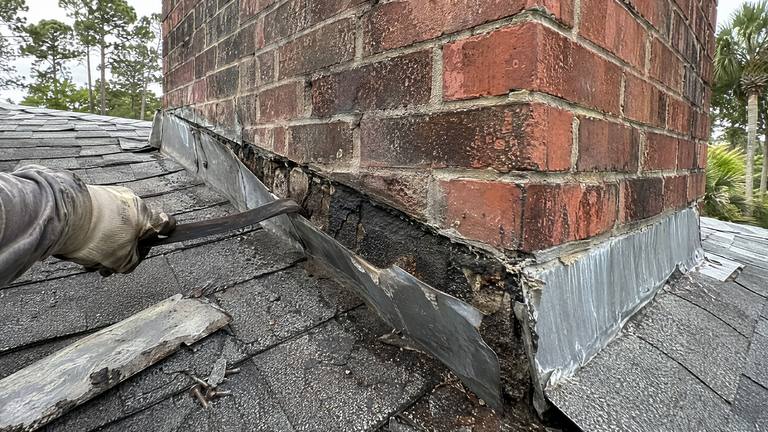


- Sealing a crown or casting a new oneA crown repair is really one of two different jobs. The cracks, the way the crown was built and what sits under it decide which one you are paying for.
- What you are paying for in a chimney inspectionAn inspection is time spent on the whole system, plus findings you can act on. Flues, appliances, access and deadlines stretch or shorten that time.
- The variables behind a relining quoteA liner is sized to the appliance first and fitted to the chimney second. Each of those steps adds work or takes it away.
- What moves the price of repointing and brick repair on a chimneyMasonry work is priced by how deep the damage runs, in the joints and in the brick itself.
- Where the teardown stops decides the size of a rebuildA rebuild is counted in courses of brick. The deeper the sound masonry sits, the bigger the job becomes.
- How a chimney repair gets sized, and what moves itFour things size every repair estimate: the failed part, the climb, the spread of water, and materials. The main repairs are ranked below.
- What changes the price of a chimney sweepA sweep is priced by what has built up inside the flue and the work it takes to get at it. The questions below size it before the visit.
- What you pay for when a chimney is waterproofedThe repellent is the quickest part of the work to describe and the last to happen. The prep before it is where most of the time goes.
- Four ways to add a fireplace, and what each one takesChoosing the type settles most of the work. Then the house decides the rest.
- Fireplace repairs, from the damper to a new fireboxDampers, firebrick, the smoke chamber and the hearth each wear out differently, and each takes a different kind of work.
- Logs, an insert or a new unit: sizing a gas fireplace jobThree gas options sit on one scale. The vent route, the gas line and the finish work then move each one along it.
- What a gas fireplace visit costs depends on what it findsA yearly service and a repair are two different visits. The part that failed, and whether it is still made, sets the second one.
Fire and gas safety
-
-
-
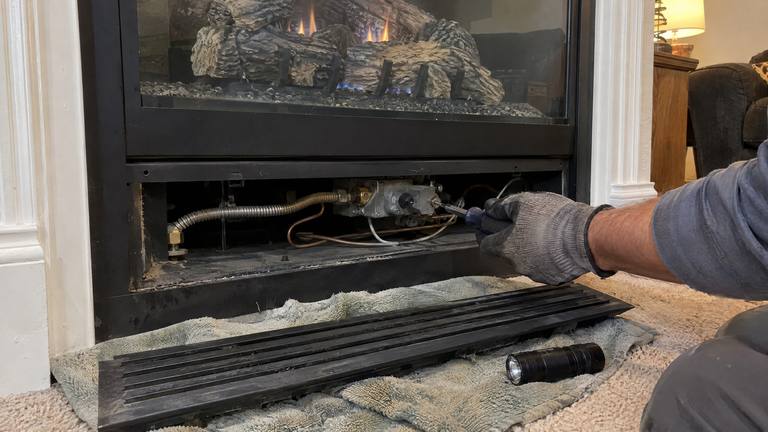


- Vent-free gas fireplaces: the safeguards, the limits and the trade-offsWhat keeps an unvented unit within safe bounds, and what does not.
- What to do during and after a chimney fireGet out and call 911 first. Everything else here, from the roar of a fire in progress to the flakes one leaves behind, comes after that.
- Using a fireplace safely at homeThe habits that keep a fire where it belongs, from the 3-foot zone to the ash can, and what changes with gas glass and small children.
Care and maintenance
- Choosing firewood that burns clean and dryA dry split of an ordinary tree outburns a wet one of a prized hardwood. Checking, storing and buying wood with that in mind.
- A yearly checklist for your chimney and fireplaceFour moments in the year carry this checklist. Much of it is looking, and a few items belong to a crew.
- Gas fireplace upkeep between service visitsThe owner keeps it clean, clear and powered; the yearly service handles the burner, the pilot and the gas. Your manual draws the line between them.
- How often a chimney needs sweeping, and why the inspection sets the paceThe standard puts the inspection on the calendar. Your wood, your fires and your flue decide the cleaning.
- Cleaning gas fireplace glass without scratching or cracking itCool glass, the right cleaner, and what the white film is telling you.
Choosing a repair or upgrade
-
-
-
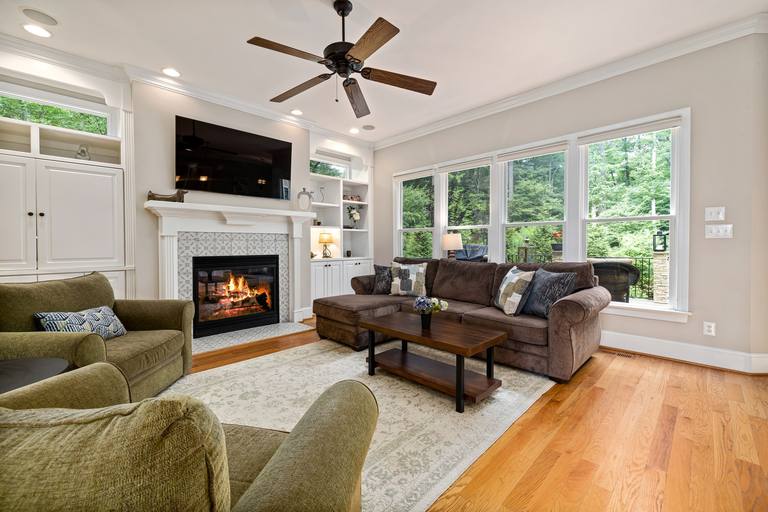


- Can a fireplace be added to the house you already own?The feasibility checks, in the order that settles them.
- Choosing who works on your chimney: the questions that matterA good chimney contractor can show you what they found and explain why the fix fits. These questions bring that out.
- Repair it or rebuild it: four tests for a damaged chimneyBoth answers are right for some chimneys. Four findings decide which one is right for yours.
- Vented or vent-free logs: look, heat, damper and room sizeTwo standards, two sets of rules, and what each means for your fireplace.
- Switching a wood fireplace to gas: log set or sealed insertA log set keeps the open fireplace; an insert seals it. Both start with a clean, sound chimney and a gas line run by the gas trade.
How chimneys and fireplaces work
- Chase cover vs chimney cap: which one your roof hasOne closes the framed box around a metal chimney; the other covers a flue opening.
- Chimney crown vs cap: two parts with two jobsThe slab across the top of the brick and the hood over the flue, and what goes wrong without either.
- Clay, stainless, aluminum or cast-in-place: choosing a flue linerFour liner types do the same job in different ways. The appliance decides which of them can do it in your chimney.
- Where the air comes from and where the exhaust goesSealed direct vent, natural-draft B-vent and vent-free units, compared part by part.
- Chimney anatomy: what each part does and how it failsA chimney is a set of parts with separate jobs. Knowing their names makes any estimate easier to read and to question.
- Factory-built or masonry: reading your fireplace from the firebox upFive places to look, and why the answer changes every repair.
- The smoke chamber and smoke shelf, explainedAbove the damper sits the part of a masonry fireplace nobody sees from the room. Its shape and its surface decide how cleanly smoke reaches the flue.
- Step, counter and apron: how chimney flashing keeps water outFlashing is two layers of metal that overlap without being joined. That unjoined overlap is the whole design.
- Creosote, from soft soot to hard glazeWood smoke leaves a coating in the flue that thickens from soot to glaze, and all of it burns.
- Tuckpointing and repointing, explained for chimney ownersTwo words for mortar work get used as one. What each really means, and the signs that chimney joints need attention.
Storms, rain and salt air
- Getting a chimney ready before hurricane seasonWind and driven rain go after loose parts at the top, cracks, and the joint with the roof. The spring checks, and what to do once a storm is forecast.
- How salt air corrodes chimney metal and masonryChlorides from sea spray use up zinc, pit stainless and crystallize in brick. Which metals hold up near the water, and a routine that catches corrosion early.
Building codes and permits
- How tall a chimney must be: the 3-2-10 rule explainedTwo measurements decide whether a masonry chimney is tall enough: how each is taken, and why a shortfall shows up at the firebox.
- Which chimney and fireplace jobs call for a permitFlorida law sets the rule and the local building department applies it, job by job, for chimney work.
- When the code requires a chimney liner, and when yours needs a new oneThe Florida Building Code settles the first question. Your appliance and the state of the old flue settle the second.
- How big and how thick a hearth extension has to beSections R1001.9, R1001.10 and R1004.2 of the residential code, with worked examples.
Buying or selling a home
- Checking the chimney before you close on a houseA general home inspection stops where the flue disappears from view. Getting the rest of the chimney checked, in writing, before the inspection period runs out.
- After the home inspector flags the chimneyA flag in the report names a symptom, not a cause. Reading its wording, and turning it into a scoped written estimate before the inspection period ends.
- Getting a fireplace and chimney ready for a saleA buyer's inspector will see the cap, the crown and the damper. Fix water and safety items first, and put the rest in writing.
Book your free inspection
Call or send the form. The inspection is free and the price is written down before any work.
Free Inspection