What you pay for when a chimney is waterproofed
The repellent is the quickest part of the work to describe and the last to happen. The prep before it is where most of the time goes.
- Family owned and operated
- Free inspection and estimate
- Same-day service available
- Upfront pricing, no hidden fees
Get Your Free Inspection
Get a quote for chimney and fireplace repair and installation in Jacksonville.
Request received
Thank you. We will call you shortly to set a time.
or call (904) 920-5495
In short
Surface area and preparation drive chimney waterproofing cost more than the product does. The crew measures how much masonry is treated, repairs open joints and cracks first, cleans the brick, lets it dry, and then applies a vapor-permeable repellent at the rate on its data sheet. A small, sound stack is the light end; a tall stack needing repairs first is the heavy end.
Measuring the job in square feet of masonry
Waterproofing is sized by the surface treated. The crew measures each face of the stack from the roof up and adds any faces below the roof that stand outside the house. A short stack on a single-story house is a small area. A tall, wide stack with two or three flues is a much larger one.
Area also sets the amount of product. Each repellent is applied at the coverage rate its data sheet gives, and porous brick takes more than dense brick, so two stacks of the same size can use different amounts.
How water gets into a sound-looking stack
Masonry is porous. Rain that hits a chimney face soaks in a short way and dries back out, and that cycle is normal for masonry. The trouble starts when wetting outruns drying: water reaches the inner face of the brick, the flue tile or nearby framing, and the salts it carries bloom on the surface as it dries.
A repellent slows the wetting so the drying can keep up. That is its whole job, and it explains why the product is the last step and not the first.
Faces below the roofline
On a chimney that runs up an outside wall, the faces below the roofline take weather too, and they can be the faces behind a stain indoors. Whether those faces are included changes the area a great deal, so the faces to be treated are listed, with the reason for each.
Light, medium and heavy waterproofing jobs
Ordered by how much work each takes:
- A small stack with sound joints, cleaned and treated in one visit.
- A larger or multi-flue stack with sound masonry.
- A stack needing a few joints repointed, with a cure period before treatment.
- A stack with spalled brick, open joints and crown work ahead of the treatment.
- A stack with an old film coating that has to come off before a repellent can go on.
- A tall stack on a steep roof, with the faces below the roofline included.
Repairs come before repellent
A water repellent does not fill gaps. It lines the pores of sound brick and mortar so liquid water beads on the surface instead of soaking in, while water vapor can still pass out. Open joints, cracked brick and a failed crown let water straight past it.
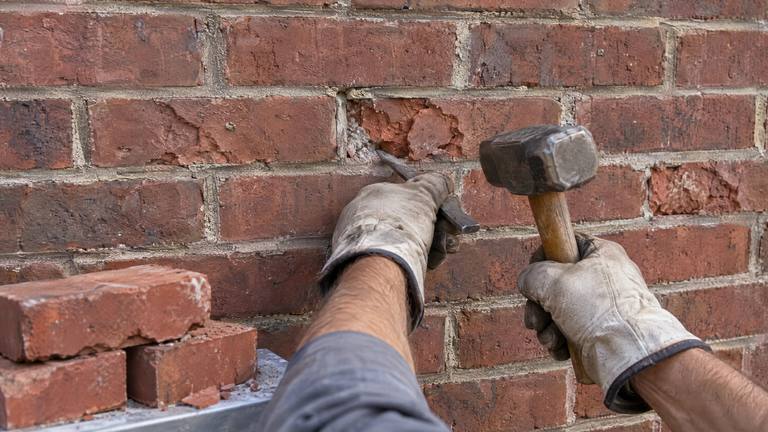
So a waterproofing estimate starts with the repairs that have to come first: repointing open joints, replacing spalled brick, sealing or recasting the crown and resetting flashing. Those are separate lines, and on a neglected chimney they can outweigh the treatment itself. New mortar also needs time to cure, and the repellent's data sheet says how long before it can be treated.
Cleaning and drying time
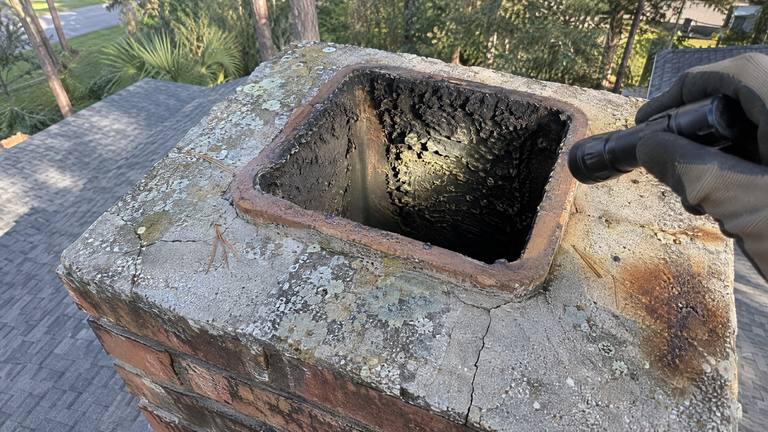
Repellent goes onto clean, dry masonry. Dirt, growth, efflorescence and old coatings come off first, using methods chosen for the brick so the face is not damaged. Efflorescence, the white salt bloom, shows that water is moving through the brick, so its source is found before any treatment.
Then the masonry has to dry, to the degree the data sheet sets. Brick that is still wet from washing or rain will not take the product evenly. That wait is why a waterproofing job can split across two visits, one to clean and repair and one to treat.
Repellent or sealer: why the product type matters
Two kinds of product get sold as waterproofing. A vapor-permeable repellent, silane or siloxane based, soaks into the masonry and lets it breathe. A film-forming sealer, like a paint or a clear coat, sits on the surface and can trap moisture behind it. A quote for chimney sealing cost can mean either product, so ask which one is priced.
Trapped moisture is what pops the faces off brick, so a film sealer is the wrong product for a chimney that has to dry outward. The product is a small share of the work next to the prep, but picking the wrong one can cost you the brick.
Paints, elastomeric coatings and film-forming anti-graffiti coatings belong to the same family. They have uses on other surfaces, but on a chimney they turn masonry that could dry into masonry that holds water.
What waterproofing leaves to other lines
The crown, the flashing and the flue opening are not protected by a masonry repellent. A crown needs a crown coating or a recast, flashing gets metal work, and the flue gets a cap, each priced apart from the repellent. Interior damage from past leaks is separate too. Stained drywall or wet framing near the chimney belongs to the trade that repairs those surfaces, once the water has been stopped.
Access, height and overspray
Treatment goes on every exposed face, by low-pressure sprayer or brush as the data sheet directs, which means reaching every face. A stack on a steep or tall roof takes staging, and faces above a lower roof or a porch need separate setup.
Overspray matters as well. Windows, siding, roofing and plants near the chimney are covered, and a calm, dry day is picked so the product lands only where it should. Some products also list temperature limits for application on their data sheet, and the crew checks those against the day.
Reading a waterproofing quote
Look for the treated area by face, the repairs that come first and their cure time, the cleaning method, the product type and its data sheet, the protection of nearby surfaces, and whether the job takes one visit or two. If a quote lists only a product and a total, ask what happens to the open joints before the spray goes on.
When treatment pays off, and when it does not
Treatment earns its place on a chimney whose brick and joints are sound but absorbent, where water soaks in through the faces. It protects that masonry from the repeated wetting that drives spalling and efflorescence.
It does little for a chimney whose water comes in at the flashing, the crown or an uncapped flue. Those leaks need a different repair first, and a repellent sold as the cure for them is money spent on the wrong part.
Reapplication follows the product's data sheet rather than a fixed calendar. A check at the yearly inspection shows whether water still beads on the brick, and that tells you when the next coat is due.
FAQ
Frequently asked questions
Can I waterproof a chimney myself?
The products are sold to homeowners, but the job is roof work, and the prep decides whether it works. Open joints and cracks have to be repaired first, and the masonry has to be clean and dry. Spraying a repellent over a failing chimney hides the problem for a while without stopping it.
Will waterproofing stop a chimney leak?
It stops water soaking in through sound brick, and that is all. Leaks from the flashing, the crown or an open flue need separate repairs, and a repellent cannot reach them. Tracing the leak first tells you which job to pay for.
Does waterproofing change how the brick looks?
A vapor-permeable repellent is made to leave little visible change once dry, and the data sheet describes what to expect on each type of masonry. Film sealers can leave a sheen or darken the brick, another strike against them on a chimney.
How soon can it rain after treatment?
The data sheet gives the dry time before rain. We check the forecast before treating and move the day if rain is due inside that window. Fresh repellent that takes rain too early can wash thin and leave uneven protection.
Is painted brick a problem for waterproofing?
Paint is a film, and a repellent cannot soak through it. Sound paint over sound brick may be left alone. Peeling paint over damp brick shows water trapped behind it, and that has to be dealt with before any treatment.

Proudly American
Family owned and operated, from the first call to the final walk-through.
Our Services
Related services
Guides
Chimney and fireplace guides
-
-
-


Book your free inspection
Call or send the form. The inspection is free and the price is written down before any work.
Free Inspection