How a chimney cap job is sized
Single flue or several, stock size or made to measure, and a metal matched to the exposure. The code's mesh rules sit under all three.
- Family owned and operated
- Free inspection and estimate
- Same-day service available
- Upfront pricing, no hidden fees
Get Your Free Inspection
Get a quote for chimney and fireplace repair and installation in Jacksonville.
Request received
Thank you. We will call you shortly to set a time.
or call (904) 920-5495
In short
Fit, flue count and metal decide chimney cap cost. A slip-in or clamp-on cap for one round or square flue is the smallest job. A multi-flue cap that mounts over the whole crown is larger, and a cap made to measure or in a heavier metal for a harsh exposure is larger again, since it is fabricated to the crown.
What the code asks of a flue cap
On a masonry chimney, the flue cap is the metal hood that covers the opening of the flue. The code's own word for the concrete top of the chimney is also cap (FBC Residential R1003.9.1), but this page means the hood. When the hood carries spark arrestor mesh, R1003.9.2 sets the rules it has to meet:
- The arrestor's open area, which the code calls net free area, is four or more times that of the flue outlet.
- The screen stands up to heat and corrosion like galvanized steel at 19 gage or stainless at 24 gage, or better.
- The openings stop spheres larger than 1/2 inch and let spheres smaller than 3/8 inch pass.
- The screen or the cap comes off so the flue can be cleaned.
Why those rules shape the price
The free-area rule means a cap is sized to the flue it covers, not picked by eye. A hood that sits too low or a mesh that is too fine starves the draft. R1003.9.3 applies the same four-times rule to any rain cap on a masonry chimney, with or without mesh.
Those numbers can rule out a decorative cap that looks right but sits too low or screens too tightly. They also explain why the estimate lists the flue size before it lists the cap.
Single-flue caps that fit the tile
The simplest cap sits on one flue tile that rises above the crown. A slip-in cap has a collar that drops into the tile, and a clamp-on cap has brackets that tighten around the outside. Both come in stock sizes for round and rectangular tiles, and fitting one is a measure, set and fasten job. On a flue that has no cap yet, chimney cap installation cost covers the same work without the removal.
The scope grows when the tile is an odd size, when it barely rises above the crown so a clamp has nothing to grip, or when the tile top is cracked. A cap clamped to a broken tile holds only as long as the tile does, so tile repair can come first.
Caps that cover the whole crown
When two or more flues share a chimney, or when the tiles are too short to clamp, the answer is an outside-mount cap that sits over the whole crown and fastens to the masonry below it. One hood covers every flue, and the free-area rule applies to each flue it serves.
These caps are measured to the crown and can be built to order when no stock size fits. A made-to-measure cap means a measuring visit, fabrication time and a second trip to install, and that puts it higher on the scale than a stock single-flue cap.
Galvanized, stainless or copper
Galvanized steel relies on a zinc coating, and once that coating wears through, the steel rusts and streaks the crown. Stainless steel resists corrosion far better. Copper is picked for its look and its long service, and it has to be kept away from contact with dissimilar metals. Fasteners should match the cap, since a stainless cap held on with plain steel screws rusts at the screws first.
Exposure changes the pick. For a house near salt water, cap makers publish guidance on which stainless grade to use, and following it keeps a new cap from pitting early. The metal line on the estimate gives the grade and the reason for it.
The crown underneath sets part of the price
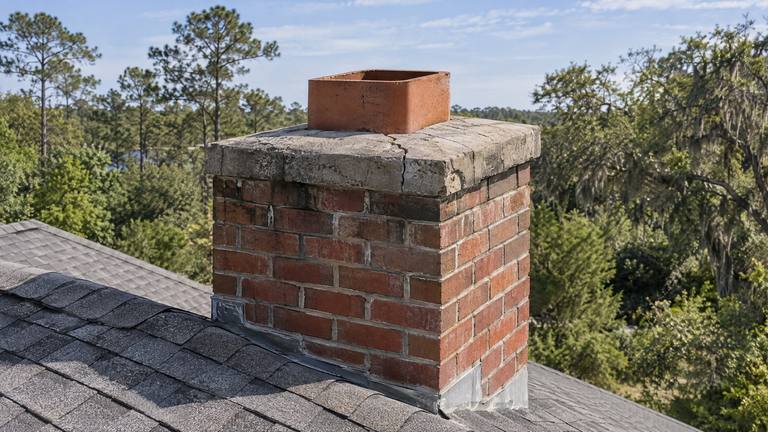
An outside-mount cap fastens to the crown or the brick below it, and a cap is only as secure as what holds it. A crown with deep cracks or a loose top course of brick is repaired before a new cap goes on, and that repair is listed apart from the cap.
A crown that is sound apart from hairline cracks can take a sealer during the same visit, which saves a second trip up the roof. We list both lines separately so you can take one without the other.
Removal, access and anything living in the flue
Chimney cap replacement cost includes removing the old cap. A rusted clamp-on cap can come away in one piece or need cutting, and old fasteners leave holes in the crown that need sealing.
Reaching the cap is its own small setup, and a steep pitch, a two-story wall or tile underfoot each add staging time. If an animal has already moved into the flue, the cap waits until it is out, and animal removal is a separate service whose timing wildlife rules can limit.
Where your cap job sits on the scale
Ranked from the simplest cap job to the most involved:
- A stock slip-in or clamp-on cap on one sound flue tile, on an easy roof.
- The same cap on a steep or tall roof, or with a rusted old cap to cut away.
- A stock cap on an odd-size or damaged tile, with tile repair first.
- An outside-mount cap covering several flues, fastened over a sound crown.
- A cap built to measure, or in heavier stainless or copper, for a harsh exposure.
- Any of the above with crown repair ahead of it.
Six questions for any cap quote
A cap quote is short, so the details that separate a good one from a weak one are easy to miss. These questions bring them out:
- Which flue sizes were measured, and is the cap sized to each?
- Does the mesh meet the code's opening rule, or is it a rain hood without an arrestor?
- Which metal and grade, and why that one for this house?
- How is it fastened, and to what: the tile, the crown or the brick?
- Does the price include taking the old cap off and sealing the old fastener holes?
- What happens if the crown under it is found cracked once the old cap is off?
Top-sealing dampers and chase-top chimneys
A top-sealing damper is a separate product with its own installation: a hinged lid at the upper end of the flue, pulled shut by a cable from the firebox, that also serves as a rain hood. It sits beside the list above rather than on it. When closed, its gasketed seal at the top also keeps conditioned air in the house while the fireplace is idle.
If the chimney is a framed box with metal pipe inside, the part on top is a chase cover, not a flue cap. It is fabricated to the chase, and its price depends on other things, laid out in the guide to chimney chase cover cost.
FAQ
Frequently asked questions
Does a chimney without a cap need one?
A cap shuts the flue to rain, blown leaves and animals, and when it carries arrestor mesh it also stops embers. An uncapped flue also lets water reach the damper and the smoke chamber, which rusts and stains them. For a flue that serves a wood fire, a cap that meets the mesh rules is a sensible addition.
Can I put a cap on myself?
A stock slip-in cap on a single tile is simple in principle, but the work happens on a roof beside an open flue. The cap still has to meet the mesh and free-area rules for that flue. On a steep or tall roof, or over a cracked crown, let a crew do it. A cap dropped into an open flue is a hard thing to fish back out.
Why is my cap streaking rust down the chimney?
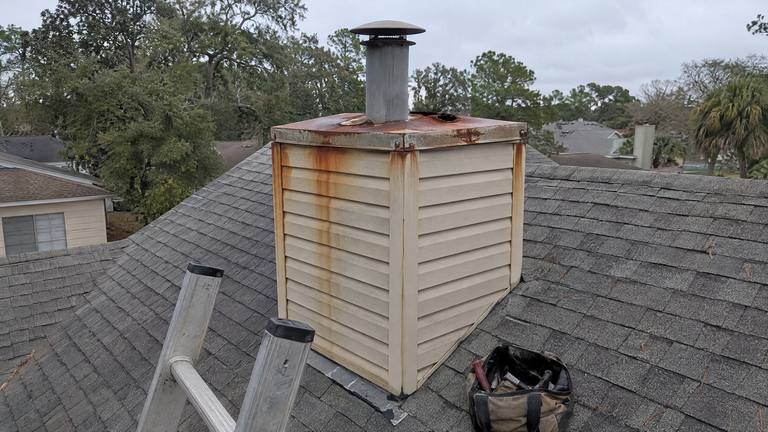
A galvanized cap has lost its zinc coating and the steel beneath is rusting. A stainless replacement stops the streaks at the source, and the stains on the masonry can then be cleaned.
Will a new cap stop a leak?
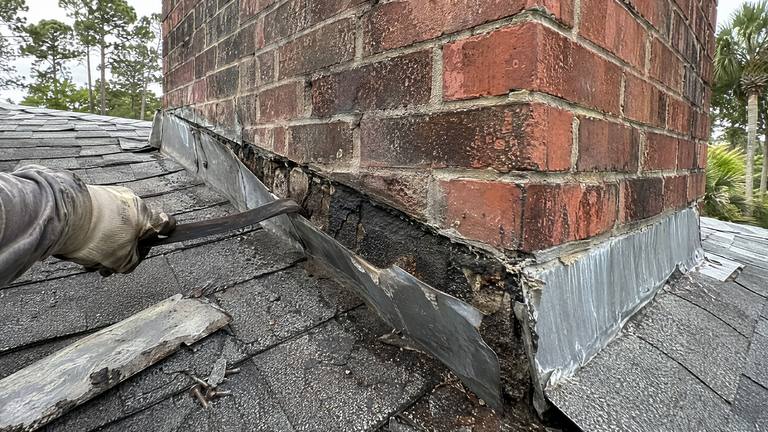
A cap stops the water that comes straight down the open flue, and nothing more. Water that stains a ceiling next to the chimney can also come through the flashing, the crown or the masonry, and a cap does nothing for those. Tracing the leak first tells you which part to pay for.
How is the mesh size chosen?
The code sets it. FBC Residential R1003.9.2 requires openings that stop a sphere larger than 1/2 inch yet let anything under 3/8 inch through, a mesh that catches embers without choking the draft.

Proudly American
A family business that answers its own phone.
Our Services
Related services

Guides
Chimney and fireplace guides
-
-
-


Book your free inspection
One call gets you a time slot and a free inspection. No pressure to decide on the day.
Free Inspection