Logs, an insert or a new unit: sizing a gas fireplace job
Three gas options sit on one scale. The vent route, the gas line and the finish work then move each one along it.
- Family owned and operated
- Free inspection and estimate
- Same-day service available
- Upfront pricing, no hidden fees
Get Your Free Inspection
Get a quote for chimney and fireplace repair and installation in Jacksonville.
Request received
Thank you. We will call you shortly to set a time.
or call (904) 920-5495
In short
Gas fireplace installation cost starts with which of three jobs you choose. A log set in a sound wood-burning fireplace is the smallest, a sealed direct-vent insert vented through liners is larger, and a new built-in unit with a new vent run is the largest. The vent route, the distance to the gas supply and the finish work then move the number.
Three gas jobs on one scale
A gas fire can come from three kinds of equipment, and each sits at a different point on the scale. Before anything else below applies, the choice of equipment decides how big the job is.
- Gas log set: a burner and ceramic logs placed in an existing, sound wood-burning fireplace, either vented (ANSI Z21.60) or vent-free (ANSI Z21.11.2).
- Direct-vent gas insert: a sealed firebox set inside an existing fireplace, with liners to the chimney top, listed as a vented gas fireplace heater (ANSI Z21.88) or a vented decorative appliance (ANSI Z21.50).
- Built-in gas fireplace: a new direct-vent or B-vent unit framed into a wall with a new vent run, listed under Z21.88 or Z21.50.
Log sets: the smallest job, with conditions
A log set uses the fireplace and chimney you already have, so gas log installation cost covers the burner, the logs, the gas connection and the controls. The fireplace has to be sound first. An open firebox joint or a cracked flue is repaired before any log set goes in.
A vented log set needs the damper held open while it is in use, as its instructions require, so a clamp or stop that keeps the damper from closing is included. Vent-free sets skip the flue but carry room-size rules and an oxygen depletion sensor, set by their standard and their manual.
The set is also sized to the firebox. The burner and logs are matched to the firebox's width and depth per the set's instructions, and a set too large for the opening pushes flame and heat where the fireplace was not built to take it.
Inserts: a sealed box and its liners
Picture a sealed firebox that slides into an existing fireplace: that is a direct-vent insert. It draws combustion air from outside and sends exhaust out through liners run up the chimney, as a pair or as a co-axial set, as its manual specifies. Its rating plate names the standard it was listed under, Z21.88 for a heater or Z21.50 for a decorative unit.
The liners set a good part of gas fireplace insert installation cost. A tall chimney means more liner, an offset means pulling it through bends, and a damaged damper frame or smoke chamber may have to be cleared to let the liners pass. A surround panel covers the space left around the insert at the fireplace face, sized to the opening.
An insert also has to fit the firebox. The manual gives a minimum opening width, height and depth, and a firebox that is too small or too shallow rules a model out before anything else is considered.
Built-in units: a new vent run
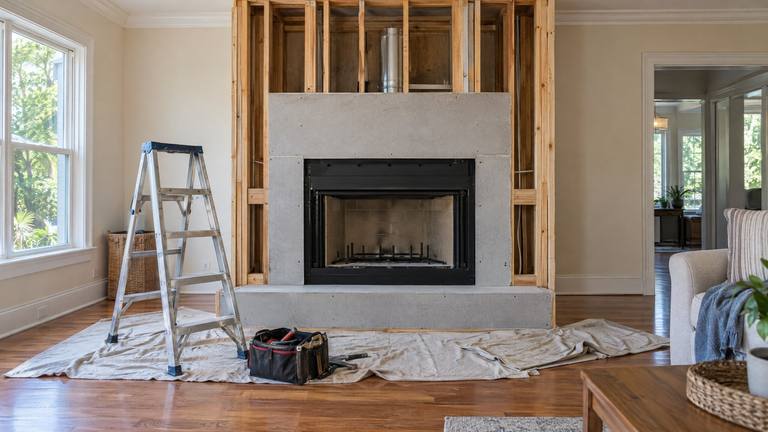
A new built-in unit starts from an empty wall, so the job includes framing, clearances per the listing, the vent run and its termination. A direct-vent unit can end at a side wall close to the unit, which keeps the run short. A B-vent unit burns air drawn from the room and sends its exhaust straight up through the roof, which adds length and roof work.
Termination clearances to windows, doors, soffits and walkways come from the manual and from the Florida Building Code's Fuel Gas volume. A wall that would put the termination too close to a window pushes the unit or the vent somewhere else, and that can change the scope. The manual's vent tables also limit pipe length and the number of elbows, so a route that looks possible on paper can fall outside them.
Running the gas supply
Every gas option needs a supply line to the unit, sized for the appliance's input and the length of the run, with a shutoff where the manual and the code call for one. That line is gas piping work, run by a gas contractor, and it appears on the estimate as a separate trade.
Distance decides most of it. A house with gas at a nearby appliance or a stub already at the fireplace is a short run. A meter on the far side of the house is a long one. A house with no gas at all needs the utility or a propane supplier involved before anything else.
Power, controls and the finish
Units that use a blower, electronic ignition or a remote receiver need power at the unit. An existing outlet nearby keeps that simple, and a new circuit is an electrician's work.
Finish work comes last, and it can be small or large. A log set needs none. An insert needs its surround. A built-in unit needs the wall closed around it with materials that meet the listing's clearances, and the estimate splits the finish work between what is included and what goes to a drywall, tile or stone trade.
Permit and startup
Installing a gas appliance falls under the permit rule in section 105.1 of the building code's administrative chapter, which names gas systems, and the inspections are set by the building department. Who files the application is written on the quote.
Startup belongs to the installation. The unit is lit, the gas pressure and flame are checked against the manual, the vent is checked for spillage, and you are walked through how to run it and what the yearly service covers.
Six gas installs side by side
Ranked by the work each takes:
- A vented log set in a sound fireplace with gas already at the hearth.
- A log set with a new gas line run from elsewhere in the house.
- An insert in a short, straight chimney.
- An insert in a tall or offset chimney, or with damper or smoke chamber work to make room for the liners.
- A built-in direct-vent unit on an outside wall, terminating close by.
- A built-in unit on an interior wall, with a long vent run or a roof termination.
Where a conversion quote can hide work
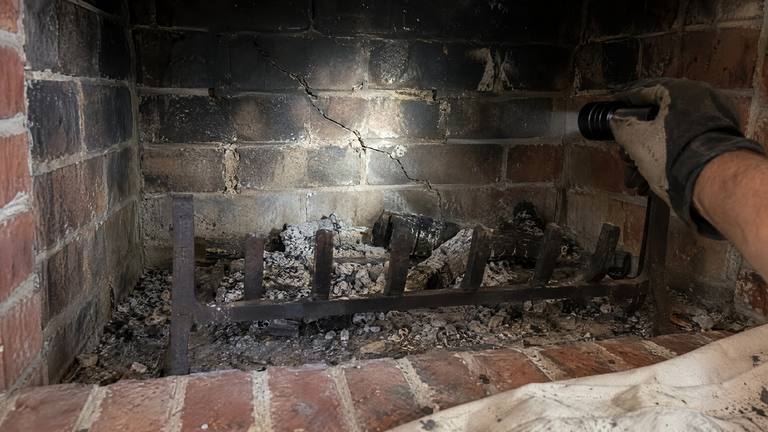
Quotes for the cost to convert a fireplace to gas can differ widely, because the existing fireplace has to be judged first. A log set or insert placed in a firebox with open joints, or vented into a cracked flue, carries the old problem into the new appliance.
A complete quote lists the fireplace and chimney repairs needed first, the equipment and its listing, the liners or vent parts, the gas line by the gas trade, power, the surround or finish, the permit and startup. If any of those are missing, ask whether they are excluded or simply unstated.
FAQ
Frequently asked questions
Why is an insert a bigger job than a log set?
An insert brings a sealed firebox, vent liners up the full flue and a surround, while a log set uses the fireplace and chimney as they are. More parts and more chimney work make it the larger job.
Do I need gas at the house already?
A gas supply has to reach the unit. If the house has natural gas or propane at another appliance, the gas contractor can extend it from there; if it has none, the utility or a propane supplier comes first.
Will an insert fit a factory-built fireplace?
Both listings decide it, the factory-built fireplace's and the insert's. Some factory-built units are listed for specific inserts and others are not, so the model plates settle the question.
Does a gas fireplace need a chimney?
A vented unit needs a vent, not a masonry chimney. A direct-vent unit can end at a side wall, while a B-vent unit runs up through the roof, each as its manual and the fuel gas code allow. Vent-free equipment skips the vent and follows room-size rules in its manual instead. The vent route is settled before the unit is chosen, since it decides where the unit can go.
Who handles the permit for a gas fireplace?
The estimate names who applies. The building department then inspects the installation, including the gas connection made by the gas contractor.

Proudly American
Family owned and operated, from the first call to the final walk-through.
Our Services
Related services
Guides
Chimney and fireplace guides
-
-
-


Book your free inspection
One call gets you a time slot and a free inspection. No pressure to decide on the day.
Free Inspection