

Fireplace insert vs fireplace replacement
Start with the existing system, then compare the change you want to make.
- Fully licensed and insured
- Locally owned
- Family owned and operated
- Same-day service
Get Your Free Inspection
Get a quote for chimney and fireplace repair and installation in Jacksonville.
Request received
Thank you. We will call you shortly to set a time.
Quicker by phone? Call (904) 920-5495
The short answer
A fireplace insert fits an approved existing fireplace opening, while a new fireplace can replace the existing appliance or form part of a new installation. The better choice depends on the current fireplace’s condition, compatibility, fuel and venting, plus the result you want. Physical fit alone does not establish that an insert is suitable.
Decide what you want to keep
Start by listing the parts of the current fireplace you value: its location, opening, mantel, hearth or finished surround. Then list what you want to change, such as the fuel, controls or appearance. That separates a product decision from a room-remodeling decision before the two become mixed in a quote.
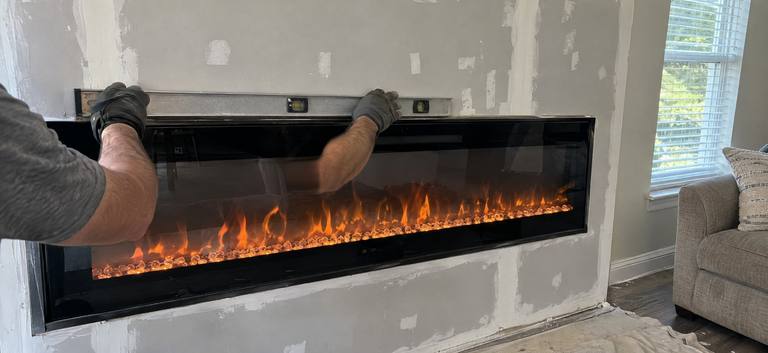
Napoleon describes an insert as a self-contained appliance designed to fit an existing opening. A new fireplace is a different starting point for the installation. These descriptions help frame the choice, but they do not approve a particular pairing. Give the installer photographs and any model information so the existing system can be identified before selecting a replacement.
Confirm whether the existing fireplace is masonry or factory built
A masonry opening and a factory-built fireplace require different compatibility checks. UL explains that accessories, including inserts, cannot simply be added to a factory-built fireplace unless it was tested and listed for the intended use under UL 127. Its guidance also distinguishes the standards relevant to solid-fuel room heaters, including UL 1482.
An insert that fits the visible opening is therefore only a candidate. Ask what documentation establishes compatibility with your existing unit. If the old fireplace’s model is unknown, make identification part of the assessment. Do not cut or remove appliance parts to make a selected insert fit before those questions have been resolved.
Assess condition before deciding what to cover
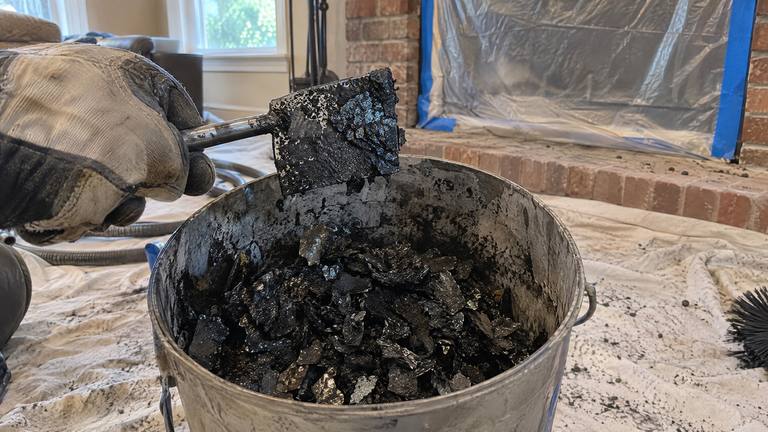
The existing fireplace and chimney need to be assessed before an insert conceals part of the opening. Napoleon’s gas-insert instructions call for the existing fireplace and chimney to be clean and sound, with necessary repairs completed. An insert purchase does not make an unresolved defect disappear.
If you know of a leak, damaged material or a past service concern, include it when requesting the estimate. Keep repair of the existing system as a visible part of the proposal. Ask what is being retained, what needs attention and whether the proposed appliance changes the work required. That is a better comparison than treating the insert and new-fireplace options as boxes with different prices.
Compare the venting plan with the fuel choice
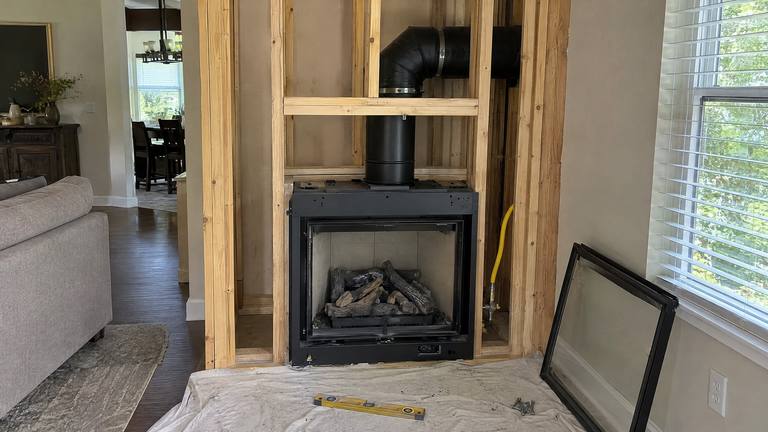
For a fuel-burning insert, the venting must match the chosen appliance and its installation instructions. Napoleon’s EPI3 wood-insert manual, for example, specifies a liner arrangement and restrictions when used with a factory-built fireplace. Those requirements belong to that model; another insert can have a different approved arrangement.
Ask the installer to explain the proposed path from the appliance to the exterior and which existing parts, if any, can remain. If the plan changes fuel, discuss that change directly. A gas supply, electrical connection or existing chimney should be assessed as part of the whole project. Do not assume the word 'insert' means every existing connection can be reused.
Check how much of the appearance will actually change
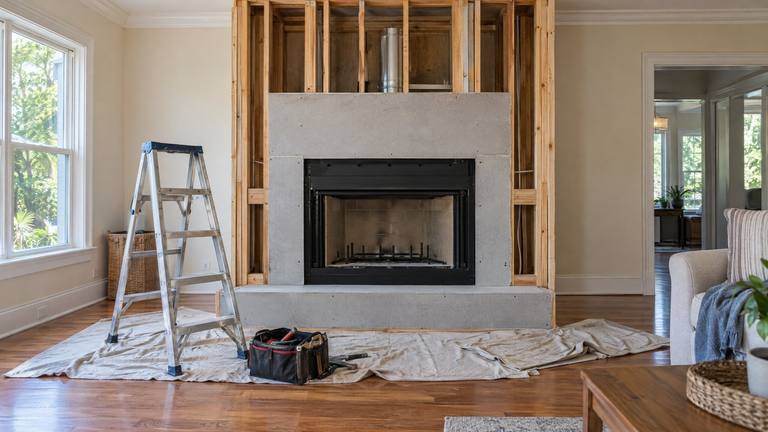
An insert usually leaves you making decisions about the visible appliance and the area around the opening. A new-fireplace project may allow a different opening or layout, depending on the work proposed. Ask for a sketch that shows the final viewing area and surround, rather than comparing only product photographs.
Measure your preference as well as the space: do you want to preserve the current focal point, change its proportions or move it? If preserving the surround is essential, say that before choosing an appliance. If the new location is the main goal, start with the guide to adding a fireplace because that involves a different planning question from filling the existing opening.
Request two complete scopes when either approach is possible
Where both options are suitable, ask for written scopes that identify the retained parts, appliance, venting, connections, removal work and final finish. Mark any uncertainty in the existing system in both options. That lets you compare the same room and desired result without assuming one route has no additional work.
An insert can be a useful way to retain an opening, but it is not automatically the lower-cost answer once necessary repairs are considered. A new fireplace is not automatically the better answer because it is newer. Choose from the documented condition, compatibility and the change you want to make, with the total work described before you approve it.
Bring the existing fireplace into the consultation
For a Jacksonville home, collect the accessible model information, photographs of the opening and any previous service notes. Tell us the current fuel and what you want the finished fireplace to do. If you do not know the appliance type, leave that question open rather than ordering an insert from the opening width alone.
Our local, family-owned team offers a free inspection and written estimate for fireplace insert installation or fireplace installation. Call (904) 920-5495 to discuss the existing system. The useful first result is a suitable project scope, whether that retains the fireplace opening or calls for a more complete replacement.
Sources
- Napoleon fireplace and insert comparison: Difference between an existing-opening insert and a fireplace installation.
- UL guidance for fuel-fired equipment: UL 127 compatibility restrictions for factory-built fireplace accessories and UL 1482 context.
- Napoleon gas-insert installation manual: Existing fireplace and chimney condition and model-specific alteration limits.
- Napoleon EPI3 wood-insert installation manual: Model-specific liner and factory-built fireplace installation requirements.
Frequently asked questions
Can every wood-burning fireplace accept an insert?
No. The existing fireplace, proposed insert and venting must form an approved installation. Factory-built units need particularly careful model and listing checks.
Does a good physical fit prove compatibility?
No. Dimensions are one part of the assessment, alongside condition, clearances, venting and the manufacturer’s requirements. Ask which documents support the proposed combination.
Can an insert hide an existing chimney problem?
A visible change does not resolve the condition of the system behind it. Necessary repairs should be identified before installation and included in the written scope.
Should I get a fireplace insert or replace the fireplace?
Explain what you want to retain and what you want to change. If the existing system supports both approaches, ask for comparable scopes instead of choosing from the product price alone.


Chimney and fireplace guides
-
-
-
-


Book your free inspection
One call gets you a time slot and a free inspection. No pressure to decide on the day.
Free Inspection