What you are paying for in a chimney inspection
An inspection is time spent on the whole system, plus findings you can act on. Flues, appliances, access and deadlines stretch or shorten that time.
- Family owned and operated
- Free inspection and estimate
- Same-day service available
- Upfront pricing, no hidden fees
Get Your Free Inspection
Get a quote for chimney and fireplace repair and installation in Jacksonville.
Request received
Thank you. We will call you shortly to set a time.
or call (904) 920-5495
In short
Chimney inspection cost pays for time on the whole system: the flue, the chimney structure, the firebox or appliance connection, the clearances to framing and the paths water can take. The scope widens with more flues, more appliances, harder roof or attic access, and a home-sale deadline. You hear the findings before the crew leaves, and any repair gets a separate written estimate.
The yearly check NFPA 211 describes
Under NFPA 211, the yearly inspection comes down to three questions: is the chimney sound, is it free of deposits, and does it keep its required clearances to anything that can burn? Cleaning, maintenance and repair follow when the answers call for them.
Those three checks are what a chimney inspection price pays someone to do. A fireplace inspection cost covers the same ground, since the same standard covers fireplaces alongside chimneys and vents. Everything else on this page is about how long they take on your particular house.
What gets checked, from cap to hearth
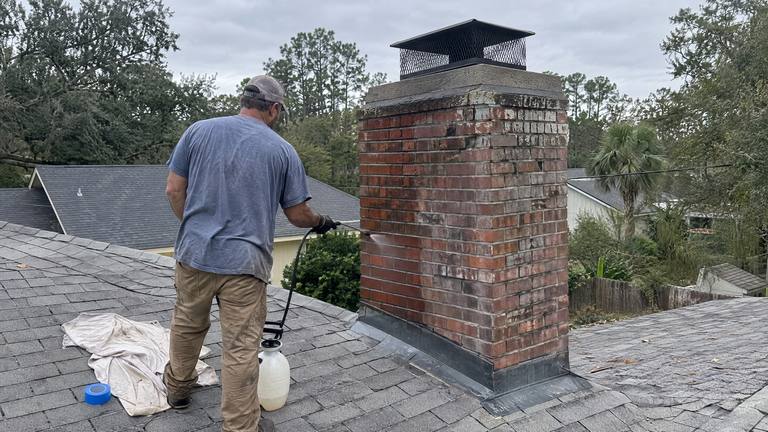
On a wood-burning masonry fireplace, the visit follows two paths at once: the path smoke takes up and out, and the path water takes down and in.
- Cap and spark arrestor: present, fastened, with the mesh intact.
- Crown: cracks, slope, and the sealed joint at the flue tile.
- Flue liner: cracked, shifted or missing tiles, open joints and deposits.
- Masonry above the roof: loose brick, open joints and spalled faces.
- Flashing: gaps, lifted steps, and sealant standing in for metal.
- Smoke chamber and damper: the parging, rust, and whether the damper closes.
- Firebox and hearth: cracked firebrick, open joints and the hearth extension in front.
- Clearances: framing and trim near the chimney, wherever the attic or the room gives a view of it.
What widens the scope
The checklist stays the same from house to house. The time it takes does not, so the honest reply to 'how much is a chimney inspection?' depends on the things that stretch it.
- More flues. Each flue is checked along its own length, from its own opening.
- More appliances. A chimney that serves a fireplace and a second appliance is checked at each connection.
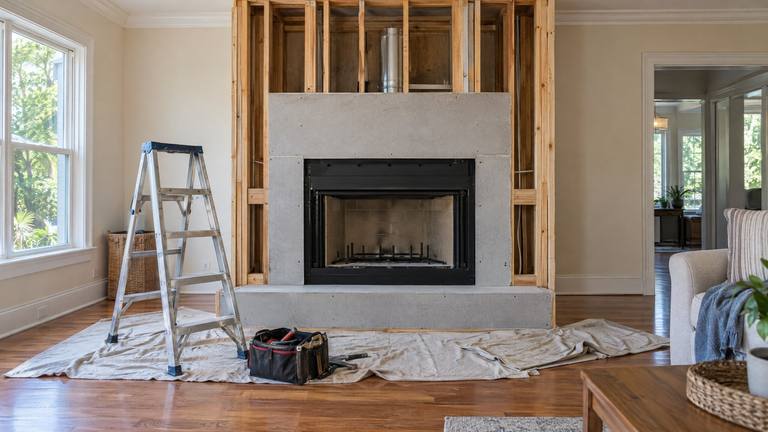
- Prefab units. The check follows the installation manual for the listed chimney, the firestops and the chase top, which starts with finding the unit's model information.
- Roof access. A tall stack, a steep pitch, or a tile or metal roof takes more setup to reach safely.
- Attic and crawlspace access. Clearance checks need a way to see the chimney where it passes through framing.
- A leak history. A reported leak means tracing the water path, on the roof and in the attic.
Clearance checks, and why they can take the longest
Clearance is the part of the yearly check that homeowners see least. For a masonry chimney, FBC Residential R1003.18 calls for an airspace of at least 2 inches between the chimney and combustible framing for any part of the chimney inside the building or built into an exterior wall. A chimney standing wholly outside the exterior walls needs at least 1 inch. That gap hides behind drywall, trim and insulation.
Checking it means finding the places where the chimney can actually be seen: the attic where it passes the ceiling framing, a closet behind the fireplace wall, a crawlspace below. A house with those spaces open and reachable takes less time than one where the hatch is painted shut or the attic is packed with stored boxes.
A prefab unit's clearances are printed in its installation manual and on its label. Those come from the listing, not from the masonry rule, so the model number decides what the check measures.
Findings and the work they point to
An inspection ends in findings, and each finding points to a specific kind of work. Seeing the pairs ahead of time makes the written estimate easier to read.
- Heavy deposits in the flue point to a sweep, or to creosote removal if the deposit has glazed.
- A cracked crown points to a sealer or a recast, depending on how deep the cracks run.
- A gap at the flashing points to a reset or a full reflash.
- Cracked flue tile points to a choice between tile repair, a listed resurfacing system and a new liner.
- A rusted or warped damper points to freeing, re-hanging or replacing it.
- Missing clearance points to a stop-use note and a plan to correct it.
Inspecting on a home-sale clock
A purchase adds two things to an inspection: a deadline, and readers who do not live in the house. The system checked is the same, but the findings have to be written clearly enough for a buyer, a seller and their agents to act on inside the contract dates.
Book it early in the inspection period. If the flue needs sweeping before it can be seen, or a finding needs a second look, the schedule still has room. The chimney inspection before buying a house guide covers the questions to ask during a purchase.
Inspection visits ranked by the time they take
From the shortest visit to the longest, with the same checklist applied to each:
- One flue, one wood-burning fireplace, an easy roof and a recent sweep.
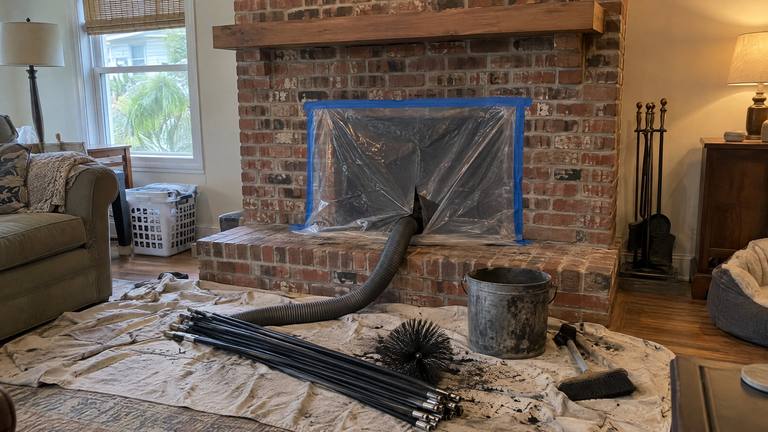
- One flue that needs sweeping first so the liner can be seen.
- Any factory-built unit, with the chase top and the listed pipe checked against the maker's instructions.
- A chimney with two or more flues, or a fireplace plus another appliance.
- A leak investigation that follows water from the roof into the attic.
- A pre-purchase inspection on a tight deadline, with findings written for several readers.
Why an inspection is not a sweep or a repair
An inspection finds and explains. It does not remove deposits and it does not fix anything. When a flue is too dirty to see, sweeping comes first so the tile can be judged, and that sweep is priced separately. Repairs work the same way. A cracked crown or a loose flashing step becomes a written estimate naming the failed part, the cause and the proposed fix. Keeping the inspection apart from the repair price is what lets you weigh the finding on its merits.
What you should have in hand when the visit ends
By the end you should know what was checked, what was found and what each finding means for using the fireplace. We walk you through it on site and show you the problem wherever that is safe, such as the firebox, the damper or a crack visible from a ladder.
Any repair then goes on a free written estimate, with each line marked fix now or can wait. Nothing on it is scheduled until you say so.
The first inspection builds the record
A chimney seen for the first time has nothing on file: no record of its liner type, flue sizes, clearances or past repairs. The first inspection builds that record. Later yearly checks compare against it, which makes them quicker and makes any change easier to spot.
FAQ
Frequently asked questions
How long does a chimney inspection take?
The chimney sets the time, not a clock. One flue on an easy roof is a short visit, while several flues, a tall stack or a leak to trace take longer. When you book, tell us what you have and we will give you a fair idea. Mention any leaks or smoke problems too, since tracing them adds time.
Do I need to be home during the visit?
Yes, for at least part of it. Someone has to open the house for the firebox and attic checks, and findings are easier to follow when you can see them in person.
Does a gas fireplace vent get inspected as well?
Yes. NFPA 211 covers vents as well as chimneys, so the vent and its termination are part of the yearly check. The gas appliance itself is serviced to its manual on a separate visit.
What if the inspection finds nothing wrong?
Then you hear exactly that, in writing. A clean result is useful to have before a sale or before the first fire after a long break. It also gives the next visit something to compare against.
Will you sweep the chimney during the inspection?
Not unless you ask for it. When deposits hide the liner, we say so and offer the sweep as a separate line, because a liner nobody can see is a liner nobody can judge.

Proudly American
Locally owned and operated in Jacksonville.
Our Services
Related services

Guides
Chimney and fireplace guides
-
-
-


Get a free chimney inspection
One call gets you a time slot and a free inspection. No pressure to decide on the day.
Free Inspection