

Local chimney animal removal for Sandalwood homes
From the first noise to the finished cap, an animal job in Sandalwood is planned around the law and the flue, starting with a free check.
- Family owned and operated
- Free inspection and estimate
- Same-day service available
- Upfront pricing, no hidden fees
Get Your Free Inspection
Get a quote for chimney and fireplace repair and installation in Jacksonville.
Request received
Thank you. We will call you shortly to set a time.
or call (904) 920-5495
Why Choose Us
Chimney wildlife specialists who follow the rules
- Locally owned in Jacksonville
- Family owned and operated
- 100% satisfaction guaranteed
- Free inspection and estimate
- Same-day service available
- 10% off when you book today
Swifts and bats follow federal and state timing, and we explain the dates before anything is done.
- Free inspection and estimateFinding out what is in your Sandalwood flue, and which rules apply, is part of the free visit.
- Upfront pricing, no hidden feesClean-out, exclusion and cap are priced as separate lines, and any trapper is named in writing.
- Same-day service availableWhen the schedule has room, we can look at a noisy chimney the same day you call.
Nests are fuel
Nesting material is dry twigs, grass and fiber packed into a narrow space, which makes it kindling in the worst possible place. A nest on the smoke shelf or across the flue can catch from the first sparks and can block the draft, sending smoke back into the house.
With a nest in your Sandalwood chimney, the fireplace is not used until the nest is gone and the flue is checked. When the nest belongs to a protected species, that wait follows the legal calendar, and the damper stays shut throughout. Removing an empty, unprotected nest is part of the clean-out and needs no separate visit. We identify what is living in your Sandalwood chimney on a free inspection; call (904) 920-5495.
More than about six miles separate Sandalwood from the coast. Sandalwood is about 6 miles from Jacksonville in a straight line.
What's Included
From identifying the animal to capping the flue
- Fireplace opening sealed while the flue is cleaned out
- Idle flues on the stack capped as well
- Clean-out at your Sandalwood home kept inside the chimney
- First-fire check for your Sandalwood fireplace once it is clear
How It Works
How our wildlife pros clear a chimney in Sandalwood
-
Tell us what you hear
Chirping, scratching and the time of day help us guess what is up there. Keep the damper shut and do not light a fire.
-
Animal identified, rules checked
A look down from the top with a light confirms what it is. Swifts and bats have legal timing, and we explain it.
-
Flue emptied, nest cleaned out
Once the animal is out, nest material and droppings come out with the firebox sealed, using brushes and a sealed, filtered vacuum.
-
Screened cap closes the top
A cap with the right screen goes on each flue, and any other gap we find is written up with its repair.
Local Conditions
Droppings and a safe clean-out in Sandalwood
Bird and bat droppings can carry the fungus behind histoplasmosis, which the CDC says spreads by breathing the spores.
Clean-outs in Sandalwood keep the dust inside the chimney, with the opening sealed and the droppings bagged.
10% off your first service when you book today
Clean-out and cap booked today, and a first service with us is 10% off.
Nests, sparks and blocked draft
A nest in a chimney is a bundle of kindling sitting in a flue built to carry flame and hot gas. Sparks from the first fire of the season can light it, and a burning nest in a narrow flue burns hot. Even unlit, a nest across the flue or packed on the smoke shelf narrows the passage and can turn smoke back into the room.
Removing nest material is therefore a safety step first. After it comes out, the flue is swept and checked along its length, because nests are built in layers and debris can lodge well above the part visible from the firebox.
Openings beside the flue tile
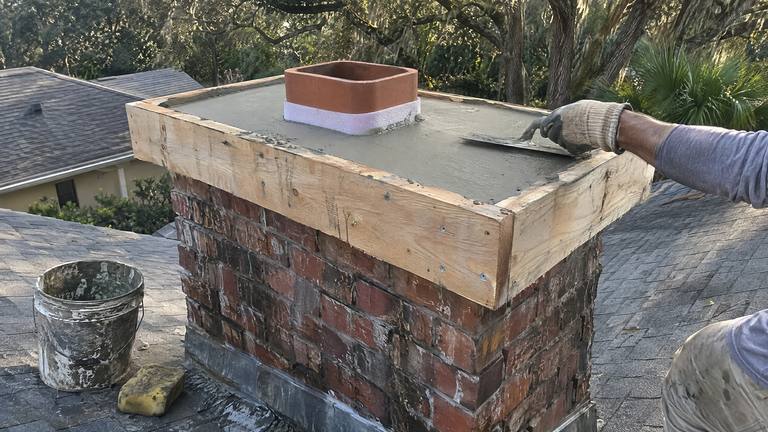
On a masonry chimney, the cap covers only part of the top. The crown around the flue tile can crack or shrink away from it, leaving a gap into the core of the chimney. Mortar missing from the top courses opens pockets an animal can widen. And where an unused flue sits beside a capped one, the open flue becomes the entrance.
Every one of those needs its own repair: sealing or recasting the crown, repointing the top courses, capping every flue. Closing only the obvious opening leaves the others in place, and the animal comes back through them. Every flue and the full crown are checked before anything is quoted.
Choosing the metal for a cap
A cap lives in the weather, so its material decides how long its screen stays whole. Galvanized steel is protected by a zinc coating that wears away over time, and once it is gone the screen rusts and tears, which is one way animals get back in. Stainless steel does not depend on a coating, and copper does not rust, though it weathers to a patina.
Fasteners deserve the same care. Screws of a different metal from the cap can corrode where they touch it and work loose over time. Cap metal, screen and fasteners are chosen to work together, and each one is named.
Free Inspection
What we confirm in Sandalwood before any removal
- Room and hearth protection while the flue is cleaned out
- Flue tiles and smoke chamber checked for damage once clear
- Chase cover, storm collar and siding gaps on a framed chimney
- Sweeping needed before the fireplace is used again
FAQ
Before anyone reaches into the flue
Will the animal come back after it leaves?
It can, as long as the way in stays open. So the job ends with the entry closed, whether by a screened cap, a repaired crown or a fixed chase cover.
Is it legal to cap a chimney with birds nesting in it?
Not when the birds are chimney swifts with an active nest, which federal law protects. The cap waits until they have migrated, and the damper stays closed in the meantime.
Our Services
More services in Sandalwood
-
-
-
-
-
-


Learn more about chimney animal removalAll services in Sandalwood
Scratching in the flue at your Sandalwood home
Our family-owned team of chimney professionals explains the wildlife rules before any work in Sandalwood.
Free Inspection