
Local chimney animal removal in Fleming Island
We handle the chimney side of an animal problem in Fleming Island, from the free inspection and legal timing to the clean-out and a fitted cap.
- Family owned and operated
- Free inspection and estimate
- Same-day service available
- Upfront pricing, no hidden fees
Get Your Free Inspection
Get a quote for chimney and fireplace repair and installation in Jacksonville.
Request received
Thank you. We will call you shortly to set a time.
or call (904) 920-5495
Why Choose Us
Animal-in-the-chimney pros for Fleming Island homes
- Locally owned in Jacksonville
- Family owned and operated
- 100% satisfaction guaranteed
- Free inspection and estimate
- Same-day service available
- 10% off when you book today
Swifts and bats follow federal and state timing, and we explain the dates before anything is done.
- Free inspection and estimateFinding out what is in your Fleming Island flue, and which rules apply, is part of the free visit.
- Upfront pricing, no hidden feesClean-out, exclusion and cap are priced as separate lines, and any trapper is named in writing.
- Same-day service availableWhen the schedule has room, we can look at a noisy chimney the same day you call.
What the smoke shelf shows
Much of the evidence in an animal job lands on the smoke shelf, the ledge just behind the damper. Twigs and nesting fiber, droppings, feathers or fur, and soil tracked in from outside each point in a different direction. So does an empty shelf with noise overhead, which suggests the animal is higher in the flue.
On a visit in Fleming Island, that debris is read before it is touched, then the flue is looked at from below and from the top. Together they show what is living there and where it got in. Anything that looks like it came from a protected species changes the timing, and the plan says so. Call (904) 920-5495 and our animal removal pros will check your Fleming Island flue for free.
Fleming Island lies on the St. Johns River. Fleming Island lies roughly 13 miles from Jacksonville, measured directly rather than by road.
What's Included
From identifying the animal to capping the flue
- Smoke shelf checked for droppings, shell and nesting fiber
- Fireplace opening sealed while the flue is cleaned out
- Crown gaps and chase cover holes closed
- First-fire check for your Fleming Island fireplace once it is clear
How It Works
How our wildlife pros clear a chimney in Fleming Island
-
Tell us what you hear
Chirping, scratching and the time of day help us guess what is up there. Keep the damper shut and do not light a fire.
-
Animal identified, rules checked
A look down from the top with a light confirms what it is. Swifts and bats have legal timing, and we explain it.
-
Flue emptied, nest cleaned out
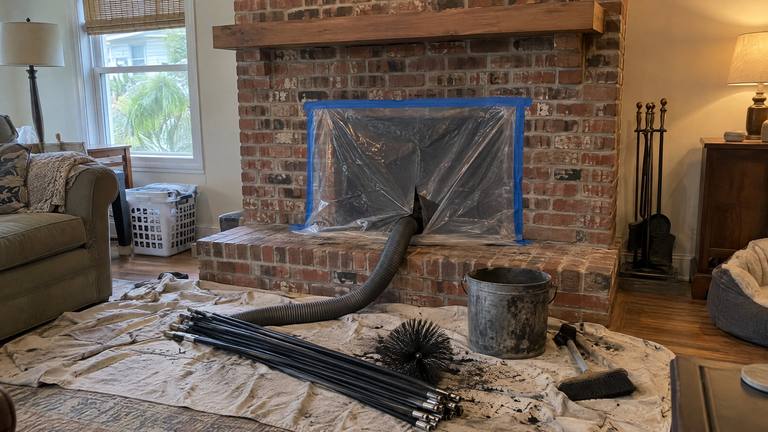
Once the animal is out, nest material and droppings come out with the firebox sealed, using brushes and a sealed, filtered vacuum.
-
Screened cap closes the top
A cap with the right screen goes on each flue, and any other gap we find is written up with its repair.
Local Conditions
Framed chases on Fleming Island homes
A factory-built chimney sits inside a framed chase, and animals can get in through the siding, the trim or a gap under the chase cover.
We check the whole chase on Fleming Island homes, and a repair to the cover or the siding is written as its own line.
10% off your first service when you book today
Scratching in the chimney? A booking today takes 10% off your first service.
Why a fire is the wrong eviction
Lighting a fire to drive out an animal feels logical and goes wrong in several ways. Heat and smoke rise into the flue where the animal is, so one that cannot climb out quickly dies there. Nest material is dry fuel and can ignite.
A nest or an animal blocking the flue pushes smoke and carbon monoxide into the living space. And if the animal belongs to a protected species, harming it breaks the law.
The better first step is quiet: damper shut, fireplace unlit, the room left alone. An animal can find its own way out of a quiet chimney, and one that does not is handled by exclusion or trapping, depending on what it is.
What the swift rule means in practice
Federal law covers chimney swifts through the Migratory Bird Treaty Act. In the Fish and Wildlife Service's words, it is illegal to harass, injure or kill the birds, and the protection extends to their eggs and nests.
For a chimney, that turns into three working rules. An active nest is not removed. The flue is not capped or blocked while swifts are using it. The sweep and the cap are scheduled after the birds have migrated.
By the Service's account, the birds arrive in March or April and head south again in August or September. A plan for your chimney goes by the actual activity in it, confirmed quiet, with the calendar only as a guide.
When an animal comes down into the house
Frightened animals that drop through a gap in the damper into the room are looking for a way out. Give them one. Shut the doors that lead to the rest of the house, prop open an exterior door or window in that room if it is safe to get to, switch off the lights and step out. An animal left alone in a quiet room can find the open door on its own.
Do not corner the animal or try to catch it by hand. If there is any chance a bat touched someone, the CDC advises getting medical advice. Once the room is clear, the chimney side of the job begins: how it got down, and how that route is closed.
Free Inspection
What we confirm in Fleming Island before any removal
- One-way exclusion device placement and the date it comes off
- Room and hearth protection while the flue is cleaned out
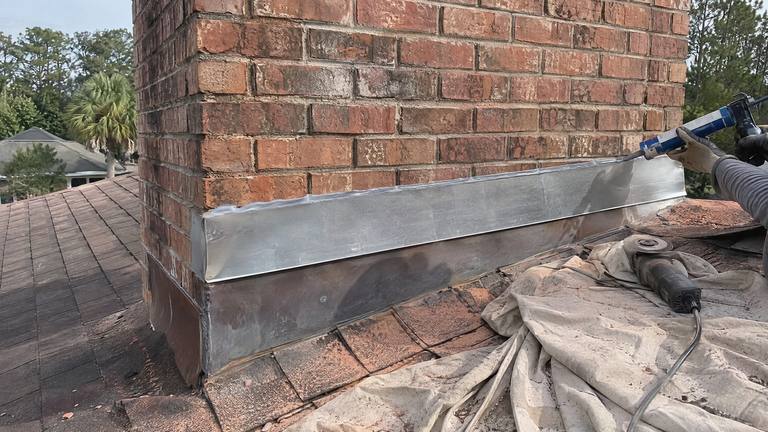
- Chase cover, storm collar and siding gaps on a framed chimney
- Earliest date the cap can go on under the wildlife rules
FAQ
Before anyone reaches into the flue
Can you come out the same day in Fleming Island?
When the day's schedule has an opening, a same-day visit is available. If we cannot come the same day, keep the damper shut and the fireplace covered until we do.
Does someone have to be home when you come?
Someone needs to let us in for the inside check and any clean-out, since both happen at the fireplace. The look from the roof can be done without anyone home if the chimney is safe to reach.
Our Services
More services in Fleming Island
-
-
-
-
-
-


Learn more about chimney animal removalAll services in Fleming Island
Scratching in the flue at your Fleming Island home
Our family-owned team of chimney professionals explains the wildlife rules before any work in Fleming Island.
Free Inspection