
Chimney animal removal in Atlantic Beach by local pros
We handle the chimney side of an animal problem in Atlantic Beach, from the free inspection and legal timing to the clean-out and a fitted cap.
- Family owned and operated
- Free inspection and estimate
- Same-day service available
- Upfront pricing, no hidden fees
Get Your Free Inspection
Get a quote for chimney and fireplace repair and installation in Jacksonville.
Request received
Thank you. We will call you shortly to set a time.
or call (904) 920-5495
Why Choose Us
Local experts for animals in Atlantic Beach chimneys
- Locally owned in Jacksonville
- Family owned and operated
- 100% satisfaction guaranteed
- Free inspection and estimate
- Same-day service available
- 10% off when you book today
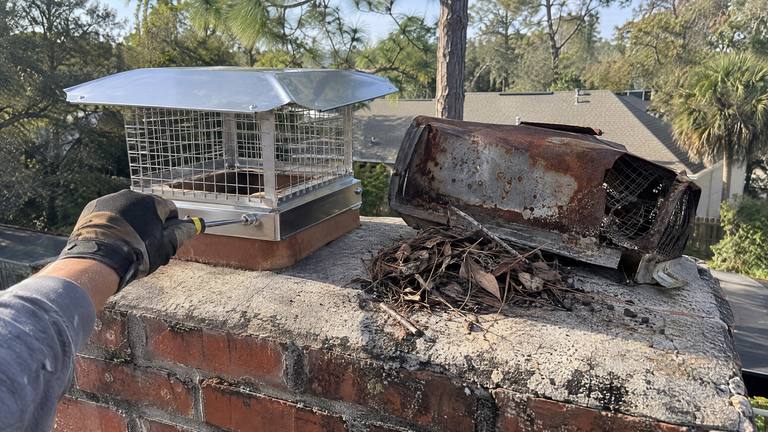
Nest material comes out before the first fire, because it is kindling sitting in the flue.
- Free inspection and estimateFinding out what is in your Atlantic Beach flue, and which rules apply, is part of the free visit.
- Upfront pricing, no hidden feesClean-out, exclusion and cap are priced as separate lines, and any trapper is named in writing.
- Same-day service availableWhen the schedule has room, we can look at a noisy chimney the same day you call.
When swifts set the schedule
Chimney swifts arrive to nest in spring and leave on migration late in the season, and while they are nesting, federal law protects the birds, their eggs and their nest. A flue with swifts in it is left alone until they go.
In Atlantic Beach homes with swifts, that means a stretch of chatter, a closed damper and a plan dated for after migration: sweep the flue, check it, and cap it if you decide to. Federal wildlife officials ask owners who can to leave a flue open for swifts, and that choice is yours. Once the birds have gone, the old nest material comes out during the sweep. On the phone at (904) 920-5495, describe what you hear in the Atlantic Beach chimney and when it happens.
Atlantic Beach is on the coast. Atlantic Beach lies roughly 14 miles from Jacksonville, measured directly rather than by road.
What's Included
Chimney animal work we take on in Atlantic Beach
- Sounds and their timing used to narrow down the animal
- Flue looked down from the top with a strong light
- One-way exclusion device fitted where the rules call for one
- Damper and smoke shelf checked after the clean-out
How It Works
How our wildlife pros clear a chimney in Atlantic Beach
-
Tell us what you hear
Chirping, scratching and the time of day help us guess what is up there. Keep the damper shut and do not light a fire.
-
Animal identified, rules checked
A look down from the top with a light confirms what it is. Swifts and bats have legal timing, and we explain it.
-
Flue emptied, nest cleaned out
Once the animal is out, nest material and droppings come out with the firebox sealed, using brushes and a sealed, filtered vacuum.
-
Screened cap closes the top
A cap with the right screen goes on each flue, and any other gap we find is written up with its repair.
Local Conditions
After a coastal storm in Atlantic Beach
Hurricane season fills half the year, from June through November. A storm that knocks a cap loose on the coast leaves the flue open, and animals can move in within days.
If you hear noise in the chimney after a storm in Atlantic Beach, keep the damper shut and call. We check the cap first.
10% off your first service when you book today
Ask for the first-service offer and 10% comes off your animal job.
What the swift rule means in practice
Federal law covers chimney swifts through the Migratory Bird Treaty Act. In the Fish and Wildlife Service's words, it is illegal to harass, injure or kill the birds, and the protection extends to their eggs and nests.
For a chimney, that turns into three working rules. An active nest is not removed. The flue is not capped or blocked while swifts are using it. The sweep and the cap are scheduled after the birds have migrated.
By the Service's account, the birds arrive in March or April and head south again in August or September. A plan for your chimney goes by the actual activity in it, confirmed quiet, with the calendar only as a guide.
Handling droppings safely
Droppings from birds and bats are more than a mess. Histoplasmosis, the CDC explains, is caught by breathing in spores of a fungus that grows in those droppings, and disturbing the material is what puts the spores in the air. Dry sweeping and household vacuums do exactly that.
The safe approach is to dampen the material to keep dust down, collect it with filtered equipment, bag it and clean the surfaces after. Whoever does the work wears respiratory protection. For homeowners the rule is simpler: leave droppings in the firebox and on the shelf alone, keep the damper closed, and let the clean-out take care of them.
The screen size that keeps animals out
Section R1003.9.2 of Florida's residential code is where the screen size comes from. The openings must not let a sphere half an inch across pass through, and must not block one of three-eighths of an inch. Its heat and corrosion resistance has to match 19-gauge galvanized steel or 24-gauge stainless steel, or better, and the open area of the arrestor must add up to four times the flue outlet's area or more.
A cap built to those numbers closes the flue to birds and larger animals while leaving it enough open area to draw. A screen with larger holes, or one torn open, does not.
Free Inspection
What we confirm in Atlantic Beach before any removal
- Identification of what is in the flue, and the evidence behind it
- One-way exclusion device placement and the date it comes off
- Nest material and droppings cleared from the shelf, damper and flue
- Flue tiles and smoke chamber checked for damage once clear
FAQ
Before anyone reaches into the flue
Will the animal come back after it leaves?
It can, as long as the way in stays open. So the job ends with the entry closed, whether by a screened cap, a repaired crown or a fixed chase cover.
Is it legal to cap a chimney with birds nesting in it?
Not when the birds are chimney swifts with an active nest, which federal law protects. The cap waits until they have migrated, and the damper stays closed in the meantime.
Our Services
More services in Atlantic Beach
-
-
-
-
-
-


Learn more about chimney animal removalAll services in Atlantic Beach
Scratching in the flue at your Atlantic Beach home
Our family-owned team of chimney professionals explains the wildlife rules before any work in Atlantic Beach.
Free Inspection