

Local chimney animal removal for Sawgrass homes
Listening, looking, then acting. An animal job in Sawgrass starts with a free inspection and ends with a clean flue and a closed top.
- Family owned and operated
- Free inspection and estimate
- Same-day service available
- Upfront pricing, no hidden fees
Get Your Free Inspection
Get a quote for chimney and fireplace repair and installation in Jacksonville.
Request received
Thank you. We will call you shortly to set a time.
or call (904) 920-5495
Why Choose Us
Animal-in-the-chimney pros for Sawgrass homes
- Locally owned in Jacksonville
- Family owned and operated
- 100% satisfaction guaranteed
- Free inspection and estimate
- Same-day service available
- 10% off when you book today
Every flue on the chimney is checked, since an idle one is the first place animals move in.
- Free inspection and estimateFinding out what is in your Sawgrass flue, and which rules apply, is part of the free visit.
- Upfront pricing, no hidden feesClean-out, exclusion and cap are priced as separate lines, and any trapper is named in writing.
- Same-day service availableWhen the schedule has room, we can look at a noisy chimney the same day you call.
The calendar comes first
Some chimney animal jobs in Sawgrass can start the day the animal is found. Others have to wait, and the reason is legal. Nesting chimney swifts have federal protection, and a state rule keeps bat exclusion devices off buildings from April 16 through August 14.
So the first thing settled is which case you have. If the rules set a date, you get it in writing, along with what can be done safely before then, such as covering the fireplace opening and checking the cap from the roof. Where no protected species is involved, the work can begin once the plan is agreed. On the phone at (904) 920-5495, describe what you hear in the Sawgrass chimney and when it happens.
About 14 miles, as the crow flies, separate Sawgrass from Jacksonville. Sawgrass lies within St. Johns County.
What's Included
What animal removal covers in Sawgrass
- Sounds and their timing used to narrow down the animal
- One-way exclusion device fitted where the rules call for one
- Nests, droppings and debris removed and bagged
- First-fire check for your Sawgrass fireplace once it is clear
How It Works
Identify, wait if the law says so, clean out, close
-
Tell us what you hear
Chirping, scratching and the time of day help us guess what is up there. Keep the damper shut and do not light a fire.
-
Animal identified, rules checked
A look down from the top with a light confirms what it is. Swifts and bats have legal timing, and we explain it.
-
Flue emptied, nest cleaned out
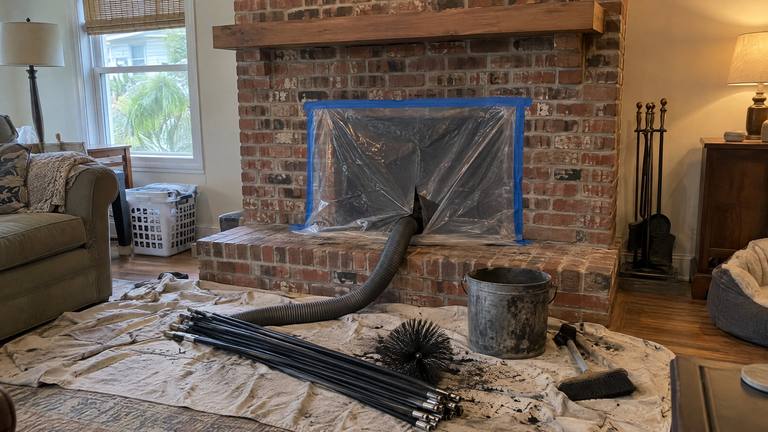
Once the animal is out, nest material and droppings come out with the firebox sealed, using brushes and a sealed, filtered vacuum.
-
Screened cap closes the top
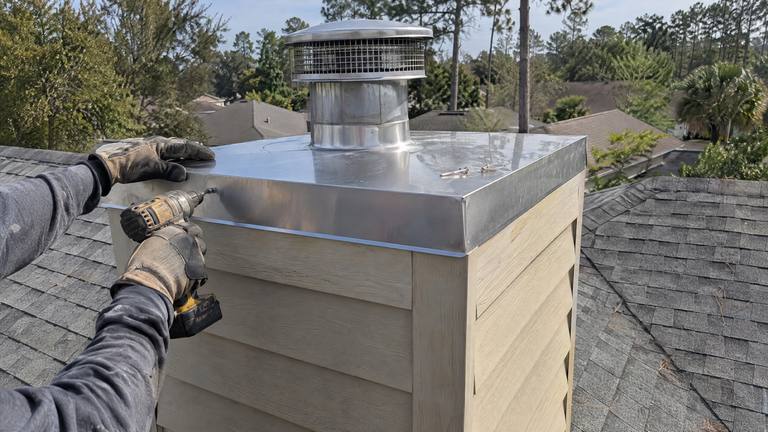
A cap with the right screen goes on each flue, and any other gap we find is written up with its repair.
Local Conditions
Sealing gaps at the crown in Sawgrass
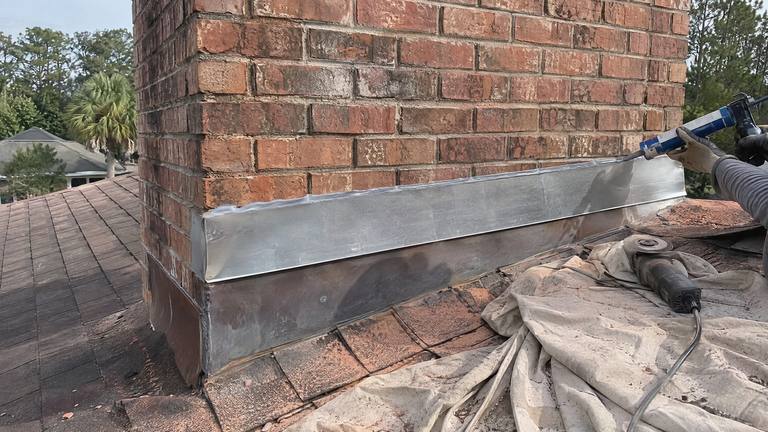
Crowns on the coast take hard weather, and a crown that shrinks away from the flue tile leaves a gap into the core of the chimney.
Closing a chimney in Sawgrass includes the crown, since a cap alone will not stop an animal using that gap.
10% off your first service when you book today
Animal removal in Sawgrass, booked today, comes with 10% off your first service.
What the swift rule means in practice
Federal law covers chimney swifts through the Migratory Bird Treaty Act. In the Fish and Wildlife Service's words, it is illegal to harass, injure or kill the birds, and the protection extends to their eggs and nests.
For a chimney, that turns into three working rules. An active nest is not removed. The flue is not capped or blocked while swifts are using it. The sweep and the cap are scheduled after the birds have migrated.
By the Service's account, the birds arrive in March or April and head south again in August or September. A plan for your chimney goes by the actual activity in it, confirmed quiet, with the calendar only as a guide.
Factory-built chimneys take listed parts
The metal chimney above a factory-built fireplace was tested and listed as a complete system, and its cap is one of the listed parts. Under the Florida Building Code, such a chimney is installed and finished off at the top exactly as its maker's instructions say (R1005.1), and decorative shrouds are not allowed there unless listed for that chimney (R1005.2).
So a generic masonry cap is not fitted to a factory-built flue, even if it seems to fit. When an animal has damaged or dislodged the cap on one, the replacement comes from the chimney's own maker, named by part and chimney model.
Keeping the cap screen open
A screen fine enough to stop animals can also catch soot, creosote flakes, leaves and seed pods. As those build up, the open area shrinks, the draft weakens and smoke can start to spill into the room. A clogged screen is also a sign that the flue itself needs attention.
NFPA 211's once-a-year chimney inspection covers the whole chimney, and the cap screen gets its look then too. A clogged screen is cleaned, and one that is torn or rusting is repaired or replaced before it lets the next animal in. On a fireplace used often, the screen may need clearing between yearly checks.
Free Inspection
Rules, timing and the cap, in writing
- Identification of what is in the flue, and the evidence behind it
- Who removes, excludes or traps the animal, named on the estimate
- Flue tiles and smoke chamber checked for damage once clear
- Crown cracks and open joints near the top that could admit animals
FAQ
Animals in Sawgrass chimneys, your questions
Does someone have to be home when you come?
Someone needs to let us in for the inside check and any clean-out, since both happen at the fireplace. The look from the roof can be done without anyone home if the chimney is safe to reach.
Can the flue for a furnace or water heater be capped too?
Yes, with a cap made for that appliance's venting, which keeps the flue open and sized for it. The estimate lists it separately from the fireplace flue.
Our Services
More services in Sawgrass
-
-
-
-
-
-


Learn more about chimney animal removalAll services in Sawgrass
Get the animal out and the chimney closed in Sawgrass
Scratching, chirping and wingbeats each point to a different animal, so describe the sound when you call (904) 920-5495 from Sawgrass.
Free Inspection