

Local chimney animal removal in San Marco
Nest out, flue clean, cap on. In San Marco, the order depends on what is living there, and finding out is free.
- Family owned and operated
- Free inspection and estimate
- Same-day service available
- Upfront pricing, no hidden fees
Get Your Free Inspection
Get a quote for chimney and fireplace repair and installation in Jacksonville.
Request received
Thank you. We will call you shortly to set a time.
or call (904) 920-5495
Why Choose Us
Chimney wildlife specialists who follow the rules
- Locally owned in Jacksonville
- Family owned and operated
- 100% satisfaction guaranteed
- Free inspection and estimate
- Same-day service available
- 10% off when you book today
Every flue on the chimney is checked, since an idle one is the first place animals move in.
- Free inspection and estimateFinding out what is in your San Marco flue, and which rules apply, is part of the free visit.
- Upfront pricing, no hidden feesClean-out, exclusion and cap are priced as separate lines, and any trapper is named in writing.
- Same-day service availableWhen the schedule has room, we can look at a noisy chimney the same day you call.
The damper is the line
While an animal is in the flue, the fireplace damper is the barrier between it and your living room. A throat damper in good shape, closed, keeps the animal on the chimney side. A plate that has rusted, warped or jammed half open lets it reach the smoke shelf, and sometimes the firebox.
For that reason, an animal visit in San Marco includes a look at the damper itself. If it will not close properly, the fireplace opening is covered for now, and the damper becomes a separate repair. A damper that works is still checked again after the animal is gone. A free animal check in San Marco starts with a call to (904) 920-5495 or the short form.
San Marco lies within Duval County. San Marco sits inland, more than about six miles from the coast.
What's Included
Chimney animal work we take on in San Marco
- Flue looked down from the top with a strong light
- Protected birds and bats identified before any step
- Damper and smoke shelf checked after the clean-out
- Crown gaps and chase cover holes closed
How It Works
From the first scratch to a closed chimney in San Marco
-
Tell us what you hear
Chirping, scratching and the time of day help us guess what is up there. Keep the damper shut and do not light a fire.
-
Animal identified, rules checked
A look down from the top with a light confirms what it is. Swifts and bats have legal timing, and we explain it.
-
Flue emptied, nest cleaned out
Once the animal is out, nest material and droppings come out with the firebox sealed, using brushes and a sealed, filtered vacuum.
-
Screened cap closes the top
A cap with the right screen goes on each flue, and any other gap we find is written up with its repair.
Local Conditions
Bats in a chimney in San Marco
Florida's nuisance wildlife rule sets the dates when bats may be excluded, and it bans sealing a roost while young cannot fly.
For bats in a chimney in San Marco, a one-way device goes on in the allowed window, and the flue is closed only after they have left.
10% off your first service when you book today
Ask for the first-service offer and 10% comes off your animal job.
Why a fire is the wrong eviction
Lighting a fire to drive out an animal feels logical and goes wrong in several ways. Heat and smoke rise into the flue where the animal is, so one that cannot climb out quickly dies there. Nest material is dry fuel and can ignite.
A nest or an animal blocking the flue pushes smoke and carbon monoxide into the living space. And if the animal belongs to a protected species, harming it breaks the law.
The better first step is quiet: damper shut, fireplace unlit, the room left alone. An animal can find its own way out of a quiet chimney, and one that does not is handled by exclusion or trapping, depending on what it is.
An idle flue is an open invitation
A flue that sees no fires is dark, sheltered and quiet, which is what nesting and roosting animals look for. With no heat or smoke rising through it, nothing discourages them, and an uncapped idle flue can host a nest for months without anyone knowing.
Two closures suit a fireplace that is seldom lit. A screened cap keeps animals out and leaves the flue open to air. A top-sealing damper, fitted on the flue itself, closes it while the fireplace is idle and opens for a fire, which also stops outside air moving through the chimney. We compare the two for your fireplace.
Before the first fire after an animal
A fireplace that has had an animal in its flue should not go straight back into use once the animal is gone. Debris can remain higher up than the visible part of the flue, droppings may coat the smoke shelf, and a damaged damper or cracked tile may not be obvious until someone looks for it.
The order that works is simple: clear and clean the flue, check the flue, damper and smoke chamber, fix what the animal damaged, and close the top. Then light a small fire first and watch that the smoke goes up cleanly. If it spills into the room, put the fire out and call before trying again.
Free Inspection
Rules, timing and the cap, in writing
- Identification of what is in the flue, and the evidence behind it
- Nest material and droppings cleared from the shelf, damper and flue
- Repair or refit of an existing cap that let the animal in
- Crown cracks and open joints near the top that could admit animals
FAQ
Animals in San Marco chimneys, your questions
Is it legal to cap a chimney with birds nesting in it?
Not when the birds are chimney swifts with an active nest, which federal law protects. The cap waits until they have migrated, and the damper stays closed in the meantime.
Does someone have to be home when you come?
Someone needs to let us in for the inside check and any clean-out, since both happen at the fireplace. The look from the roof can be done without anyone home if the chimney is safe to reach.
Our Services
More services in San Marco
-
-
-
-
-
-
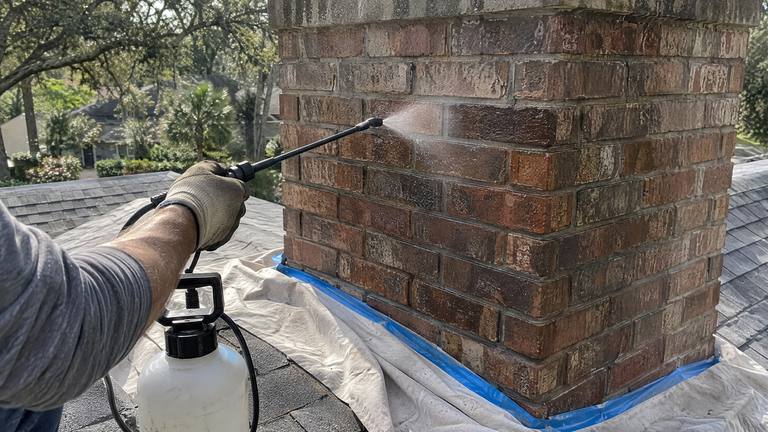


Learn more about chimney animal removalAll services in San Marco
One visit to learn what moved in
Our wildlife pros identify what is in your San Marco flue and explain the rules first. Call (904) 920-5495.
Free Inspection