
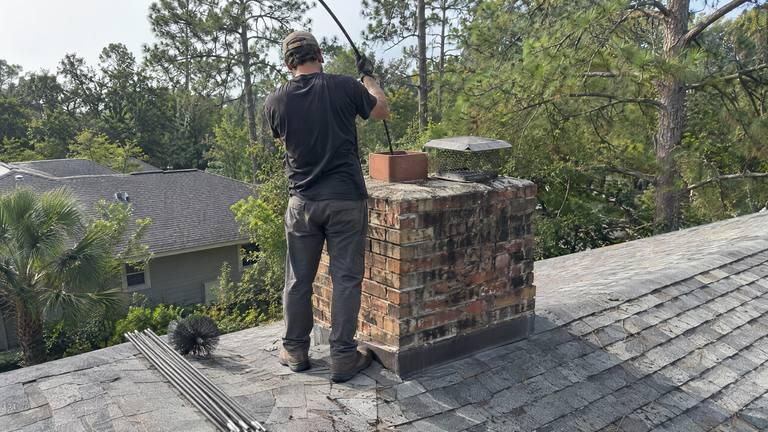
Local chimney creosote removal in Lake Shore
The glaze in your Lake Shore flue mapped by height for free, then the method and rounds priced in writing.
- Fully licensed and insured
- Locally owned
- Family owned and operated
- Same-day service
Get Your Free Inspection
Get a quote for chimney and fireplace repair and installation in Jacksonville.
Request received
Thank you. We will call you shortly to set a time.
Quicker by phone? Call (904) 920-5495
Family-owned creosote experts serving Lake Shore
- Locally owned in Jacksonville
- Family owned and operated
- 100% satisfaction guaranteed
- Free inspection and estimate
- Same-day service available
- 10% off any service
Treatment rounds and the rules between them are written down in advance.
- Free inspection and estimateThe glaze in your Lake Shore flue is mapped by height and the liner checked at no charge.
- 100% satisfaction guaranteedIf the flue is not left bare, examined and clean as agreed, we come back and finish it.
- Family owned and operatedA family business chooses the method and does the work, so the care taken with your liner stays in one set of hands.
A fireplace that sat for years
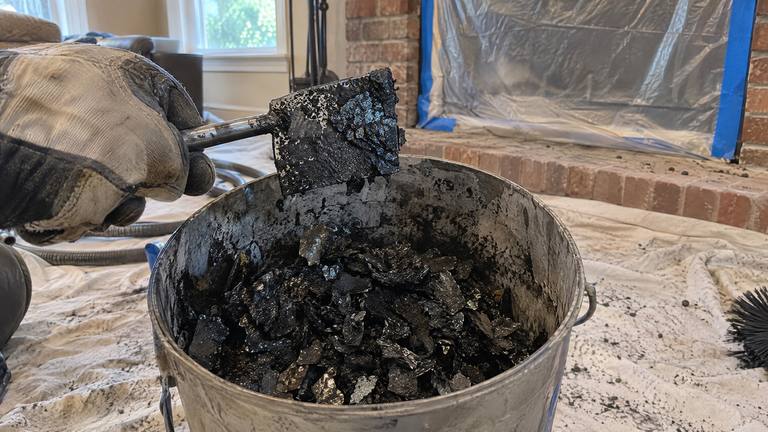
Years of disuse do not clear a flue, and it can still hold the deposits of its last seasons. Old glaze does not go away on its own, and it hides the condition of the liner behind it.
Before the first fire in years, the flue should be cleaned and examined. Hard, shiny deposits call for removal, which is more than a brush can do. We check, remove and write down what the bare flue shows. Planning the first fire in years at a house in Lake Shore? Phone (904) 920-5495 for a free creosote inspection.
Lake Shore is a neighborhood within the City of Jacksonville. Lake Shore lies within Duval County.
Glaze off, flue checked, room protected
- Firebox sealed under a filtered vacuum
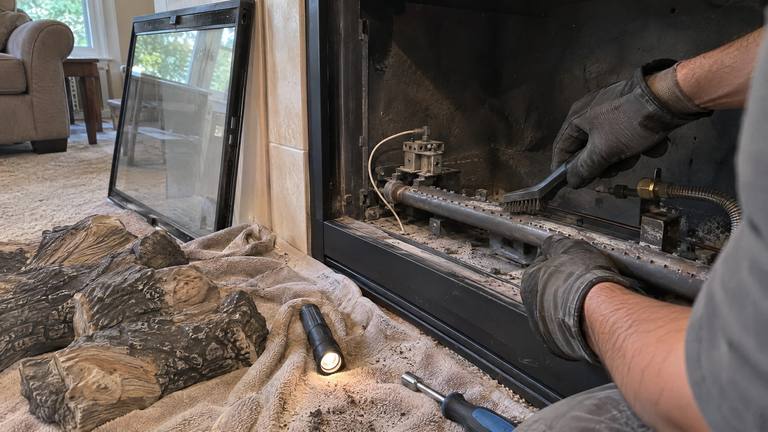
- Room and hearth covered while we work
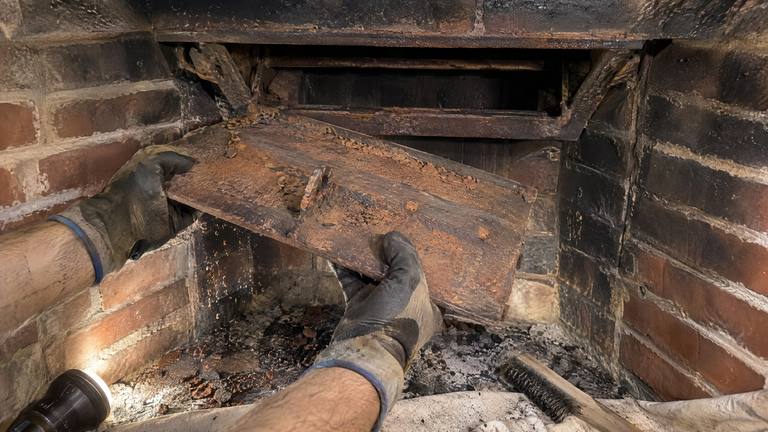
- Damper area cleaned and worked through its travel
- A written creosote plan for your Lake Shore fireplace, free
Check, seal, remove, examine
-
Glaze mapped, liner checked
The deposits are recorded by height and the liner assessed before a method is chosen.
-
Room sealed and protected
The fireplace opening is closed with a panel under a filtered vacuum, and the hearth area covered.
-
Rotary passes or treatment rounds
Glaze is broken loose with rotary tools on sound tile, or softened with a labeled treatment and brushed away.
-
Bare flue examined
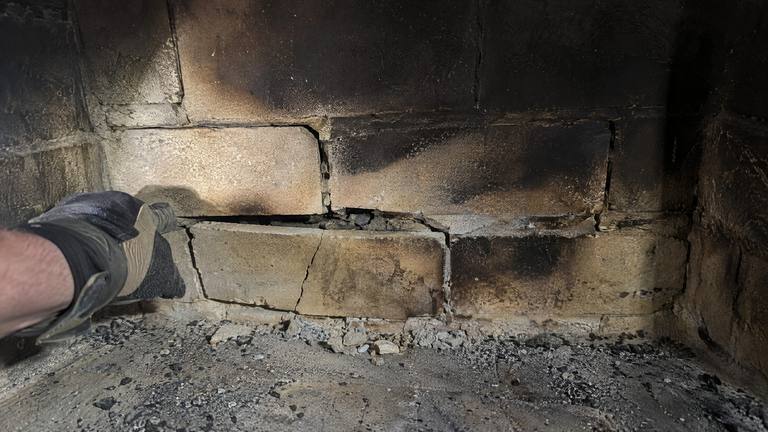
The cleaned flue is checked from both ends, draft tested and burning habits reviewed.
Rain through uncapped flues in Lake Shore
An uncapped flue takes rain inland as well, and wet creosote smells and runs.
A cap priced with creosote removal in Lake Shore keeps new deposits drier between cleanings.
10% off any service booked within 72 hours of inspection
However many rounds the glaze takes, each one is discounted.
How rotary removal works
Rotary removal uses flexible rods driven by a drill, with a head on the end that spins inside the flue. The head may carry chains, cable whips or cutting tips, each more aggressive than the last.
The head is run through the flue in passes, starting gentle and stepping up only as needed, while debris falls into the sealed firebox below. Between passes we check progress with a light. The aim is bare tile with the least force that gets there, because every step up in aggression is a step up in risk to the liner.
Using the fireplace between rounds
When removal takes more than one round, the product label decides whether and how the fireplace may be used in between. Some treatments need fires to work. Others need the fireplace left cold until they are brushed out.
We give you the instructions for your treatment in writing, with the date of the next visit. If the fireplace should not be used, we say so plainly. If it may be used, we explain how, including what kind of fire and for how long, so the treatment works as its maker intends. If you are unsure about a fire, a phone call before lighting it settles the question.
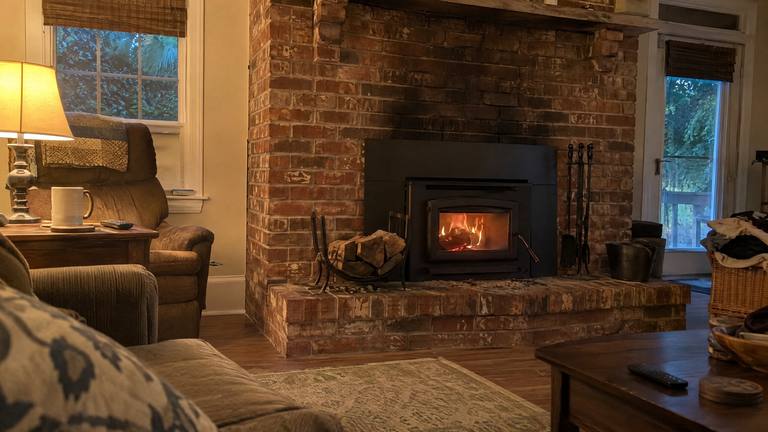
Creosote above a wood-burning insert
A wood insert burning on low air can deposit creosote in its liner or, where there is no full liner, on the walls of the original flue above it. Those deposits restrict the insert's draft and can be hard to reach.
How they are removed depends on how the insert is vented and what its manual allows. Some need the insert pulled forward to reach the connection. Others are cleaned from the roof. We check the setup before quoting, and if the insert is venting into an oversized flue without a liner, we explain why a liner matters.
Deposit findings written down before pricing
- Fireplace opening sealed and room covered before work starts
- Smoke chamber and damper area cleared along with the flue
- Honeycombed deposits noted, with the closer flue check they call for
- Debris bagged, firebox and hearth cleaned before we leave
Creosote questions from Lake Shore
Will you make a mess in the house?
No more than a dusty drop cloth. The fireplace opening is sealed with a panel and a filtered vacuum, the hearth area is covered, and we clean the firebox before leaving.
Should the fireplace stay cold between treatment rounds?
That depends on the product. Some need fires to work and others need the fireplace left cold, and we give you the rules for yours in writing.
More services in Lake Shore
-
-
-
-
-
-


Remove hardened creosote in Lake Shore
Glaze reported by a sweep in Lake Shore? Share the details at (904) 920-5495 so the right method is planned.
Free Inspection