
Local chimney animal removal for Lake Shore homes
Nest out, flue clean, cap on. In Lake Shore, the order depends on what is living there, and finding out is free.
- Family owned and operated
- Free inspection and estimate
- Same-day service available
- Upfront pricing, no hidden fees
Get Your Free Inspection
Get a quote for chimney and fireplace repair and installation in Jacksonville.
Request received
Thank you. We will call you shortly to set a time.
or call (904) 920-5495
Why Choose Us
Chimney wildlife specialists who follow the rules
- Locally owned in Jacksonville
- Family owned and operated
- 100% satisfaction guaranteed
- Free inspection and estimate
- Same-day service available
- 10% off when you book today
The clean-out stays inside the chimney, with the fireplace opening sealed while we work.
- Free inspection and estimateFinding out what is in your Lake Shore flue, and which rules apply, is part of the free visit.
- Upfront pricing, no hidden feesClean-out, exclusion and cap are priced as separate lines, and any trapper is named in writing.
- Same-day service availableWhen the schedule has room, we can look at a noisy chimney the same day you call.
How it got in
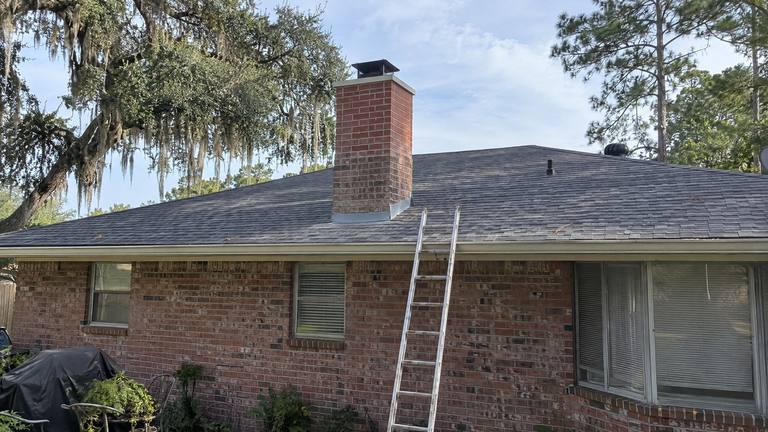
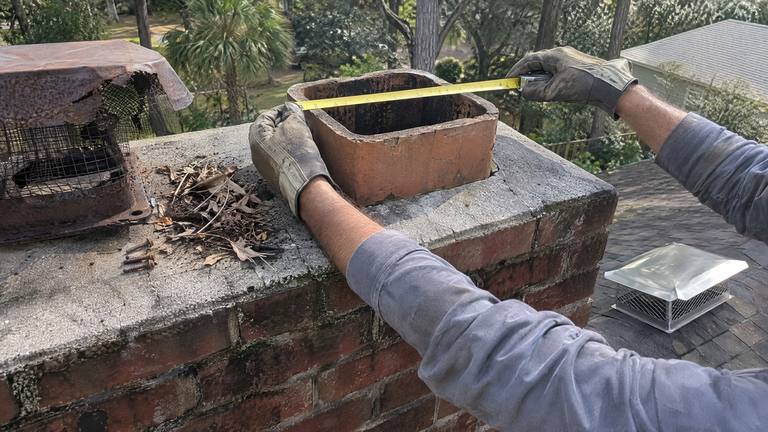
Every animal job ends with the same question: where did it get in? On a masonry chimney the first suspect is the flue top, either uncapped or under a cap whose screen has rusted, torn or pulled loose. It can also be a crack in the crown, open joints near the top, or a gap beside the flue tile.
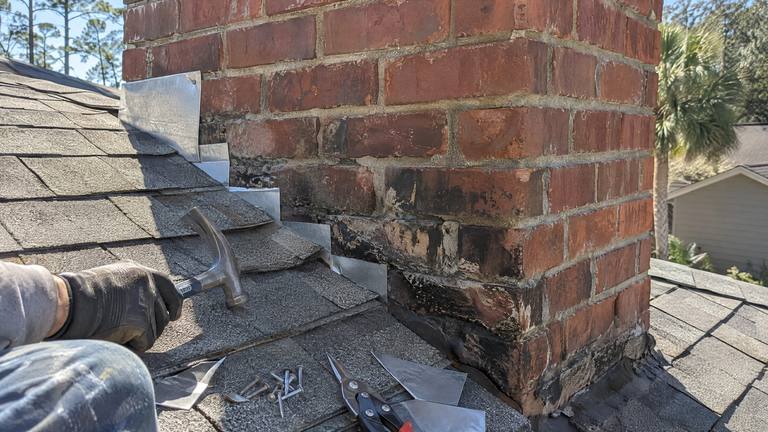
On visits in Lake Shore, the entry is found before the fix is priced, because a new cap does nothing about a hole in the crown. Each opening is listed with its repair. Rain uses the same openings, so closing them helps the chimney twice. On the phone at (904) 920-5495, describe what you hear in the Lake Shore chimney and when it happens.
The county for Lake Shore is Duval County. The coast is more than about six miles from Lake Shore.
What's Included
From identifying the animal to capping the flue
- Sounds and their timing used to narrow down the animal
- Legal timing explained with the rule named
- Fireplace opening sealed while the flue is cleaned out
- Nests, droppings and debris removed and bagged
How It Works
From the first scratch to a closed chimney in Lake Shore
-
Tell us what you hear
Chirping, scratching and the time of day help us guess what is up there. Keep the damper shut and do not light a fire.
-
Animal identified, rules checked
A look down from the top with a light confirms what it is. Swifts and bats have legal timing, and we explain it.
-
Flue emptied, nest cleaned out
Once the animal is out, nest material and droppings come out with the firebox sealed, using brushes and a sealed, filtered vacuum.
-
Screened cap closes the top
A cap with the right screen goes on each flue, and any other gap we find is written up with its repair.
Local Conditions
How animals get into chimneys in Lake Shore
Lake Shore sits inland, where salt rust plays less of a part. Animals get in through a missing or torn cap screen, a gap at the crown or a hole in a chase cover.
Removal is only half the job. The way in gets closed before we leave.
10% off your first service when you book today
Clean-out and cap booked today, and a first service with us is 10% off.
Evidence on the smoke shelf
The smoke shelf is where a chimney keeps its records. Anything that falls down the flue lands there: nesting fiber and twigs, droppings, bits of shell, soil, leaves and pieces of a failing cap screen. Reading that layer before it is disturbed tells a lot about who has been using the chimney and for how long.
It also points to other work. Rust flakes suggest a damper or cap that is corroding. Mortar crumbs point to open joints above. Wet debris means rain is getting in, which points to an open flue top. The shelf is cleared only after that reading, so nothing useful is lost.
Who may remove a nuisance animal
Florida's rule on nuisance wildlife (68A-9.010) gives the owner of a property the right to deal with nuisance wildlife there, personally or through someone the owner picks, as long as the method is one the rule allows. Protected species and bats sit outside that general permission and carry their own limits.
The rule also controls what happens to an animal caught alive, including where it may be released. For Lake Shore jobs that need trapping, the estimate names who is doing it, so you know who is acting on your authority and under which rule. The chimney clean-out and the cap follow once the flue is empty.
Keeping the cap screen open
A screen fine enough to stop animals can also catch soot, creosote flakes, leaves and seed pods. As those build up, the open area shrinks, the draft weakens and smoke can start to spill into the room. A clogged screen is also a sign that the flue itself needs attention.
NFPA 211's once-a-year chimney inspection covers the whole chimney, and the cap screen gets its look then too. A clogged screen is cleaned, and one that is torn or rusting is repaired or replaced before it lets the next animal in. On a fireplace used often, the screen may need clearing between yearly checks.
Free Inspection
Rules, timing and the cap, in writing
- Identification of what is in the flue, and the evidence behind it
- Nest material and droppings cleared from the shelf, damper and flue
- Damper condition after the animal is gone, with any repair priced
- Screened cap sized to the flue, with mesh and metal named
FAQ
Animals in Lake Shore chimneys, your questions
Will the animal come back after it leaves?
It can, as long as the way in stays open. So the job ends with the entry closed, whether by a screened cap, a repaired crown or a fixed chase cover.
Does someone have to be home when you come?
Someone needs to let us in for the inside check and any clean-out, since both happen at the fireplace. The look from the roof can be done without anyone home if the chimney is safe to reach.
Our Services
More services in Lake Shore
-
-
-
-
-
-


Learn more about chimney animal removalAll services in Lake Shore
One visit to learn what moved in
Our wildlife pros identify what is in your Lake Shore flue and explain the rules first. Call (904) 920-5495.
Free Inspection