
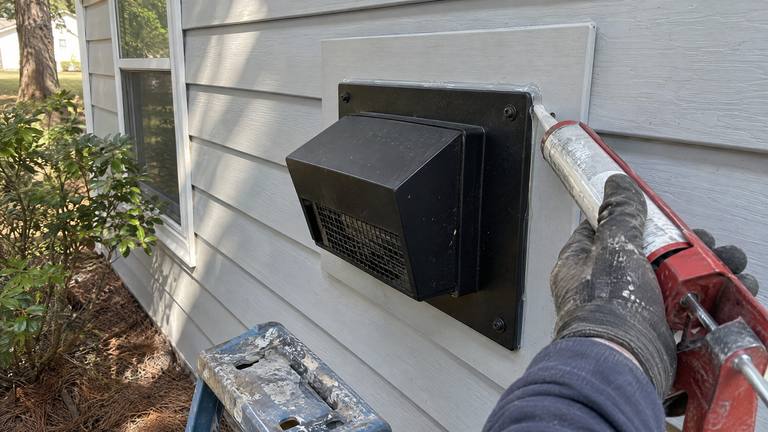
Family-run gas fireplace venting in St. Nicholas
Your St. Nicholas gas fireplace vent traced joint by joint at no charge, with each fix written down by our family crew.
- Fully licensed and insured
- Locally owned
- Family owned and operated
- Same-day service
Get Your Free Inspection
Get a quote for chimney and fireplace repair and installation in Jacksonville.
Request received
Thank you. We will call you shortly to set a time.
Quicker by phone? Call (904) 920-5495
Local vent specialists who repair with listed parts
- Locally owned in Jacksonville
- Family owned and operated
- 100% satisfaction guaranteed
- Free inspection and estimate
- Same-day service available
- 10% off any service
Any new section matches the pipe family the fireplace was approved with.
- Free inspection and estimateThe vent on your St. Nicholas gas fireplace is traced from the collar to the cap and measured against the code at no charge.
- Upfront pricing, no hidden feesEach section, fitting and reroute is priced on its own line before any pipe is cut or replaced.
- 100% satisfaction guaranteedIf the flame, the draft or the shutdown problem is not fixed by the vent repair we quoted, we come back.
A smell of exhaust in the room
Exhaust in the room from a gas fireplace is a safety matter first. Shut the unit off and air the room out. With a carbon monoxide alarm going, or anyone headachy, dizzy or sick to the stomach, everybody goes outside and dials 911 from there. Rooms with a fireplace are the place for a working carbon monoxide alarm.
With the house clear, the vent is traced for an opened joint, a cracked inner pipe or a blocked cap, and the glass seal gets checked on sealed units. The fireplace stays off until the fault is found. Exhaust smell from a gas fireplace in St. Nicholas? Call (904) 920-5495 once everyone is outside.
St. Nicholas lies within Duval County. St. Nicholas does not reach the coast.
What gas fireplace venting covers in St. Nicholas
- Crushed or rusted sections replaced from the listed system
- Sagging runs resupported and resloped
- New vent routes drawn before any cutting
- Roof covering work named for a roofer
Identify, trace, repair, test
-
Identify the system
The manual and pipe markings tell us the vent type, size and maker.
-
Trace the run
With the unit off and cool, we follow the vent and check joints, supports and clearances.
-
Repair with listed parts
Joints are reseated, damaged sections replaced and crowded caps moved.
-
Test and record
We fire the unit, check flame and draft, then note every fix.
Yearly vent checks in St. Nicholas
Makers ask for gas fireplace vents to be inspected yearly. In St. Nicholas a vent that has not been looked at in years is worth a visit.
We trace it from collar to cap.
10% off any service booked within 72 hours of inspection
Cap too close to a window in St. Nicholas? The reroute is discounted too.
Soffits, corners, meters and intakes
Windows are only part of a termination check. One maker's chart for its direct-vent units also keeps the cap 18 inches below a ventilated soffit within 2 feet horizontally, 12 inches below an unventilated soffit, 3 feet from a service regulator vent outlet, and 3 feet to either side of a gas meter and regulator within 15 feet above them.
The same chart also covers mechanical air supply inlets near the cap. We measure each of these on the house, not only the window. A cap can pass the window rule and still fail one of these.
Height limits on a B-vent
Natural-draft vents need height to draw. One maker's B-vent fireplaces need at least 8 feet of vertical vent, measured from the top of the unit to the top of the termination, and allow no more than 40 feet.
The same manual limits any horizontal portion to half the height of the vent system, measured center to center. A short or mostly sideways B-vent drafts poorly and can spill at the draft hood. We measure the system against those figures before repairing it, since a repair that keeps a failing layout keeps the problem. A tall vent can overdraw too, which is why there is a maximum as well as a minimum.
Cap height and roof pitch
A steeper roof needs a taller B-vent cap, because wind moving over the roof creates pressure zones near the surface. One maker's table asks for 1 foot above a roof from flat to 7 in 12, rising in steps to 2 feet over 8 in 12 to 9 in 12, and 5 feet over 12 in 12 to 14 in 12.
We measure the pitch with a gauge and the cap height from the roof, and extend the vent with listed pipe where it falls short. The shingles or roof covering around the penetration are a roofer's work, named on the estimate. The table is the maker's; the roofer's work around the pipe is separate.
Clearances, slope and caps on paper
- Vent type, size and maker from the manual and the pipe markings
- Every reachable joint checked for full engagement and its lock
- Termination measured against Table 503.8 and the maker's chart
- A written list of findings and fixes, collar to cap
Gas fireplace vent questions from St. Nicholas
Why does my flame look blue and lazy?
It is short of air, and a blocked vent is one of the listed causes. Turn the unit off and have the cap and joints checked.
How often should the vent be inspected?
Once a year at minimum, plus a check before first use, by someone qualified. We can put it on the calendar.
More services in St. Nicholas
-
-
-
-
-
-


Learn more about gas fireplace ventingAll services in St. Nicholas
Fix the vent on your St. Nicholas gas fireplace
Fireplace shutting off in St. Nicholas? Our specialists start with the vent, free.
Free Inspection