
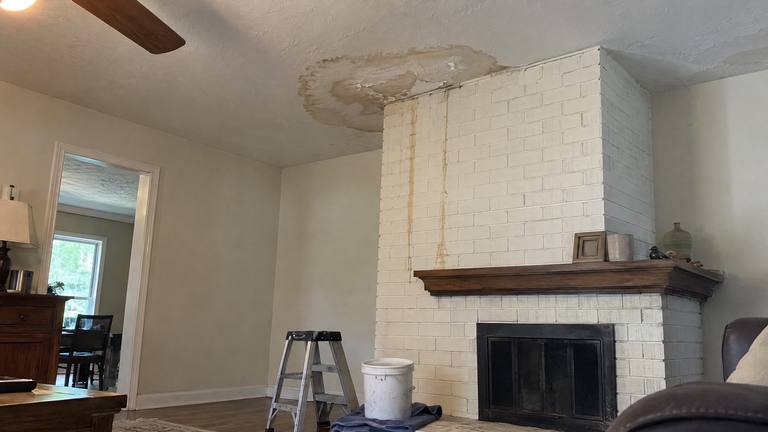
Local chimney leak repair in Bayard
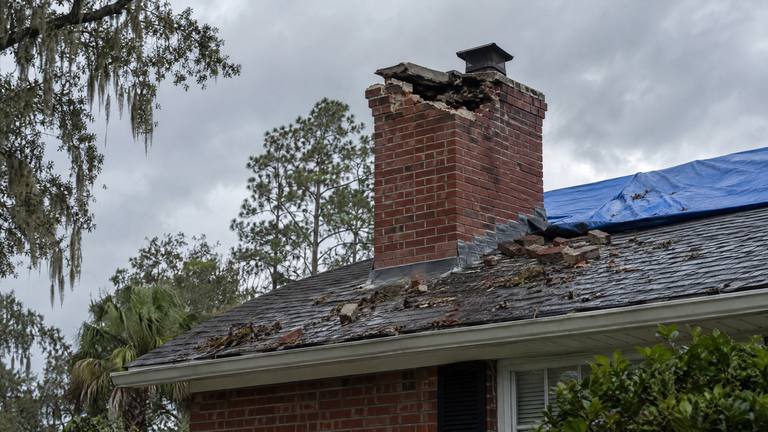
Crown, flashing, brick, flue top or chase cover? A free inspection finds which one is leaking at your Bayard home.
- Fully licensed and insured
- Locally owned
- Family owned and operated
- Same-day service
Get Your Free Inspection
Get a quote for chimney and fireplace repair and installation in Jacksonville.
Request received
Thank you. We will call you shortly to set a time.
Quicker by phone? Call (904) 920-5495
Chimney leak experts who test before they fix
- Locally owned in Jacksonville
- Family owned and operated
- 100% satisfaction guaranteed
- Free inspection and estimate
- Same-day service available
- 10% off any service
The attic stains and the test result for your Bayard home come before any repair price.
- Free inspection and estimateThe first leak check at your Bayard home is free, attic and roof included.
- Upfront pricing, no hidden feesThe repair is priced for the entry point the test proved, and nothing you do not need is added.
- 100% satisfaction guaranteedIf the stain comes back after the repair, tell us and we come back to find out why.
Leaks that began after other work on the house
Sometimes a chimney leak starts right after something else was done to the house. A satellite dish bracket screwed into the mortar, new gutters strapped to the brick, a re-roof that reused old flashing, or pressure washing that blasted open weak joints can all create a new way in.
When the timing lines up like that on a house in Bayard, we look at that work first. It narrows the test and it can explain why a chimney that stayed dry for years suddenly did not. The finding then says what the earlier work changed and how we would put it right. Book the free leak inspection for your Bayard home at (904) 920-5495, ideally before the next rain.
Bayard sits in Duval County. Bayard is inland.
Tracing and stopping a chimney leak
- Crown flooded with the flue covered
- Each brick face sprayed the way driven rain hits it
- Zones spaced out so the brick dries between tests
- Roof leaks handed to your roofer with our notes
From attic stain to proven entry point in Bayard
-
Attic stains and readings
We read the stain pattern on the rafters and take moisture readings on the chimney breast before any water goes on.
-
Water test by zone
Flashing, faces, crown and flue are each wet on their own for a set time while someone watches inside.
-
Fix at the proven entry
The part that let water in gets the repair, whether that is flashing, a crown coating, a cap or repointed joints.
-
Dry-out and a storm check
Wet areas are noted for drying, and after the next heavy rain we check that the stain stays dry.
Keeping a leak log in Bayard
A few notes can save hours of testing. Write down the date each time the leak shows, how hard it was raining, which way the wind blew and how long after the rain started the water appeared.
Bring the log to the visit in Bayard, and we plan the water test around it.
10% off any service booked within 72 hours of inspection
If the inspection finds two leaks, each repair you book before 72 hours have passed is 10% off.
Measuring how much water the brick drinks
A RILEM tube, sometimes called a Karsten tube, is a small graduated glass or plastic tube stuck to the face of the brick with putty. It is filled with water, and the drop in the column over a set time shows how quickly that patch of masonry absorbs water under light pressure.
The test compares one face with another, a brick with the joint beside it, or a treated area with an untreated one. It does not replace a hose test, but it shows whether a face is drinking enough water to matter and whether a repellent would help once the openings are closed.
Testing the open flue as its own zone
An uncapped flue is tested last, after the crown, because it is the highest entry point. With the crown sheltered, water is run into the flue opening at a rate like steady rain.
Water from an open flue runs down the liner and lands in the smoke chamber, on the damper and in the firebox. If that is where the leak shows, and the other zones stayed dry, a cap sized to the flue is the fix. If the water shows up on a ceiling instead, the liner itself may have open joints that let water out into the masonry on its way down.
Damp mortar in the smoke chamber
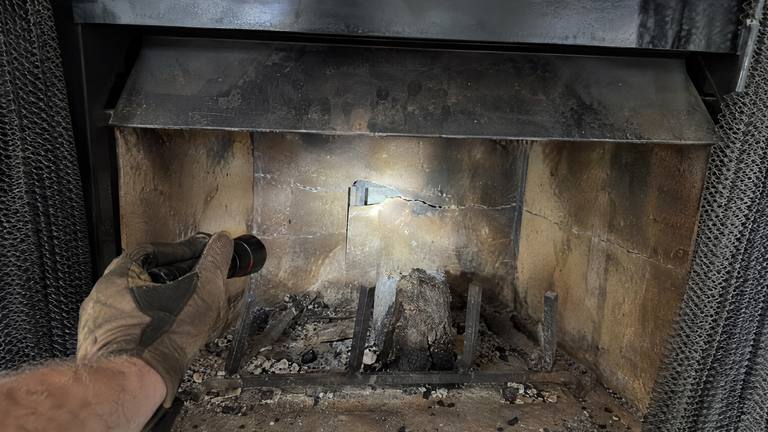
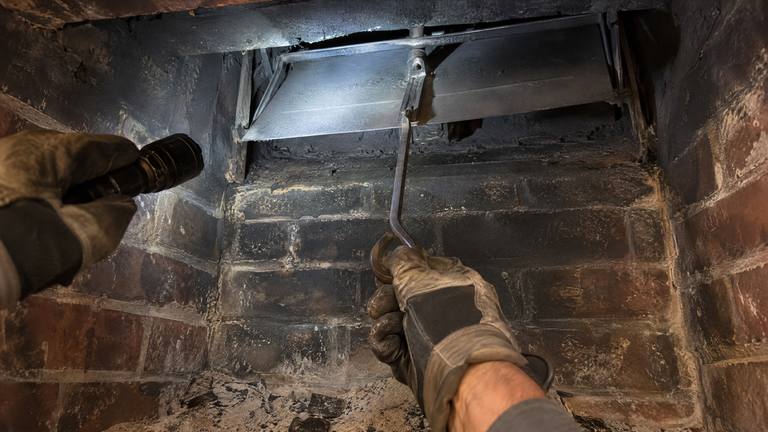
The smoke chamber, the tapered space between the damper and the flue, is where water coming down the inside of a chimney tends to collect. Damp or crumbling mortar there, or a rust-stained smoke shelf, shows that water has been getting into the flue or the core of the stack for some time.
A light from the firebox shows the chamber on every leak call. Damp mortar there points us to the flue top and the crown before the outside faces. Mortar that has washed out also needs repair once the leak is stopped, and that is a separate line of work.
Zones tested and what they showed
- Zones tested in order, with time and result for each
- Moisture readings on the chimney breast before and after testing
- Repair for the proven entry point, with materials named
- Interior damage noted for drywall, paint or framing trades
Leak questions from Bayard
Will the water test make my leak worse?
The test puts water where rain already goes, in controlled amounts, and we stop a zone as soon as water shows inside. We protect the area below the leak with towels or a tray. Any water that comes in is much less than a storm would bring.
Should I repair the ceiling now or wait?
Wait until the chimney has been fixed and has come through a heavy rain dry. Repairing the ceiling first risks staining the new paint if the leak is not fully closed. Moisture readings tell you when the area is ready.
More services in Bayard
-
-
-
-
-
-


Stain after rain, free check
Our leak pros read the attic, test the chimney zone by zone and write down the entry. Call (904) 920-5495 for Bayard.
Free Inspection