
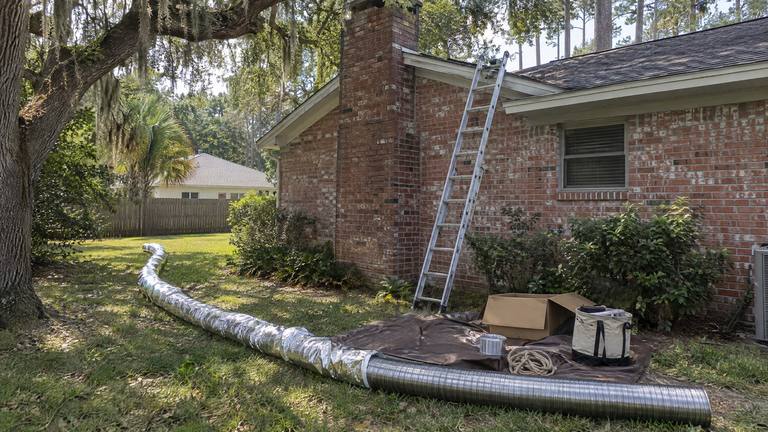
Chimney liner installation in Sunbeam by local liner pros
Liner connections, alloy, sizing and insulation checked against the installed equipment and system listing during a free inspection in Sunbeam.
- Fully licensed and insured
- Locally owned
- Family owned and operated
- Same-day service
Get Your Free Inspection
Get a quote for chimney and fireplace repair and installation in Jacksonville.
Request received
Thank you. We will call you shortly to set a time.
Quicker by phone? Call (904) 920-5495
Local liner experts for Sunbeam fireplaces and stoves
- Locally owned in Jacksonville
- Family owned and operated
- 100% satisfaction guaranteed
- Free inspection and estimate
- Same-day service available
- 10% off any service
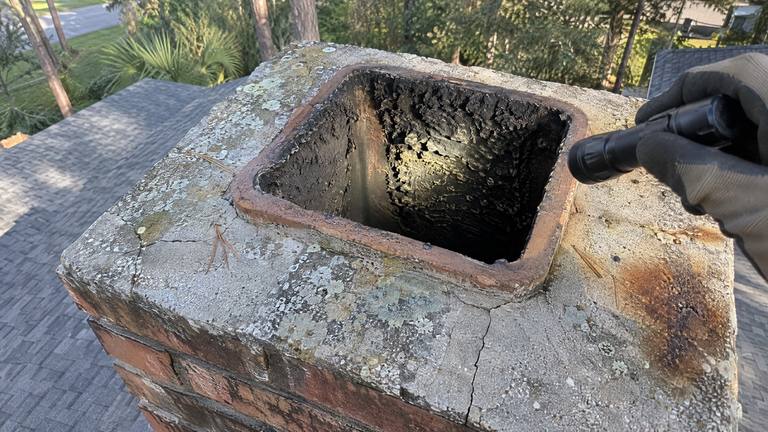
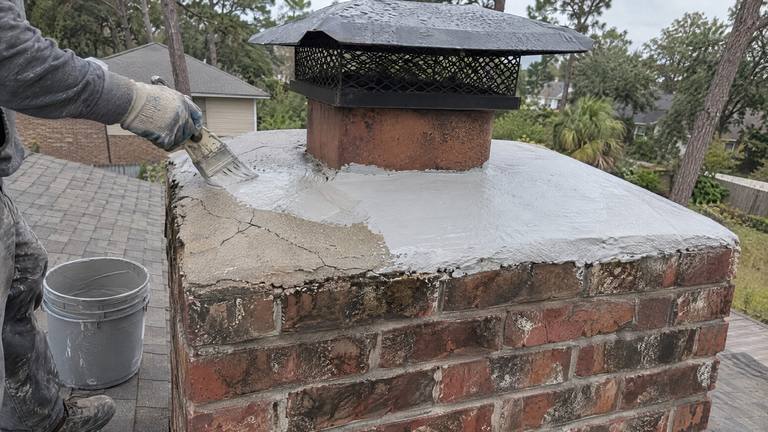
The crown under the top plate is checked too, because a cracked crown lets water around a new liner.
- Free inspection and estimateWe sweep and measure the flue in Sunbeam at no charge before any liner is ordered.
- Upfront pricing, no hidden feesLiner size, alloy, insulation and cap are one written price, set before the order goes in.
- Workmanship warrantyHow we install the liner is covered by our workmanship warranty, and the maker's terms come in writing.
A masonry chimney built with no liner
Some masonry chimneys were built without any flue lining, with smoke running straight against the brick and mortar. The code calls for masonry chimneys to be lined, and an unlined flue shows why: mortar joints erode from the inside, heat passes through the brick toward framing, and the rough passage slows the draft.
Lining it means a listed stainless liner run the full height, insulated where its listing calls for it, with a cap at the top. The inspection that comes first confirms the brick around it is sound enough for your Sunbeam chimney to carry one. Book the free flue measurement for your Sunbeam home at (904) 920-5495.
Sunbeam is inland. Sunbeam is a neighborhood within the City of Jacksonville.
What relining covers in Sunbeam
- Old flue swept clean before anything goes in
- Stainless alloy picked for the fuel you burn
- Insulating blanket or poured mix where the listing asks
- Broken tile cleared out of the liner's way
Sweep, prove, size, reline
-
Sweep and prove the flue
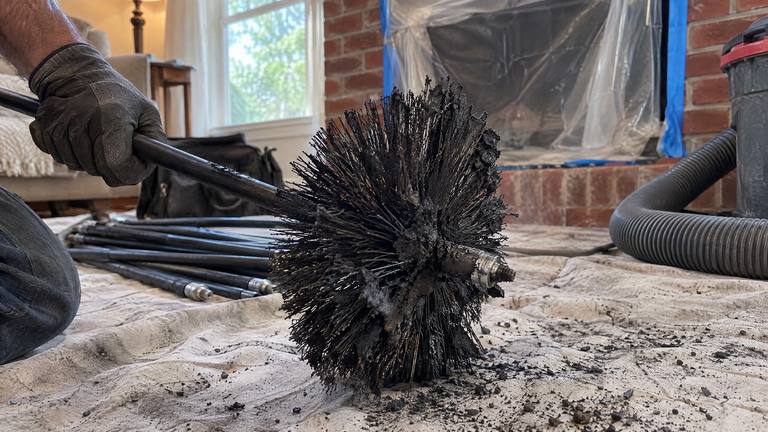
The flue is swept clean, then a test piece or cone is lowered to make sure the liner will pass every bend.
-
Size and alloy chosen
The diameter comes from the appliance collar or the fireplace opening, and the alloy from the fuel.
-
Liner run down and joined
The liner goes down with its insulation where the listing asks, and joins the stove, insert or smoke chamber below.
-
Top plate, cap and record
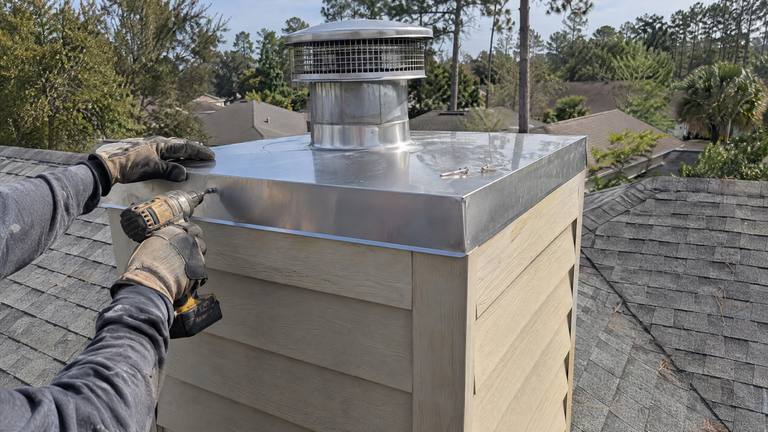
The top plate is clamped and sealed, the cap fastened, and you get the installation record.
Short chimneys and liners in Sunbeam
Liner systems are listed for a range of chimney heights, and a very short chimney may not draw well even when lined.
We measure the height of your Sunbeam chimney and check it against the liner's listing before ordering.
10% off any service booked within 72 hours of inspection
The liner and its fittings for your Sunbeam chimney come 10% off together.
The cap on a relined flue
A relined flue gets its own cap, clamped to the top plate or the liner collar. It keeps rain out of the liner, where water mixes with deposit and attacks the metal, and its screen keeps birds and animals out of a passage that is now too narrow to clear by hand.
Where the chimney had a single wide cap over several flues, the new liner cap may sit higher than the old cap allows. We check the fit and say whether the old cap is refitted, raised or replaced with an arrangement that covers every flue. The screen gets checked again on every sweep after that.
Old tile standing above the crown
Old clay tile can stand a few inches proud of the crown. If it is sound, one liner maker's instructions allow it to stay, with the top plate and cap fitted over it.
If it is cracked or crumbling, it is cut back flush with the crown using a chisel, taking care that pieces do not fall down the flue, and any that do are removed from the bottom. The cut surface and any cracks are filled with mortar so the top plate sits flat and seals against the masonry. The top is checked for level before the plate is set, whichever way it went.
Chimney height and the liner listing
Liner systems are listed for a range of chimney heights, and one maker's instructions call for a chimney at least 10 feet high. Below that, the draft a liner can produce may not be enough for the appliance.
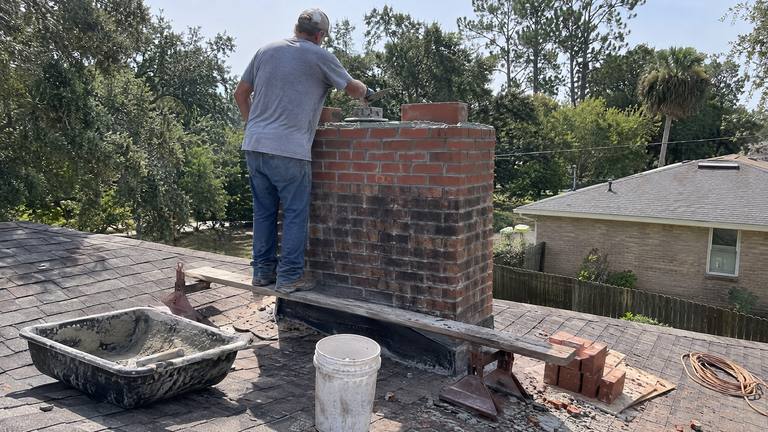
The code sets its own height rule at the roof: at least 3 feet above where the chimney passes through, and 2 feet above anything on the building inside a 10-foot radius (FBC R1003.9). Where the chimney meets neither rule, a liner alone does not fix it. A short chimney is pointed out before any liner is priced.
Size, alloy and listing on paper
- Stainless alloy picked from the listing for the fuel being burned
- Rigid or flexible liner chosen to suit a straight or offset flue
- Insert adapter fitted and clamped to the insert's flue collar
- Damaged tile at the top cut back flush and the surface patched
Relining questions from Sunbeam
Will the new liner show from outside?
Only the top plate and the liner cap show above the crown. They sit low, and the cap's screen and lid are the parts you will notice from the ground.
What paperwork do I get after relining?
The liner maker's instructions and an installation record with the liner size, alloy, length and insulation. Keep them with the house papers for the next sweep, inspection or sale.
More services in Sunbeam
-
-
-
-
-
-


Learn more about chimney liner installation and reliningAll services in Sunbeam
Reline your chimney in Sunbeam
Our relining pros sweep and prove your Sunbeam flue before sizing a liner. Call (904) 920-5495.
Free Inspection