
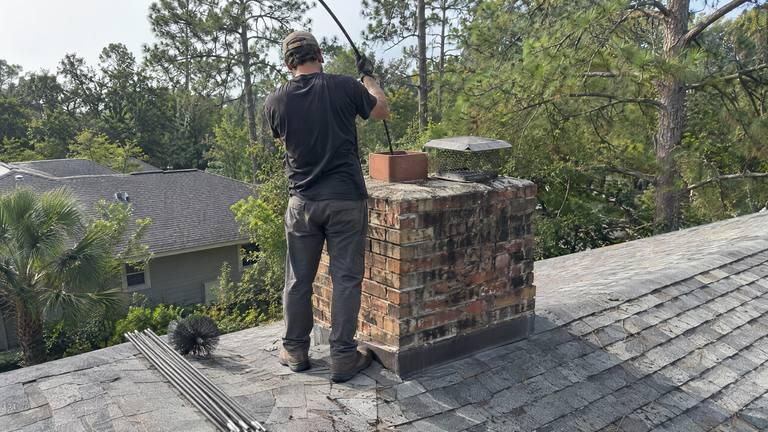
Creosote removal for Sandalwood homes
Glaze off and bare tile examined, so your Sandalwood fireplace is ready for cleaner fires, with our 100% satisfaction guarantee on the job.
- Fully licensed and insured
- Locally owned
- Family owned and operated
- Same-day service
Get Your Free Inspection
Get a quote for chimney and fireplace repair and installation in Jacksonville.
Request received
Thank you. We will call you shortly to set a time.
Quicker by phone? Call (904) 920-5495
Creosote specialists who check the liner first
- Locally owned in Jacksonville
- Family owned and operated
- 100% satisfaction guaranteed
- Free inspection and estimate
- Same-day service available
- 10% off any service
Relining is offered only when cleaning would not be the better spend.
- Free inspection and estimateThe glaze in your Sandalwood flue is mapped by height and the liner checked at no charge.
- 100% satisfaction guaranteedIf the flue is not left bare, examined and clean as agreed, we come back and finish it.
- Family owned and operatedA family business chooses the method and does the work, so the care taken with your liner stays in one set of hands.
What treatment rounds look like
Heavy glaze removed by treatment rarely comes off in one visit. A treatment is applied, left for the time its label gives, then brushed away with whatever it has loosened. Thick deposits can need another round. Each round is booked in advance so the gap follows the label, not our calendar.
Between rounds, the label decides whether the fireplace may be used. We give you those rules in writing and schedule the next round around them. Want to know how many rounds your flue may need in Sandalwood? Phone (904) 920-5495; the inspection that estimates it is free.
Sandalwood is in Duval County. The coastline lies beyond Sandalwood.
What creosote removal covers in Sandalwood
- Method matched to clay tile or stainless liner
- Treatment rounds scheduled with written rules
- Burning habits explained in plain terms
- A written creosote plan for your Sandalwood fireplace, free
How creosote removal runs
-
Glaze mapped, liner checked
The deposits are recorded by height and the liner assessed before a method is chosen.
-
Room sealed and protected
The fireplace opening is closed with a panel under a filtered vacuum, and the hearth area covered.
-
Rotary passes or treatment rounds
Glaze is broken loose with rotary tools on sound tile, or softened with a labeled treatment and brushed away.
-
Bare flue examined
The cleaned flue is checked from both ends, draft tested and burning habits reviewed.
Rain through uncapped flues in Sandalwood
An uncapped flue takes rain inland as well, and wet creosote smells and runs.
A cap priced with creosote removal in Sandalwood keeps new deposits drier between cleanings.
10% off any service booked within 72 hours of inspection
However many rounds the glaze takes, each one is discounted.
Where rotary tools do not belong
The same spinning chain that breaks glaze can chip the face of a clay tile, knock out weak mortar joints or tear a thin metal liner. On a sound, well-built clay flue, careful rotary work is safe. On a flue with cracked tiles or open joints, it can make the damage worse.
So the liner is checked before any rotary head goes up. Where the tile is weak, or where the flue has a metal liner whose maker limits the tools, a chemical treatment is used instead, even though it may take more rounds. The estimate records that choice and the reason.
Deposits on and around the damper
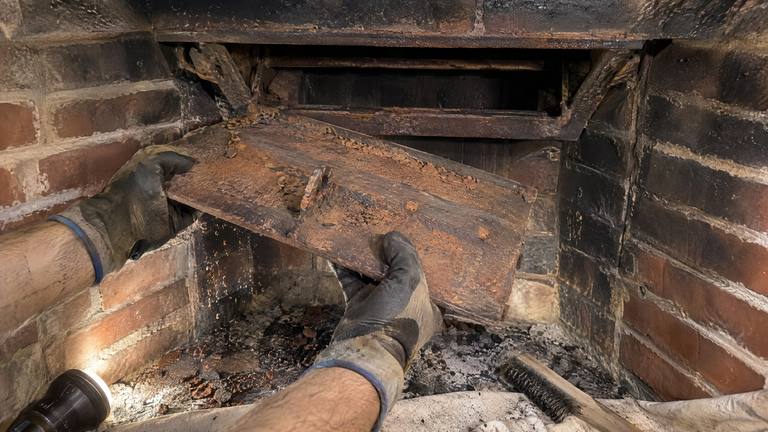
The damper sits in the throat, right where smoke speeds up and cools. Tar and glaze collect on the plate, the frame and the smoke shelf behind it, and heavy buildup can stop the damper closing or opening fully.
Clearing the damper area is part of creosote removal. The plate is worked through its travel once it is clean, and the seat is checked for rust and scale. A damper that still will not move properly once clean is noted for repair, and that work is priced separately. Glaze on a damper's seat can stop the plate sealing, so the seat is scraped clean too.
When removal uncovers damage
Glaze can hide damage for years, and removal sometimes reveals it: a tile split lengthwise, a joint with no mortar, a section flaked thin. Those are not caused by removal, but they could not be seen before it.
When we find damage, we stop at the point where more work could make it worse, show you what we found and explain the repair options. No fire is lit until the flue is sound again. Repairs are priced separately, and nothing beyond the agreed removal is done without your say. Having the flue bare also makes any repair more accurate to price, because nothing is hidden.
What we record about the glaze in Sandalwood
- Deposit type recorded by height, from soft soot to hard glaze
- Smoke chamber and damper area cleared along with the flue
- Bare flue examined from top and bottom once the glaze is off
- Honeycombed deposits noted, with the closer flue check they call for
Before the glaze comes off
Is rotary removal safe for my flue?
On a sound clay tile flue, careful rotary work is safe. On cracked tile or a thin metal liner it can cause damage, so we check the liner first and choose a treatment instead where needed.
What does a creosote inspection in Sandalwood cost?
The inspection is free, and the method, rounds and price are written down before any work. Book the removal within 72 hours of it and 10% comes off.
More services in Sandalwood
-
-
-
-
-
-


Get the glaze out of your Sandalwood flue
Shiny black deposits in Sandalwood? The inspection costs nothing, and removal booked within 72 hours of it is 10% off.
Free Inspection