
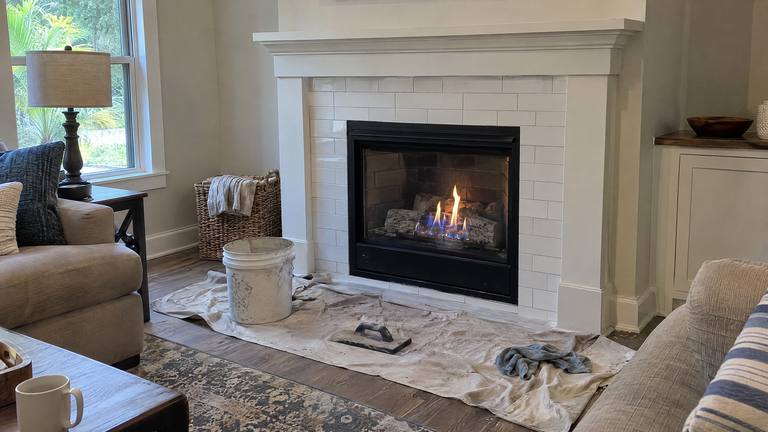
Gas insert fireplace installation in O'Neil
Mantel, opening and flue in O'Neil measured against the insert's rating plate before anything is ordered.
- Fully licensed and insured
- Locally owned
- Family owned and operated
- Same-day service
Get Your Free Inspection
Get a quote for chimney and fireplace repair and installation in Jacksonville.
Request received
Thank you. We will call you shortly to set a time.
Quicker by phone? Call (904) 920-5495
Local gas insert specialists who install to the listing
- Locally owned in Jacksonville
- Family owned and operated
- 100% satisfaction guaranteed
- Free inspection and estimate
- Same-day service available
- 10% off any service
Pressures are read at the valve and joints leak tested once gas arrives.
- Free inspection and estimateThe opening, flue and mantel of your O'Neil fireplace are measured against the insert's plate at no charge.
- Upfront pricing, no hidden feesInsert, vent kit, surround, cleaning and repairs are priced line by line, and the gas and power trades are named.
- 100% satisfaction guaranteedIf the insert does not light, burn or seal the way its manual describes after our installation, we come back.
A chimney that serves two fireplaces
Some chimneys carry two flues, one for each fireplace, and sometimes a wood stove shares the stack. A gas insert's pipes need a flue that nothing else uses, and its maker rules out any hookup to a flue that also serves a solid-fuel appliance. Two fireplaces on one chimney can each have their own insert, one flue apiece.
Every flue on the chimney is traced before the pipes are planned, so the insert gets one of its own. Chimney with more than one flue at your O'Neil house? Have it checked at (904) 920-5495 before choosing an insert.
O'Neil is in Nassau County. O'Neil lies near the coast.
Gas insert work for O'Neil fireplaces
- Co-axial and adapter kits where the manual calls for them
- Surrounds sized to uneven fireplace faces
- Power-outage behavior explained before you buy
- Model and vent kit recorded for your O'Neil house
How gas insert installation runs
-
Measure against the plate
Opening, flue and mantel are checked against the insert's rating plate and manual.
-
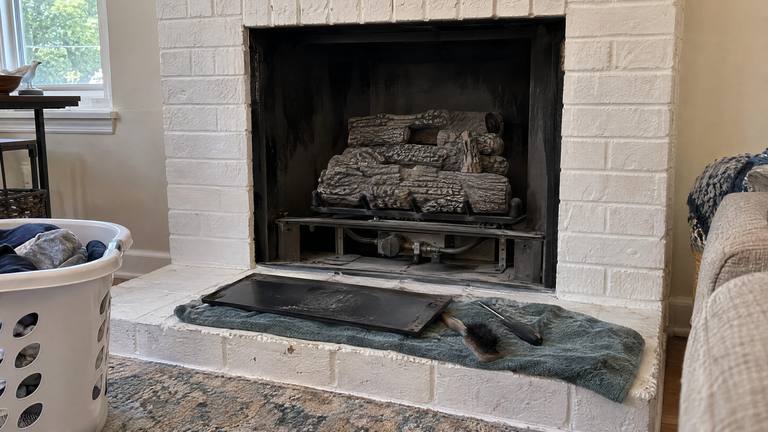
Clean and check the chimney
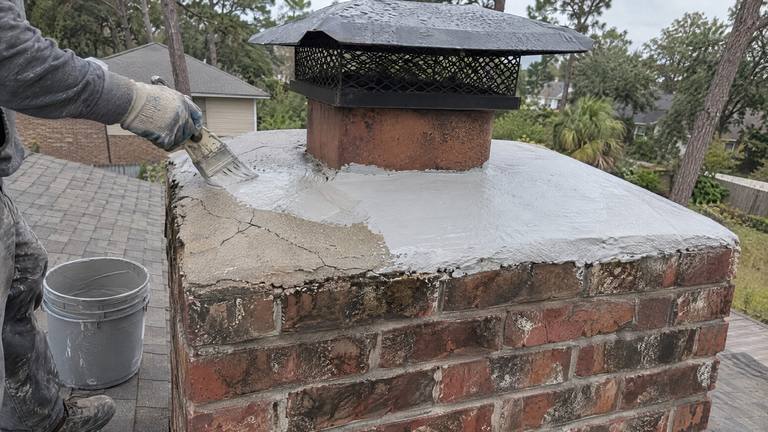
The old flue is cleaned, examined and repaired if needed before the liners go up.
-
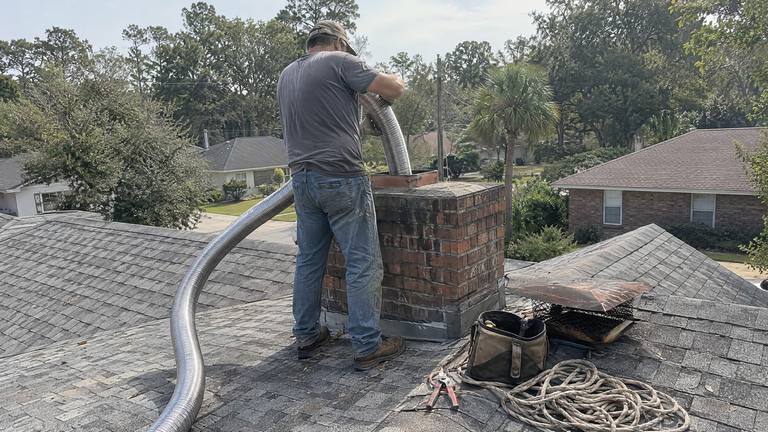
Liners, insert, surround
The vent kit runs to its termination, the insert is set and the surround fitted.
-
Hookups and first light
The gas and electrical hookups are made, then we light and test the insert with you.
Termination checks near the water
The termination of an insert in O'Neil sits in air that carries some salt from the coast a few miles away.
Its screen and fasteners get a look at each service.
10% off any service booked within 72 hours of inspection
Switching to gas? Book the insert within 72 hours of the inspection and take 10% off.
Cleaning a chimney that burned wood
Before a gas appliance connects, section 503.5.6 of the state fuel gas code has the chimney passage checked to be clear and cleaned if it once vented solid or liquid fuel. A fireplace that burned wood falls squarely under that rule.
So every gas insert installation in an old wood fireplace starts with cleaning and a look at the flue. What we find, a cracked flue lining, loose debris or missing parging above the throat, is written down before the liners go in and hide it. The findings are priced separately from the insert.
Co-linear venting, two liners side by side
A co-linear system uses two separate flexible liners inside the old flue: one brings outdoor air to the insert, the other carries exhaust away. One maker's kit uses a 3-inch liner for intake and a 4-inch liner for exhaust, both two-ply flexible liner approved for venting gas appliances.
At the bottom, an adapter joins them to the insert's collar; at the top, a co-linear termination kit and its flashing close the chimney. Co-linear kits are common in fireplace conversions because two small flexible liners get past a narrow throat more easily than one large rigid pipe.
Gas pressure at the valve
Every gas insert's rating plate lists the supply pressures its valve needs. One maker's plate gives a minimum of 4.5 and a maximum of 7 inches of water column for natural gas, and 11 to 13 for propane, with manifold pressures set lower.
The gas contractor or propane supplier sizes the piping to deliver that range, and once the supply is at the valve, we connect the insert, leak test every joint we made and read the pressures at the valve's test ports with the burner running. The readings go on the ticket. Pressures outside the plate's range are corrected before the insert runs for any length of time.
Measured in O'Neil before a gas insert is ordered
- Chimney examined and cleaned before any gas appliance connects
- Co-linear or co-axial kit chosen from the insert's manual
- Liner bend radius kept through the throat and smoke shelf
- Damper removed or fixed open, and any trimming noted
Before you switch to gas
Who runs the gas line?
The gas trade does: a gas contractor, the gas company or your propane supplier. Their part is on the estimate with a date, and our hookup follows once gas reaches the valve.
Does a gas insert need yearly service?
Yes. Makers want a yearly check of the insert and its venting by someone qualified, and we can put that on the calendar from the day it goes in.
More services in O'Neil
-
-
-
-
-
-


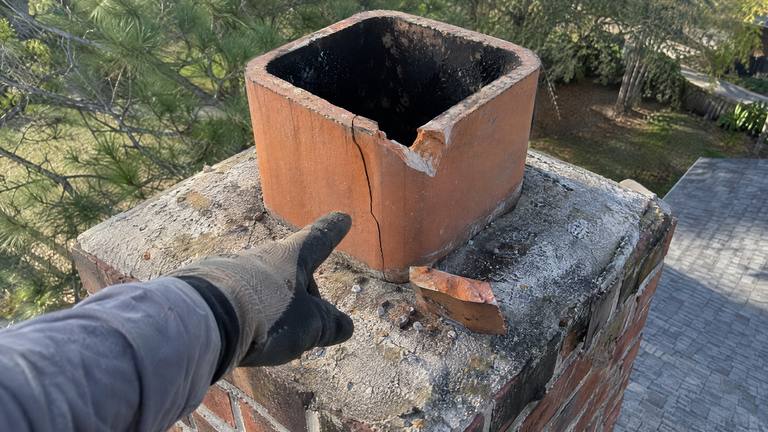
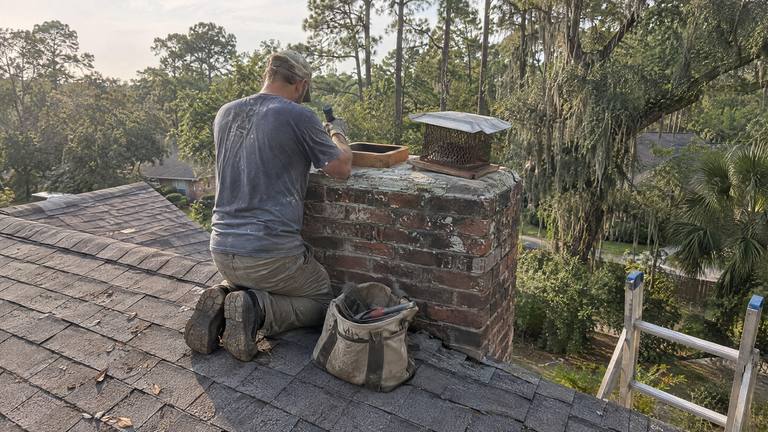
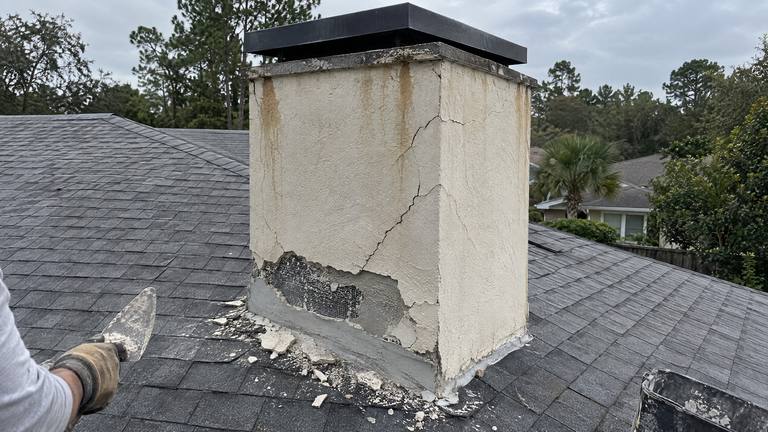
Learn more about gas fireplace insert installationAll services in O'Neil
Easy heat from the fireplace in O'Neil
Tired of wood fires in O'Neil? Our specialists check free whether a gas insert fits.
Free Inspection