
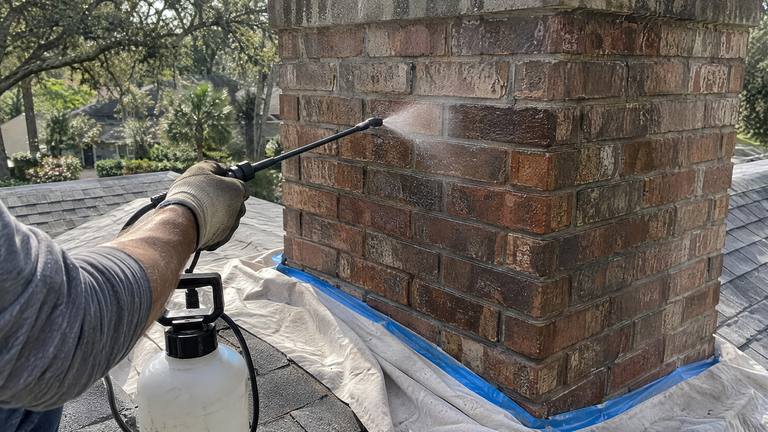
Local chimney waterproofing in Nocatee
A free water test tells us whether your Nocatee brick needs a repellent at all.
- Fully licensed and insured
- Locally owned
- Family owned and operated
- Same-day service
Get Your Free Inspection
Get a quote for chimney and fireplace repair and installation in Jacksonville.
Request received
Thank you. We will call you shortly to set a time.
Quicker by phone? Call (904) 920-5495
Local waterproofing experts for Nocatee brick
- Locally owned in Jacksonville
- Family owned and operated
- 100% satisfaction guaranteed
- Free inspection and estimate
- Same-day service available
- 10% off any service
Every job starts with a test patch, so you see how your brick looks treated before we do the rest.
- Free inspection and estimateWe splash test your Nocatee chimney at no charge and tell you if the brick needs treatment at all.
- No hidden feesRepairs and repellent are separate lines, and nothing is added once the spraying starts.
- 100% satisfaction guaranteedIf treated brick still soaks up water where we sprayed, we come back and put it right.
An old sealer gone cloudy or peeling
Some chimneys were coated in the past with a clear product that formed a film: a gloss on the brick that later clouded, whitened or began to peel. That film slows drying and can hold water behind it, and new penetrating repellents do not bond well over it. We look for signs of an old coating on Nocatee brick before any product is chosen, and test a small area if it is hard to tell. If the film has to come off first, the removal is priced with its method, following the old coating maker's directions where they are known. Call (904) 920-5495 and our waterproofing pros will test your Nocatee brick for free.
The coast is close to Nocatee. Nocatee lies within St. Johns County.
Waterproofing work we do in Nocatee
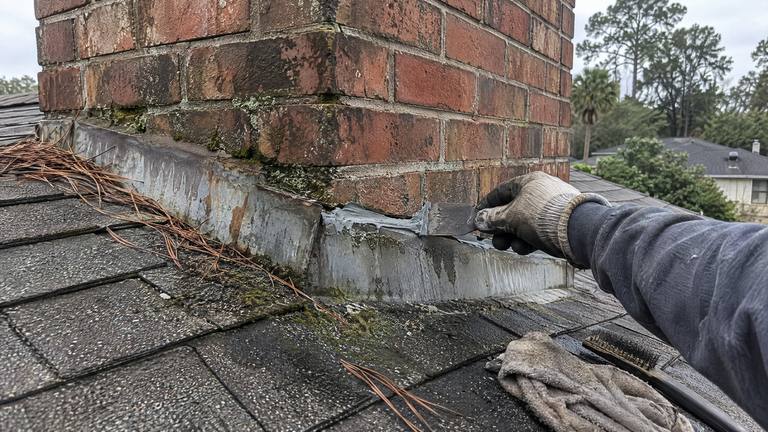
- Crown, cap and flashing checked for openings first
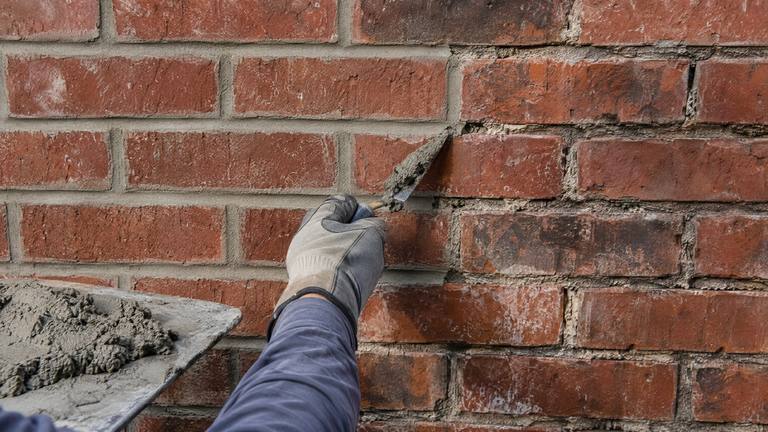
- Open joints and cracked brick repaired before treatment
- Cure time after repointing taken from the data sheet
- Test patch left to dry beside untreated brick
Splash, repair, patch test, flood
-
Splash test every face
Water on each face shows where the brick soaks it up, and the crown, cap and flashing are checked for openings.
-
Openings closed and cured
Joints, brick, crown and flashing are repaired first, and the cure time on the data sheet runs its course.
-
Clean, patch test, then flood
The brick is cleaned, a test patch dries beside untreated brick, then the repellent goes on from the bottom up.
-
Dry and retest
Once it has cured, we splash the faces again so you can see the water bead off.
Old sealers near the coast in Nocatee
Chimneys close to the ocean often carry old coatings put on to keep salt out. Many have gone cloudy or started to peel, and a new repellent will not soak through them.
We test the old coating in Nocatee, and we report whether it must come off first.
10% off any service booked within 72 hours of inspection
Book the repairs and the treatment together and the discount covers both.
How deep a penetrating repellent goes
The protection from a penetrating product sits beneath the face of the brick. BIA puts the depth at up to about 3/8 inch for penetrants in general, with no film left on the surface. The maker of the siloxane we use states penetration of up to 1/4 inch or more, varying with how porous the surface is and how much moisture it holds on the day. That depth is what lets the treatment outlast wear of the outer face. It is also why the brick has to be dry: pores already full of water leave less room for the product to travel, and the treated zone ends up shallower.
Protecting windows, skylights and shingles
Silane and siloxane products react with unprotected glass as well as brick, as BIA's note points out, and the note adds that these chemicals can etch glass. The maker of the product we apply adds paint, plants and asphalt-based materials such as roof shingles to the list of things to keep clear. So before any spraying, the glass in windows, skylights and doors close to the stack is covered, the roof surface around it is shielded, and plants below are protected as the directions describe. Any overspray that reaches an uncovered surface is washed off with soap and water straight away.
Old sealer on the brick
Sealer applied in the past may still be on the brick, and a new treatment has to work with it or replace it. According to BIA, penetrating repellents are typically incompatible with film-forming coatings already on the brick, and putting one over the other can lead to clouding or poor penetration. Signs of an old film include a gloss, a whitish haze or patches that have peeled away. When we see those, a small test tells us more, and removal is listed as its own step, done to the old product maker's directions and with the removal products disposed of properly.
Repairs and treatment, priced apart
- Cure time after repointing, taken from the product's data sheet
- Test patch location, and when it will be checked after curing
- Weather window: dry masonry, no rain forecast, temperature in range
- Covering glass, roofing, siding, paint and plants from overspray
Waterproofing questions from Nocatee
Will waterproofing stop water coming into my fireplace?
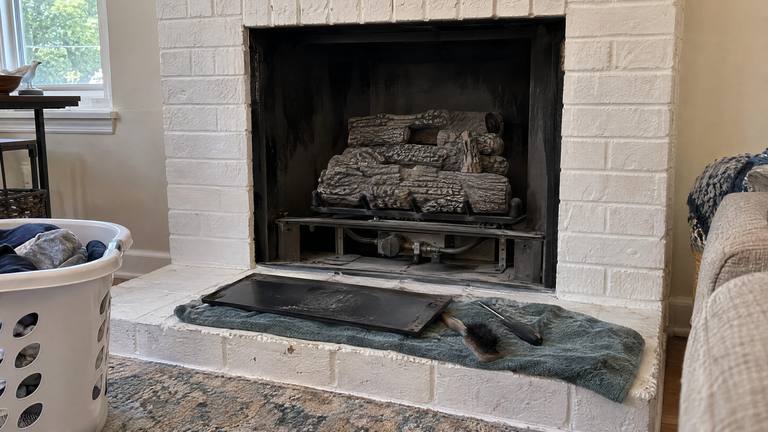
Not if the water comes down the flue or through the crown. Those paths are closed with a cap or crown repair, and treatment of the brick faces comes afterward if it is still needed.
Can you treat a stucco chimney?
The product we use lists portland cement stucco among its surfaces. Cracks in the stucco are repaired first, and a test patch shows how it takes the product.
More services in Nocatee
-
-
-
-
-
-


Learn more about chimney waterproofingAll services in Nocatee
Keep rain out of your Nocatee chimney
A simple splash test shows whether your brick in Nocatee soaks up rain. Call (904) 920-5495 to have our masonry experts run it.
Free Inspection