
Chimney animal removal in Lake Geneva by local pros
A screened cap ends it, but only once the flue is empty. Our local crew gets your Lake Geneva chimney there lawfully, after a free look.
- Fully licensed and insured
- Locally owned
- Family owned and operated
- Same-day service
Get Your Free Inspection
Get a quote for chimney and fireplace repair and installation in Jacksonville.
Request received
Thank you. We will call you shortly to set a time.
Quicker by phone? Call (904) 920-5495
Chimney wildlife specialists who follow the rules
- Locally owned in Jacksonville
- Family owned and operated
- 100% satisfaction guaranteed
- Free inspection and estimate
- Same-day service available
- 10% off any service
Nest material comes out before the first fire, because it is kindling sitting in the flue.
- Free inspection and estimateFinding out what is in your Lake Geneva flue, and which rules apply, is part of the free visit.
- Upfront pricing, no hidden feesClean-out, exclusion and cap are priced as separate lines, and any trapper is named in writing.
- Same-day serviceWhen the schedule has room, we can look at a noisy chimney the same day you call.
How it got in
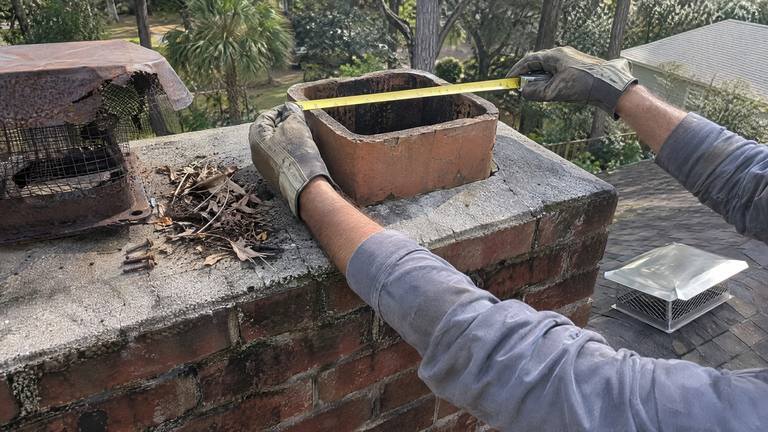
Every animal job ends with the same question: where did it get in? On a masonry chimney the first suspect is the flue top, either uncapped or under a cap whose screen has rusted, torn or pulled loose. It can also be a crack in the crown, open joints near the top, or a gap beside the flue tile.
On visits in Lake Geneva, the entry is found before the fix is priced, because a new cap does nothing about a hole in the crown. Each opening is listed with its repair. Rain uses the same openings, so closing them helps the chimney twice. On the phone at (904) 920-5495, describe what you hear in the Lake Geneva chimney and when it happens.
Lake Geneva is part of Clay County. Lake Geneva lies inland.
From identifying the animal to capping the flue
- One-way exclusion device fitted where the rules call for one
- Damper and smoke shelf checked after the clean-out
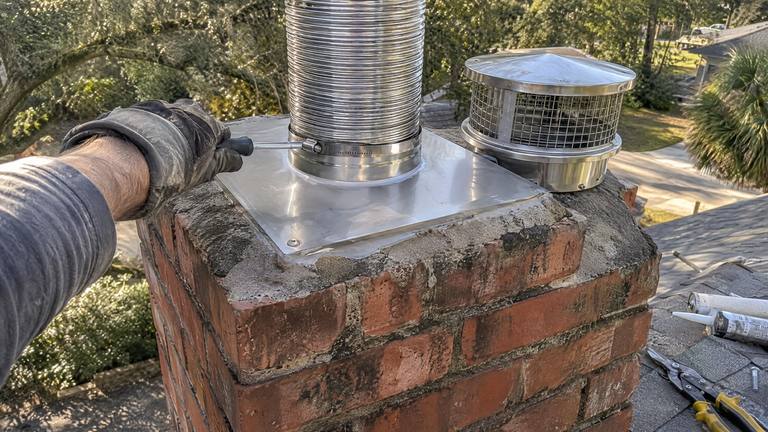
- Screened cap sized to keep animals out
- Clean-out at your Lake Geneva home kept inside the chimney
How chimney animal removal runs
-
Sounds, shelf and flue read
What you hear and when, what is on the smoke shelf and a look down from the top tell us what is inside.
-
Rules and timing checked
Protected birds and bats set the dates, and a one-way device goes on where the rules call for one.
-
Clean-out with the opening sealed
Once the flue is empty, nests and droppings come out through a sealed firebox and are bagged.
-
Way in closed for good
A screened cap, crown repair or chase cover fix closes the entry, and the damper is checked.
How animals get into chimneys in Lake Geneva
Lake Geneva sits inland, where salt rust plays less of a part. Animals get in through a missing or torn cap screen, a gap at the crown or a hole in a chase cover.
Removal is only half the job. The way in gets closed before we leave.
10% off any service booked within 72 hours of inspection
Getting animals out of your Lake Geneva chimney counts, and so does the cap that keeps them out.
Evidence on the smoke shelf
The smoke shelf is where a chimney keeps its records. Anything that falls down the flue lands there: nesting fiber and twigs, droppings, bits of shell, soil, leaves and pieces of a failing cap screen. Reading that layer before it is disturbed tells a lot about who has been using the chimney and for how long.
It also points to other work. Rust flakes suggest a damper or cap that is corroding. Mortar crumbs point to open joints above. Wet debris means rain is getting in, which points to an open flue top. The shelf is cleared only after that reading, so nothing useful is lost.
Exclusion first, closure second
Sealing a bat roost is a two-step job under the Florida rule. First, a one-way exclusion device goes on the opening the bats use, so they can leave at night and cannot come back. Second, the device has to stay put for a minimum of four days and nights in a row on which the National Weather Service forecasts lows above 50 degrees, and only after that can permanent repairs close the opening.
Counting only nights forecast to stay above 50 degrees gives the device a fair chance to clear the roost. The estimate for a bat job shows both steps and the earliest date for each.
The screen size that keeps animals out
Section R1003.9.2 of Florida's residential code is where the screen size comes from. The openings must not let a sphere half an inch across pass through, and must not block one of three-eighths of an inch. Its heat and corrosion resistance has to match 19-gauge galvanized steel or 24-gauge stainless steel, or better, and the open area of the arrestor must add up to four times the flue outlet's area or more.
A cap built to those numbers closes the flue to birds and larger animals while leaving it enough open area to draw. A screen with larger holes, or one torn open, does not.
What we confirm in Lake Geneva before any removal
- Identification of what is in the flue, and the evidence behind it
- One-way exclusion device placement and the date it comes off
- Earliest date the cap can go on under the wildlife rules
- Separate cap lines for flues that serve a furnace or water heater
Before anyone reaches into the flue
Will the animal come back after it leaves?
It can, as long as the way in stays open. So the job ends with the entry closed, whether by a screened cap, a repaired crown or a fixed chase cover.
How do you know the flue is empty before capping?
By several quiet days, a look down from the top with a light, and, where one was used, an exclusion device that has done its work. For bats, the state rule's waiting period applies before any permanent closure.
More services in Lake Geneva
-
-
-
-
-
-


Learn more about chimney animal removalAll services in Lake Geneva
Find out what is in your Lake Geneva chimney
Something living in the flue in Lake Geneva? Our specialist finds out what it is at no charge.
Free Inspection