
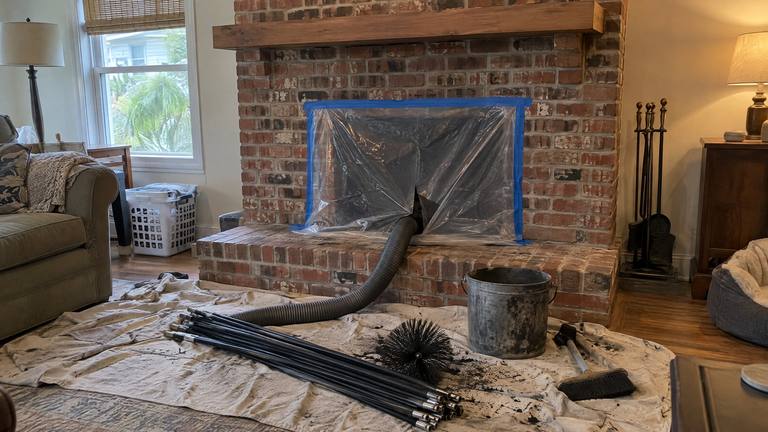
Heavy creosote removal in Springfield by local pros
Glaze checked for free in Springfield, same day when a slot is open, and 10% off removal booked in the 72 hours after.
- Fully licensed and insured
- Locally owned
- Family owned and operated
- Same-day service
Get Your Free Inspection
Get a quote for chimney and fireplace repair and installation in Jacksonville.
Request received
Thank you. We will call you shortly to set a time.
Quicker by phone? Call (904) 920-5495
Local creosote pros for Springfield chimneys
- Locally owned in Jacksonville
- Family owned and operated
- 100% satisfaction guaranteed
- Free inspection and estimate
- Same-day service available
- 10% off any service
Treatment rounds and the rules between them are written down in advance.
- Free inspection and estimateThe glaze in your Springfield flue is mapped by height and the liner checked at no charge.
- 100% satisfaction guaranteedIf the flue is not left bare, examined and clean as agreed, we come back and finish it.
- Family owned and operatedA family business chooses the method and does the work, so the care taken with your liner stays in one set of hands.
Method and rounds priced upfront
Our creosote estimate sets out the deposit, the method and the expected rounds. The glaze is recorded by height, the method is named with the reason for it, and a treatment's rounds are estimated from its label and the depth of glaze. Each line is written so it can be compared with any other quote you get.
Room protection, cleanup and the flue check after removal are included in the price, and any repair found once the flue is bare is priced separately. Want a written creosote estimate for your flue in Springfield? Call (904) 920-5495; the inspection is free.
Springfield sits in Duval County. Springfield sits away from the coastline.
What creosote removal covers in Springfield
- Room and hearth covered while we work
- Bare flue examined from both ends
- Hidden cracks and open joints written up
- Burning habits explained in plain terms
From the first look to a bare flue in Springfield
-
Glaze mapped, liner checked
The deposits are recorded by height and the liner assessed before a method is chosen.
-
Room sealed and protected
The fireplace opening is closed with a panel under a filtered vacuum, and the hearth area covered.
-
Rotary passes or treatment rounds
Glaze is broken loose with rotary tools on sound tile, or softened with a labeled treatment and brushed away.
-
Bare flue examined
The cleaned flue is checked from both ends, draft tested and burning habits reviewed.
Storm season and creosote smells in Springfield
Storm season rain falls inland as well, and water on flue deposits strengthens their smell.
If your Springfield fireplace smells after storms, heavy deposits may be the cause.
10% off any service booked within 72 hours of inspection
Whichever removal method your flue needs, the discount covers it.
How smoke turns into glaze
Wood smoke carries water vapor, tar and unburned gases. When it meets flue walls cooler than itself, part of it condenses into a liquid that coats the walls. Later fires heat that coating and bake it hard.
Layer by layer, fire after fire, it becomes glaze. The conditions that speed it up are all about temperature: a smoky, cool fire, a cold flue and a flue too large for the smoke passing through it. That is why glaze removal comes with a look at the fire and the flue, not only the deposits. Removing glaze without changing those conditions only resets the clock.
Why a creosote smell comes and goes
Creosote in a flue gives off a sharp, smoky odor that tends to be stronger on damp days and when air is moving down the chimney into the house. Kitchen and bath fans, or a stack effect in the house, can pull that air in through the fireplace.
Removal takes away the source. A damper that seals, a cap that keeps rain off the deposits and a check on what is pulling air into the house help too. If the smell returns after removal, we look at those factors before assuming more cleaning is needed.
Using the fireplace between rounds
When removal takes more than one round, the product label decides whether and how the fireplace may be used in between. Some treatments need fires to work. Others need the fireplace left cold until they are brushed out.
We give you the instructions for your treatment in writing, with the date of the next visit. If the fireplace should not be used, we say so plainly. If it may be used, we explain how, including what kind of fire and for how long, so the treatment works as its maker intends. If you are unsure about a fire, a phone call before lighting it settles the question.
Deposit findings written down before pricing
- Liner type and visible condition checked before any method is chosen
- Method named: rotary tools or a labeled treatment, with the reason
- Burning habits reviewed: wood, air and what goes in the firebox
- Debris bagged, firebox and hearth cleaned before we leave
Creosote questions from Springfield
Do you remove creosote in Springfield?
Yes. We remove glazed and heavy creosote across Duval County, Springfield included. Tell us whether you burn in an open fireplace or an insert when you call, so we bring the right tools.
Should the fireplace stay cold between treatment rounds?
That depends on the product. Some need fires to work and others need the fireplace left cold, and we give you the rules for yours in writing.
More services in Springfield
-
-
-
-
-
-


Learn more about creosote removalAll services in Springfield
Book a creosote check before the next fire
Light glaze or heavy deposits, the method and the number of rounds for your Springfield flue are priced before we start.
Free Inspection