
Local chimney creosote removal in O'Neil
Family-owned creosote specialists check your O'Neil flue for free, then pick rotary tools or a treatment it can take.
- Fully licensed and insured
- Locally owned
- Family owned and operated
- Same-day service
Get Your Free Inspection
Get a quote for chimney and fireplace repair and installation in Jacksonville.
Request received
Thank you. We will call you shortly to set a time.
Quicker by phone? Call (904) 920-5495
Family-owned creosote experts serving O'Neil
- Locally owned in Jacksonville
- Family owned and operated
- 100% satisfaction guaranteed
- Free inspection and estimate
- Same-day service available
- 10% off any service
Treatment rounds and the rules between them are written down in advance.
- Free inspection and estimateThe glaze in your O'Neil flue is mapped by height and the liner checked at no charge.
- 100% satisfaction guaranteedIf the flue is not left bare, examined and clean as agreed, we come back and finish it.
- Family owned and operatedA family business chooses the method and does the work, so the care taken with your liner stays in one set of hands.
A sweep left the glaze behind
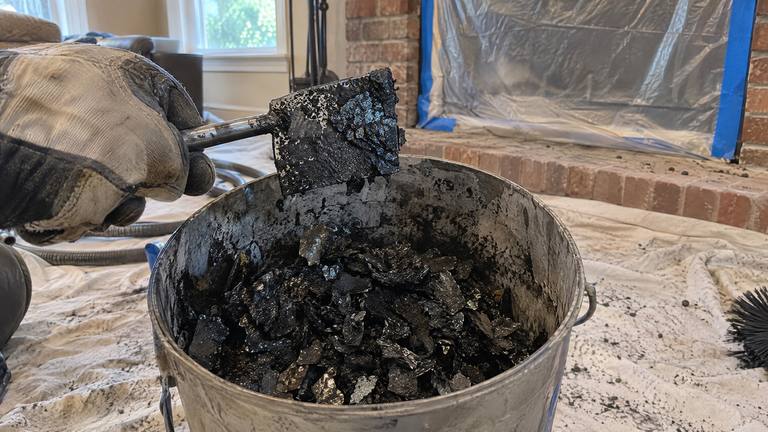
Plenty of creosote removal jobs start with a routine sweep that could not finish. The brushes cleared the soft soot and flakes, then skidded over a hard, shiny layer that stayed stuck to the flue walls. The sweep's note says glaze, and the fireplace should wait.
Glazed deposits need a different approach from brushing, chosen to suit the liner underneath. We examine the flue, map the glaze by height and explain the method before any work. Sweep found glaze in your flue in O'Neil? Call (904) 920-5495 and our creosote specialists will check it for free.
O'Neil lies within Nassau County. The coast is close to O'Neil.
Glaze off, flue checked, room protected
- Room and hearth covered while we work
- Bare flue examined from both ends
- Glaze mapped in your O'Neil flue before any price
- A written creosote plan for your O'Neil fireplace, free
Check, seal, remove, examine
-
Glaze mapped, liner checked
The deposits are recorded by height and the liner assessed before a method is chosen.
-
Room sealed and protected
The fireplace opening is closed with a panel under a filtered vacuum, and the hearth area covered.
-
Rotary passes or treatment rounds
Glaze is broken loose with rotary tools on sound tile, or softened with a labeled treatment and brushed away.
-
Bare flue examined
The cleaned flue is checked from both ends, draft tested and burning habits reviewed.
After the storm season in O'Neil
Close to the ocean, storm rain can soak flue deposits and make odors worse.
If your O'Neil fireplace smells stronger after the season, the flue is worth checking for heavy creosote.
10% off any service booked within 72 hours of inspection
Whichever removal method your flue needs, the discount covers it.
Why a brush slides over glaze
A sweep's brush works by scraping. Soft soot and flaky deposits break off under its bristles and fall down the flue. Glaze is different. It is hard, smooth and fused to the wall, and the bristles ride over it without catching.
Pushing harder does not help and can damage the brush or the liner. So once a sweep reports glaze, the work changes to tools that break it mechanically or products that change it chemically. We confirm the glaze on the inspection and choose between those two routes by what the liner can take. Brushing glaze harder also polishes it, which makes the next attempt harder still.
Keeping the dust inside the firebox
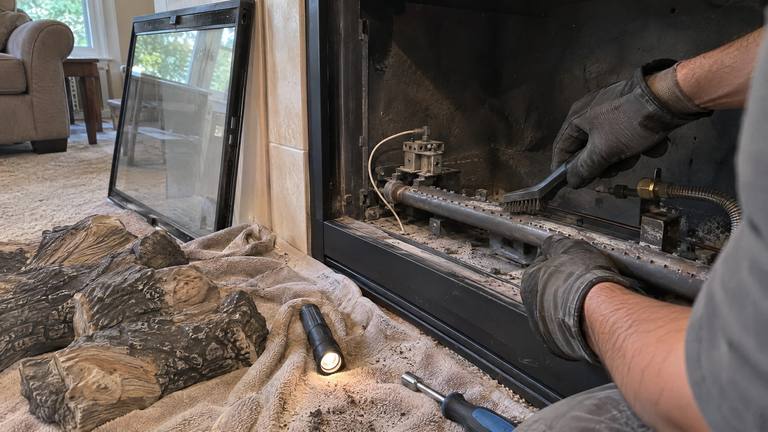
Creosote dust is fine, black and oily, and it stains fabric and carpet. So removal starts with sealing the fireplace opening with a panel, and a sealed, filtered vacuum runs through the panel to keep the firebox under slight suction.
The floor and furniture near the hearth are covered, and nothing leaves the firebox except through the vacuum. Debris is bagged as it comes down. When the work is done, the firebox and hearth are cleaned and the covers removed with care, so the room looks as it did before. Pets and children are kept out of the room while the tools are running.
Examining the flue once it is bare
The best time to judge a flue is right after glaze removal. With the deposits gone, the tile surfaces, joints and any cracks show clearly under a light from the top and bottom.
We examine the whole flue at that point and write down what we see: sound tile, cracks, open joints, flaking faces or displaced sections. That record is part of the job. If the flue needs repair, you get the findings with it, and the repair is priced as a separate item for you to decide on. If the flue is sound, the report says so, which is worth having in its own right.
Deposit findings written down before pricing
- Method named: rotary tools or a labeled treatment, with the reason
- Fireplace opening sealed and room covered before work starts
- Repairs found behind the glaze listed and priced separately
- Debris bagged, firebox and hearth cleaned before we leave
Creosote questions from O'Neil
Why can't a regular sweep remove glaze?
Brushes work by scraping, and glaze is hard and smooth enough that bristles slide over it. It needs rotary tools or a treatment that makes it brittle first.
Is rotary removal safe for my flue?
On a sound clay tile flue, careful rotary work is safe. On cracked tile or a thin metal liner it can cause damage, so we check the liner first and choose a treatment instead where needed.
More services in O'Neil
-
-
-
-
-
-


Remove hardened creosote in O'Neil
Our creosote pros map the glaze, check the liner and price the method for your O'Neil flue. Call (904) 920-5495.
Free Inspection