
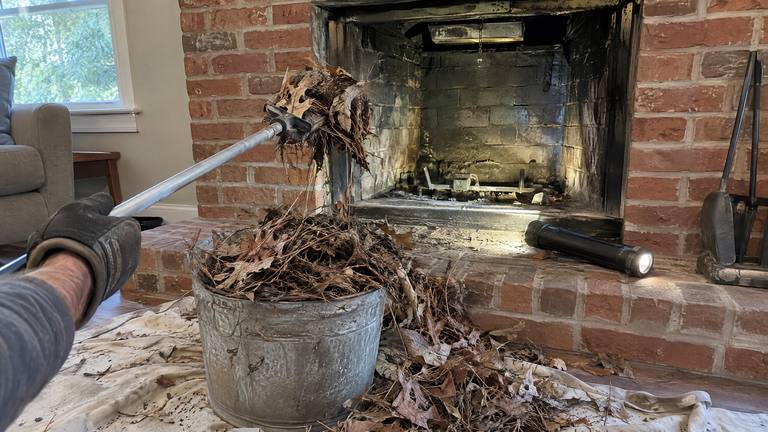
Local chimney animal removal for Middleburg homes
Keep the damper shut and the fire unlit. We identify what moved into your Middleburg chimney for free, clear it out lawfully and cap the flue.
- Fully licensed and insured
- Locally owned
- Family owned and operated
- Same-day service
Get Your Free Inspection
Get a quote for chimney and fireplace repair and installation in Jacksonville.
Request received
Thank you. We will call you shortly to set a time.
Quicker by phone? Call (904) 920-5495
Animal-in-the-chimney pros for Middleburg homes
- Locally owned in Jacksonville
- Family owned and operated
- 100% satisfaction guaranteed
- Free inspection and estimate
- Same-day service available
- 10% off any service
A chimney in Middleburg gets back in use only after a check that nothing is left higher up.
- Free inspection and estimateFinding out what is in your Middleburg flue, and which rules apply, is part of the free visit.
- Upfront pricing, no hidden feesClean-out, exclusion and cap are priced as separate lines, and any trapper is named in writing.
- Same-day serviceWhen the schedule has room, we can look at a noisy chimney the same day you call.
What the smoke shelf shows
Much of the evidence in an animal job lands on the smoke shelf, the ledge just behind the damper. Twigs and nesting fiber, droppings, feathers or fur, and soil tracked in from outside each point in a different direction. So does an empty shelf with noise overhead, which suggests the animal is higher in the flue.
On a visit in Middleburg, that debris is read before it is touched, then the flue is looked at from below and from the top. Together they show what is living there and where it got in. Anything that looks like it came from a protected species changes the timing, and the plan says so. Call (904) 920-5495 and our animal removal pros will check your Middleburg flue for free.
At the 2020 Census, Middleburg was home to 12,881 people. Middleburg does not reach the coast.
What animal removal covers in Middleburg
- Sounds and their timing used to narrow down the animal
- Smoke shelf checked for droppings, shell and nesting fiber
- Fireplace opening sealed while the flue is cleaned out
- Screened cap sized to keep animals out
From the first scratch to a closed chimney in Middleburg
-
Sounds, shelf and flue read
What you hear and when, what is on the smoke shelf and a look down from the top tell us what is inside.
-
Rules and timing checked
Protected birds and bats set the dates, and a one-way device goes on where the rules call for one.
-
Clean-out with the opening sealed
Once the flue is empty, nests and droppings come out through a sealed firebox and are bagged.
-
Way in closed for good
A screened cap, crown repair or chase cover fix closes the entry, and the damper is checked.
When an animal gets past the damper
Even a good damper leaves gaps around its plate, and an animal in the smoke chamber can push through into the room.
If something has come into a room in Middleburg, shut the doors to the rest of the house, open an outside door and leave the room.
10% off any service booked within 72 hours of inspection
Scratching in the chimney? The clean-out you book in the next 72 hours is 10% off.
Reading sounds by the hour
The time of day is one of the best clues to what is in a flue. Activity that starts at first light and fades at dusk points to an animal that is active by day. Scratching and movement that begin around sunset and return before dawn point to a night-active animal leaving and coming back. Noise at any hour, low in the chimney near the damper, suggests something trapped rather than living there.
Where the sound comes from matters too. High, echoing sounds are near the top of the flue, while muffled scraping close to the firebox is on the smoke shelf or damper. A few days of notes on timing make the first visit shorter.
Telling an animal smell from a creosote smell
Two very different smells come out of fireplaces. Creosote smells smoky and tar-like, lingers for weeks or months, and gets stronger when the house draws air down the flue. An animal smell, whether from droppings, nesting or remains, tends to appear more suddenly, smells sour or rotten, and builds over days.
The difference changes the plan. An animal smell means finding and removing the source above the damper and cleaning the area around it, after which the odor fades. A creosote smell means a sweep and a look at why air is moving down the chimney. When both are present, both get dealt with.
The screen size that keeps animals out
Section R1003.9.2 of Florida's residential code is where the screen size comes from. The openings must not let a sphere half an inch across pass through, and must not block one of three-eighths of an inch. Its heat and corrosion resistance has to match 19-gauge galvanized steel or 24-gauge stainless steel, or better, and the open area of the arrestor must add up to four times the flue outlet's area or more.
A cap built to those numbers closes the flue to birds and larger animals while leaving it enough open area to draw. A screen with larger holes, or one torn open, does not.
Rules, timing and the cap, in writing
- One-way exclusion device placement and the date it comes off
- Flue tiles and smoke chamber checked for damage once clear
- Repair or refit of an existing cap that let the animal in
- Earliest date the cap can go on under the wildlife rules
Animals in Middleburg chimneys, your questions
Should I call a chimney company or a trapper?
For an animal in the flue, the chimney side, from identification to clean-out and the cap, is our work. If the animal has to be trapped, the person doing that is named on the estimate, so you are not left coordinating two strangers.
What if the animal has died in the chimney?
Everything is taken out, the smoke shelf and the area around the damper get cleaned, and the flue is checked for anything else lodged in it. Once the source is gone, the smell fades. Keep the damper shut until then.
More services in Middleburg
-
-
-
-
-
-


Learn more about chimney animal removalAll services in Middleburg
One visit to learn what moved in
Our wildlife pros identify what is in your Middleburg flue and explain the rules first. Call (904) 920-5495.
Free Inspection