
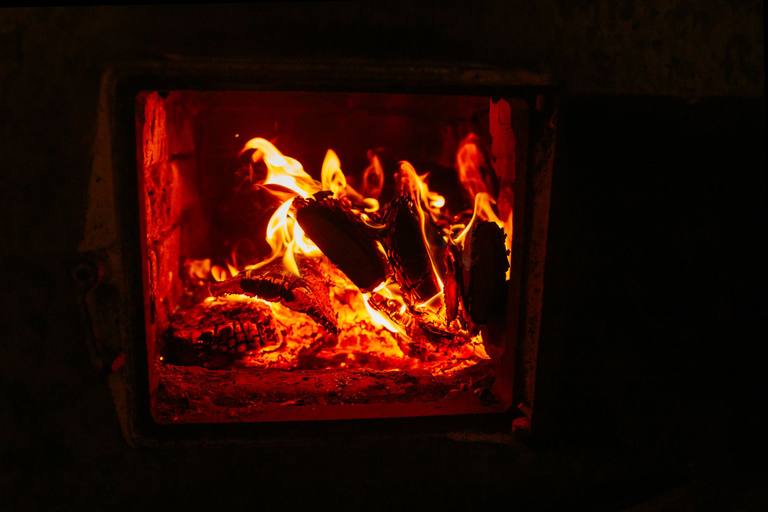
Local chimney creosote removal in Garden City
Creosote removal in Garden City booked within 72 hours of the inspection comes 10% off.
- Fully licensed and insured
- Locally owned
- Family owned and operated
- Same-day service
Get Your Free Inspection
Get a quote for chimney and fireplace repair and installation in Jacksonville.
Request received
Thank you. We will call you shortly to set a time.
Quicker by phone? Call (904) 920-5495
Creosote specialists who check the liner first
- Locally owned in Jacksonville
- Family owned and operated
- 100% satisfaction guaranteed
- Free inspection and estimate
- Same-day service available
- 10% off any service
You leave with plain advice on wood and air that keeps the glaze away.
- Free inspection and estimateThe glaze in your Garden City flue is mapped by height and the liner checked at no charge.
- 100% satisfaction guaranteedIf the flue is not left bare, examined and clean as agreed, we come back and finish it.
- Family owned and operatedA family business chooses the method and does the work, so the care taken with your liner stays in one set of hands.
A chimney on an outside wall
A masonry chimney built on the outside wall of a house loses heat to the air around it, so its flue can run cooler than one inside the house. Cooler flue walls mean more smoke condenses on them, and more creosote forms.
Chimneys like that can glaze even with sensible burning. We look at the flue size and the fire habits together, since a cool flue that is also oversized builds deposits fastest. Exterior chimney in Garden City with heavy deposits? Call (904) 920-5495 and ask our creosote team for a free inspection.
Garden City lies within Duval County. Garden City does not reach the coast.
What creosote removal covers in Garden City
- Hard, shiny glaze removed where brushes skid
- Room and hearth covered while we work
- Draft tested before we leave
- Burning habits explained in plain terms
From the first look to a bare flue in Garden City
-
Glaze mapped, liner checked
The deposits are recorded by height and the liner assessed before a method is chosen.
-
Room sealed and protected
The fireplace opening is closed with a panel under a filtered vacuum, and the hearth area covered.
-
Rotary passes or treatment rounds
Glaze is broken loose with rotary tools on sound tile, or softened with a labeled treatment and brushed away.
-
Bare flue examined
The cleaned flue is checked from both ends, draft tested and burning habits reviewed.
Honeycombed deposits in Garden City flues
Puffy, porous creosote means deposits have burned in the flue at some point.
In Garden City that calls for a closer flue examination before any removal tool goes up.
10% off any service booked within 72 hours of inspection
Heavy deposits in Garden City? Book the removal on inspection day or two days later, and 10% comes off either way.
How smoke turns into glaze
Wood smoke carries water vapor, tar and unburned gases. When it meets flue walls cooler than itself, part of it condenses into a liquid that coats the walls. Later fires heat that coating and bake it hard.
Layer by layer, fire after fire, it becomes glaze. The conditions that speed it up are all about temperature: a smoky, cool fire, a cold flue and a flue too large for the smoke passing through it. That is why glaze removal comes with a look at the fire and the flue, not only the deposits. Removing glaze without changing those conditions only resets the clock.
Deposits on and around the damper
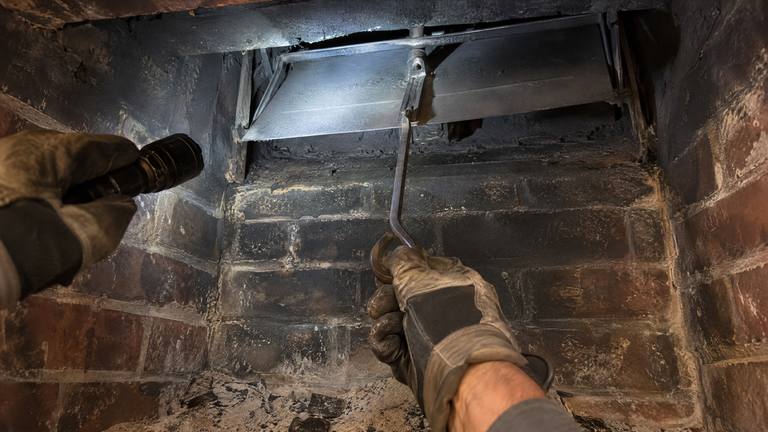
The damper sits in the throat, right where smoke speeds up and cools. Tar and glaze collect on the plate, the frame and the smoke shelf behind it, and heavy buildup can stop the damper closing or opening fully.
Clearing the damper area is part of creosote removal. The plate is worked through its travel once it is clean, and the seat is checked for rust and scale. A damper that still will not move properly once clean is noted for repair, and that work is priced separately. Glaze on a damper's seat can stop the plate sealing, so the seat is scraped clean too.
Creosote above a wood-burning insert
A wood insert burning on low air can deposit creosote in its liner or, where there is no full liner, on the walls of the original flue above it. Those deposits restrict the insert's draft and can be hard to reach.
How they are removed depends on how the insert is vented and what its manual allows. Some need the insert pulled forward to reach the connection. Others are cleaned from the roof. We check the setup before quoting, and if the insert is venting into an oversized flue without a liner, we explain why a liner matters.
Deposit findings written down before pricing
- Liner type and visible condition checked before any method is chosen
- Treatment rounds estimated from the label and the glaze depth
- Fireplace opening sealed and room covered before work starts
- Flue size compared with the fire it serves
Creosote questions from Garden City
Is rotary removal safe for my flue?
On a sound clay tile flue, careful rotary work is safe. On cracked tile or a thin metal liner it can cause damage, so we check the liner first and choose a treatment instead where needed.
Will you make a mess in the house?
No more than a dusty drop cloth. The fireplace opening is sealed with a panel and a filtered vacuum, the hearth area is covered, and we clean the firebox before leaving.
More services in Garden City
-
-
-
-
-
-


Learn more about creosote removalAll services in Garden City
Book a creosote check before the next fire
Light glaze or heavy deposits, the method and the number of rounds for your Garden City flue are priced before we start.
Free Inspection