
Heavy creosote removal in Doctors Inlet by local pros
The glaze in your Doctors Inlet flue mapped by height for free, then the method and rounds priced in writing.
- Fully licensed and insured
- Locally owned
- Family owned and operated
- Same-day service
Get Your Free Inspection
Get a quote for chimney and fireplace repair and installation in Jacksonville.
Request received
Thank you. We will call you shortly to set a time.
Quicker by phone? Call (904) 920-5495
Family-owned creosote experts serving Doctors Inlet
- Locally owned in Jacksonville
- Family owned and operated
- 100% satisfaction guaranteed
- Free inspection and estimate
- Same-day service available
- 10% off any service
Rotary heads go only where the tile can take them, and treatments go everywhere else.
- Free inspection and estimateThe glaze in your Doctors Inlet flue is mapped by height and the liner checked at no charge.
- 100% satisfaction guaranteedIf the flue is not left bare, examined and clean as agreed, we come back and finish it.
- Family owned and operatedA family business chooses the method and does the work, so the care taken with your liner stays in one set of hands.
Deposits around a wood insert
A wood-burning insert run on low air overnight can build creosote in its liner and at the top of the chimney. Deposits there restrict the insert's draft and cannot be reached from the firebox. The insert's manual and its liner decide how the work is done.
Clearing them may mean pulling the insert or working from the roof, depending on how it is connected and what its manual allows. We check that before quoting. Heavy deposits in the flue above an insert in Doctors Inlet? Call (904) 920-5495 and ask our creosote team for a free inspection.
Doctors Inlet lies within Clay County. Doctors Inlet sits away from the coastline.
Creosote removal work in Doctors Inlet
- Method matched to clay tile or stainless liner
- Room and hearth covered while we work
- Smoke chamber and smoke shelf cleared
- Hidden cracks and open joints written up
Check, seal, remove, examine
-
Glaze mapped, liner checked
The deposits are recorded by height and the liner assessed before a method is chosen.
-
Room sealed and protected
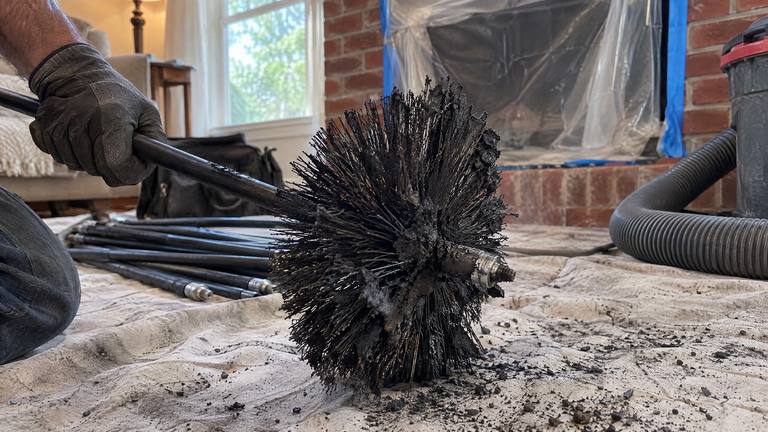
The fireplace opening is closed with a panel under a filtered vacuum, and the hearth area covered.
-
Rotary passes or treatment rounds
Glaze is broken loose with rotary tools on sound tile, or softened with a labeled treatment and brushed away.
-
Bare flue examined
The cleaned flue is checked from both ends, draft tested and burning habits reviewed.
What builds creosote in Doctors Inlet
Well inland, Doctors Inlet chimneys see little salt, and none of it affects creosote. The fire and the flue decide how much builds up: wet wood, starved fires and cold or oversized flues.
Those are the things we look at on every creosote job, alongside the removal itself.
10% off any service booked within 72 hours of inspection
However many rounds the glaze takes, each one is discounted.
Creosote in stainless steel liners
Stainless liners are thinner than clay tile and can be scratched, dented or torn by aggressive tools. Liner makers set out how their products should be cleaned, often calling for brushes of a particular material.
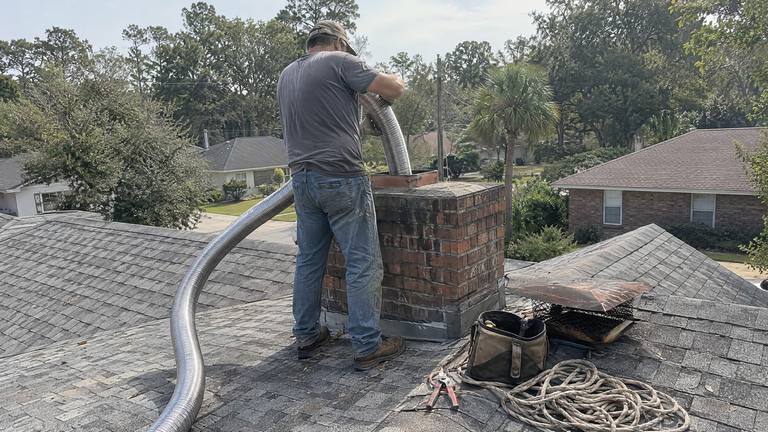
When a stainless liner has glazed, we read the maker's instructions and stay within them. That usually means a treatment to soften the glaze followed by an approved brush. If a liner has been damaged by earlier cleaning, we note it, since a torn liner is a repair or replacement item rather than a cleaning job. The liner's maker and model, where we can find them, are written on the estimate.
The yearly check after removal
NFPA 211 schedules an annual look at every chimney, fireplace and vent, checking that it is sound, clear of deposits and at safe clearances, and it has cleaning done when the deposits call for it. A flue that has glazed once is a good reason to keep that schedule.
At the next yearly check, we look at how much has built up since removal and what kind of deposit it is. Light, soft soot means the changes in burning are working. New glaze means something still needs attention, whether the wood, the air supply or the size of the flue. We note the date and findings of each check so the trend is easy to see.
Why a creosote smell comes and goes
Creosote in a flue gives off a sharp, smoky odor that tends to be stronger on damp days and when air is moving down the chimney into the house. Kitchen and bath fans, or a stack effect in the house, can pull that air in through the fireplace.
Removal takes away the source. A damper that seals, a cap that keeps rain off the deposits and a check on what is pulling air into the house help too. If the smell returns after removal, we look at those factors before assuming more cleaning is needed.
Deposit findings written down before pricing
- Deposit type recorded by height, from soft soot to hard glaze
- Fireplace opening sealed and room covered before work starts
- A cap priced alongside when the flue has none
- Relining priced as an option when glaze keeps returning
Creosote questions from Doctors Inlet
Is rotary removal safe for my flue?
On a sound clay tile flue, careful rotary work is safe. On cracked tile or a thin metal liner it can cause damage, so we check the liner first and choose a treatment instead where needed.
Should the fireplace stay cold between treatment rounds?
That depends on the product. Some need fires to work and others need the fireplace left cold, and we give you the rules for yours in writing.
More services in Doctors Inlet
-
-
-
-
-
-


Learn more about creosote removalAll services in Doctors Inlet
Remove hardened creosote in Doctors Inlet
Our creosote pros map the glaze, check the liner and price the method for your Doctors Inlet flue. Call (904) 920-5495.
Free Inspection