
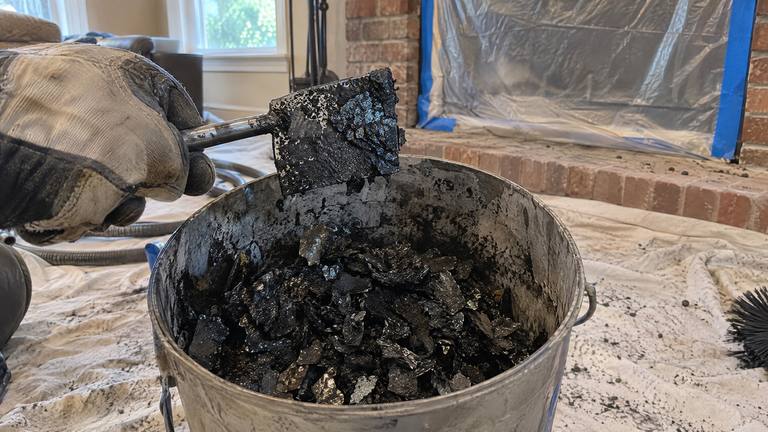
Heavy creosote removal in Clay Hill by local pros
Creosote removal in Clay Hill booked within 72 hours of the inspection comes 10% off.
- Fully licensed and insured
- Locally owned
- Family owned and operated
- Same-day service
Get Your Free Inspection
Get a quote for chimney and fireplace repair and installation in Jacksonville.
Request received
Thank you. We will call you shortly to set a time.
Quicker by phone? Call (904) 920-5495
Creosote specialists who check the liner first
- Locally owned in Jacksonville
- Family owned and operated
- 100% satisfaction guaranteed
- Free inspection and estimate
- Same-day service available
- 10% off any service
You leave with plain advice on wood and air that keeps the glaze away.
- Free inspection and estimateThe glaze in your Clay Hill flue is mapped by height and the liner checked at no charge.
- 100% satisfaction guaranteedIf the flue is not left bare, examined and clean as agreed, we come back and finish it.
- Family owned and operatedA family business chooses the method and does the work, so the care taken with your liner stays in one set of hands.
Puffy, honeycombed deposits
Creosote that looks puffed up, like a dark sponge or honeycomb, may have burned already. Deposits that ignite in the flue expand as they burn, and the flue walls behind them may have been heated far past their normal range.
That changes the order of work. Before any aggressive tool goes up, the flue is examined closely for cracked tiles and open joints, the deeper check NFPA 211 asks for once a chimney has probably been harmed. Then the method is chosen.
Seeing puffy, porous deposits in a fireplace in Clay Hill? Leave it unused and phone (904) 920-5495 to book the free flue examination.
Clay Hill sits in Clay County. Clay Hill is inland.
Creosote removal work in Clay Hill
- Hard, shiny glaze removed where brushes skid
- Firebox sealed under a filtered vacuum
- Draft tested before we leave
- Relining offered only when it is the better fix
From the first look to a bare flue in Clay Hill
-
Glaze mapped, liner checked
The deposits are recorded by height and the liner assessed before a method is chosen.
-
Room sealed and protected
The fireplace opening is closed with a panel under a filtered vacuum, and the hearth area covered.
-
Rotary passes or treatment rounds
Glaze is broken loose with rotary tools on sound tile, or softened with a labeled treatment and brushed away.
-
Bare flue examined
The cleaned flue is checked from both ends, draft tested and burning habits reviewed.
Firewood and deposits in Clay Hill
Wood that has not dried long enough burns cool and smoky wherever it is burned. Six months of drying is the floor EPA Burn Wise sets.
Dry wood burned in Clay Hill fireplaces leaves far lighter deposits than green wood.
10% off any service booked within 72 hours of inspection
Glaze in the flue? The removal you book in the next three days comes 10% off.
Dry wood and lighter deposits
EPA Burn Wise advises seasoning firewood for at least six months before burning it. Seasoned wood weighs less, shows split ends and rings rather than thuds when two pieces are struck together. Wet wood hisses, steams and is hard to keep burning.
Dry wood burns hotter and cleaner, so its smoke carries less moisture into the flue and leaves fewer deposits. We mention this on every creosote job because it is the cheapest way to keep a cleaned flue clean. Wood stored off the ground, under cover and open to air on the sides dries better than a covered pile.
Air, doors and smoky fires
A fire needs air to burn cleanly. Glass doors closed tight, air controls turned down or a house that is short of makeup air can all starve a fire, making it cool and smoky.
Fireplace door makers give instructions on how the doors should be set while burning, and following them matters. In a tight house, a kitchen fan running during a fire can pull against the flue. We look at these on the visit, because a fire that cannot breathe keeps making creosote however often the flue is cleaned. Opening a nearby window a crack while a fire burns can be enough to settle a smoky fireplace.
What should not go in the firebox
Garbage is on the EPA Burn Wise list of things not to burn, along with cardboard, plastics, and painted or treated wood. They make smoky fires, some release harmful fumes, and paper and cardboard can send burning pieces up the flue.
A fireplace used as an incinerator builds deposits quickly. After removal, we go over what belongs in the firebox: dry firewood, a little kindling and newspaper to start. It sounds basic, yet it is one of the things that keeps a cleaned flue from glazing again. Anything that smells of plastic or chemicals when it burns does not belong in the firebox.
Deposit findings written down before pricing
- Liner type and visible condition checked before any method is chosen
- Treatment rounds estimated from the label and the glaze depth
- Smoke chamber and damper area cleared along with the flue
- Debris bagged, firebox and hearth cleaned before we leave
Creosote questions from Clay Hill
Is rotary removal safe for my flue?
On a sound clay tile flue, careful rotary work is safe. On cracked tile or a thin metal liner it can cause damage, so we check the liner first and choose a treatment instead where needed.
What does a creosote inspection in Clay Hill cost?
The inspection is free, and the method, rounds and price are written down before any work. Book the removal within 72 hours of it and 10% comes off.
More services in Clay Hill
-
-
-
-
-
-


Book a creosote check before the next fire
Light glaze or heavy deposits, the method and the number of rounds for your Clay Hill flue are priced before we start.
Free Inspection